
 AU
AU
 UK
UK
 CA
CA
 US
US
 IND
IND

 NZ
NZ

.png)
I. Sector Landscape and Outlook
The New Zealand Commerce Commission is conducting a market study to evaluate the retail grocery sector to restrict the rising cost of groceries and make sure shoppers pay a reasonable price at the counter. In the year to September 2021, approximately $22 billion was spent at supermarkets and grocery stores. This momentum is expected to continue ahead despite elevated global food commodity prices, high property rentals and wage costs that are anticipated to drag the annual food price inflation to a record level.
Food Prices Continue to Increase in March 2022 Quarter
As per Stats.NZ, food prices rose 6.7%, influenced by fruit and vegetables (up 17%) and grocery food (up 5.5%), and miscellaneous goods and services rose 5.6%, influenced by other various services (up 11%) and personal care (up 6.4%) in the March 2022 quarter versus March 2021 quarter CPI Index. The food increased 3.1% quarterly, influenced by fruit and vegetables (up 9.3%) and grocery food (up 2.4%). The average price for 1 pack of 25 cigarettes was $44.66 in the March 2022 quarter, an increase from $42.74 in the December 2021 quarter and $42.95 in the March 2021 quarter.
Exhibit 1: Food Continued to Report Strength in March 2022 Quarter
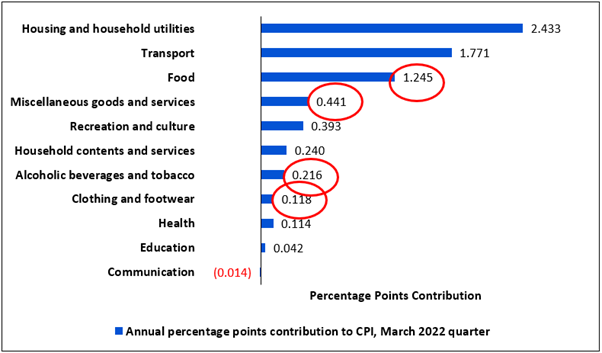
Data Source: This work is based on/includes Stats NZ’s data which are licensed by Stats NZ for reuse under the Creative Commons Attribution 4.0 International Licence; Chart Created by Kalkine Group
Rebound in Credit Card Spending in March 2022
As per RBNZ, seasonally adjusted total billings in NZ were $3.8 billion in March, up 3.2% MoM, and seasonally adjusted domestic billings on NZ issued cards were $3.6 billion, up 2.2% MoM. Further, the overseas billings (actual) on NZ issued cards increased to $0.4 billion in March 2022, as overseas travel restrictions eased, indicating the highest value of overseas monthly billings recorded since February 2020. Seasonally adjusted total advances outstanding at the end of March stood at $5.8 billion, down 6.8% YoY from $6.2 billion. Moreover, total credit limits continued to slide to $21.5 billion (not seasonally adjusted), down 3.8% YoY.
Exhibit 2: Trend in Total billings on NZ Cards (Actual)
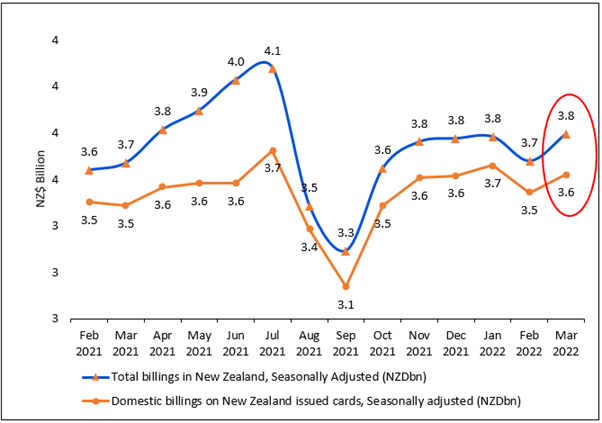
Data Source: This work is based on/includes rbnz data which are licensed by rbnz.govt for reuse under the Creative Commons Attribution 4.0 International Licence; Chart Analysis by Kalkine Group
Uptick in Sales Volume & Value in Retail Business in December 2021 Quarter
As per Stats.NZ, the total retail sales volume increased by 8.6%, and total retail sales value (with price effects included) increased by 10% ($2.6 billion), resulting in 14 of the 16 regions' higher sales values in December 2021 quarter versus September 2021 quarter. At the industry level, the department store sales volumes increased by 19%, and food and beverage services increased 12% during the said period. Thirteen of the 15 industries had higher sales values in the December 2021 quarter versus the September 2021 quarter. The food and beverage services values grew 13% ($352 million), and the department store values increased 21% ($257 million).
Index Performance:
The S&P/NZX All Consumer Discretionary Index generated a 2-year return of ~42.14% versus ~11.98% by the S&P/NZX 50 Index. Therefore, S&P/NZX All Consumer Discretionary Index overperformed S&P/NZX 50 Index by ~30.16% in 2-year.
Exhibit 3: S&P/NZX All Consumer Discretionary Index vs S&P/NZX 50 Index
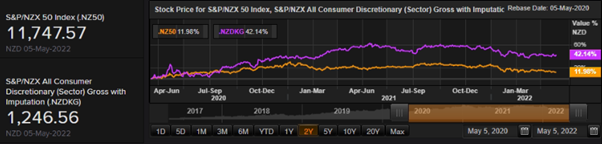
Source: REFINITIV
Key Risks and Challenges:
The retail and food market are open to intense competition, with the industry going through the phase of consolidation and technology taking over a major portion of sales. Small start-ups are competing with well-established players in terms of the latest technology and highly skilled talent backed by government support that includes tax incentives and progressive attitudes. Few players are exiting the market, providing room for the remaining players. Meanwhile, consumers take advantage of private label products at reduced prices and multiple choice.
Exhibit 4. Key Risks in Consumer Discretionary Sector:
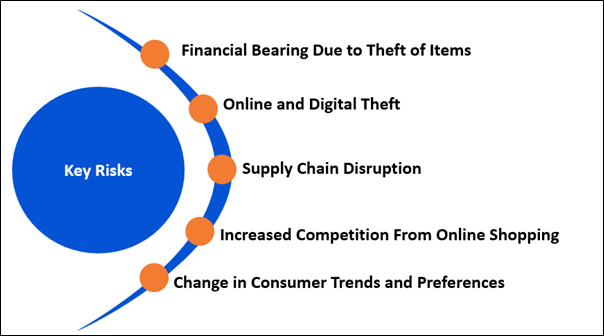
Source: Analysis by Kalkine Group
Outlook:
Most NZ consumers purchase groceries at the retail grocery store. However, there has been a sudden increase in online sales due to the COVID-19 pandemic restrictions. The online sales of speciality food, groceries and liquor increased by 47% to $1.3 billion between 2019 and 2020, versus a rise in sector sales of 10%. Further, the total number of online consumers increased by 54% to 1.09 million, indicating a strengthening business line. Customers also carried out over 41% of online transactions in 2020, and online basket size grew by 5%. The availability of e-commerce and hygiene consciousness is increasing store switching behaviour, resulting in consumers moving away from their primary store.
Apart from the sector-specific factors, we have also analysed four NZX-listed companies operating in the same sector. This report covers their insights, outlook, performance and potential as expected to be delivered in the near to medium term.
1) Hallenstein Glasson Holdings Limited (Recommendation: Buy, Potential Upside: Low Double-Digit) (M-Cap: NZ$349.54 million, Gross Dividend Yield: 8.729%)
Business Description:
Hallenstein Glasson Holdings Limited (NZX: HLG) is a retailer of menswear and womenswear, operating business segments including Hallenstein Bros Limited, Glassons Limited, and Hallenstein Properties Limited.
Outlook:
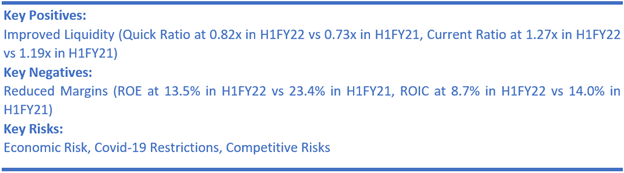
The company is looking forward to a solid finish for FY22, driven by building digital engagement with customers, attractive the store experience, retaining cost-control measures and providing the latest trending products focusing on sustainability. Digital sales rose to 32.8% of total sales in H1FY22, up from 23.8% in H1FY21. The company has increased its focus on digital marketing to drive engagement across all channels. The Glassons App continues to provide strong results with over 500,000 downloads, while phenomenal work has been conducted on the Hallensteins webshop to improve the look and the customer experience.
Technical Overview:
Daily Price Chart
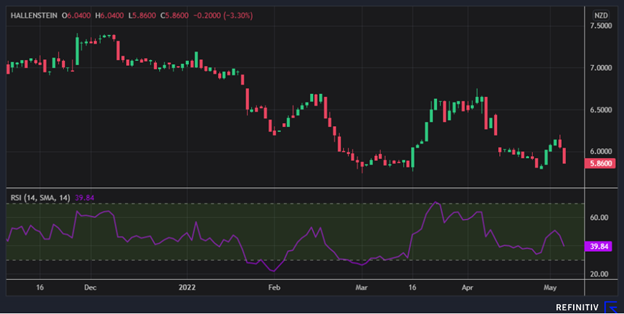
Source: REFINITIV, Note: Purple color line reflects Relative Strength Index (14-Period)
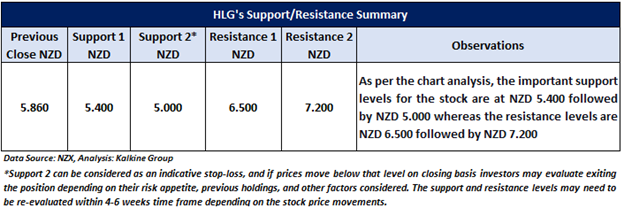
Stock Recommendation
Gross margin on sales stood at 57.9% in H1FY22 versus 56.5% in H1FY21, primarily driven by better prices negotiated with suppliers and favourable exchange rates. This was partially nullified by an increase in freight costs due to a disrupted supply chain. The company implemented additional cost controlling measures to reduce operating costs and inventory levels to preserve liquidity.
Considering the facts above, we give a “Buy” recommendation on the stock at the closing market price of $5.86 per share, down 3.30% as of 5th May 2022.
2) Savor Limited (Recommendation: Speculative Buy, Potential Upside: Low Double-Digit) (M-Cap: NZ$27.67 million)
Business Description:
Savor Limited (NZX: SVR) is among the most significant hospitality businesses in New Zealand. It has ten iconic venues in Auckland, which comprises Azabu Ponsonby and Azabu Mission Bay, Ebisu, and Non Solo Pizza. These all have their unique concepts, cultures, and offerings.
Outlook:
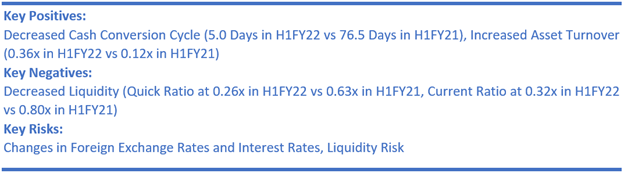
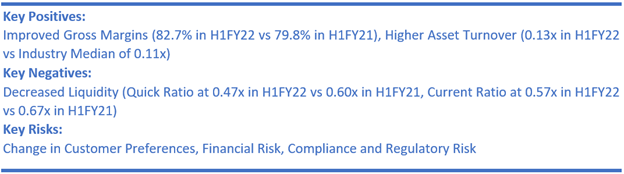
The company reported solid financial performance in H1FY22, primarily led by robust trading results throughout winter and the potential to drive growth. Meanwhile, the COVID-19 circumstances challenge the business and place immense pressure on growth. The company’s acquisition of Oji Sushi in July 2021 was materialized to add the premium to sushi range of Savor’s existing Japanese credentials. The outlet was opened in Auckland’s Britomart in August 2021. Savor’s organic growth continued with the formation of Bar Non Solo in the Seafarers Building. Moreover, the company remains in discussions with several parties to grab profitable assets.
Technical Overview:
Daily Price Chart
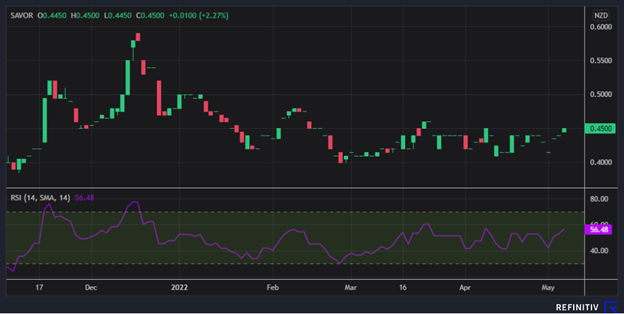
Source: REFINITIV, Note: Purple color line reflects Relative Strength Index (14-Period)
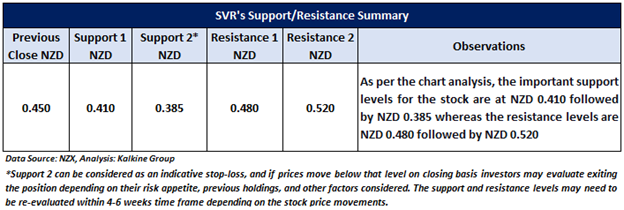
Stock Recommendation
Considering the facts above, we give a “Speculative Buy” recommendation on the stock at the closing market price of $0.45 per share, up 2.27% as of 5th May 2022.
3) Good Spirits Hospitality Limited (Recommendation: Speculative Buy, Potential Upside: Low Double-Digit) (M-Cap: NZ$3.75 million)
Business Description:
Good Spirits Hospitality Limited (NZX: GSH) is an investment company that identifies quality acquisition opportunities, primarily in the hospitality sector in New Zealand. The company owns and operates hospitality venues on New Zealand’s North Island.
Outlook:
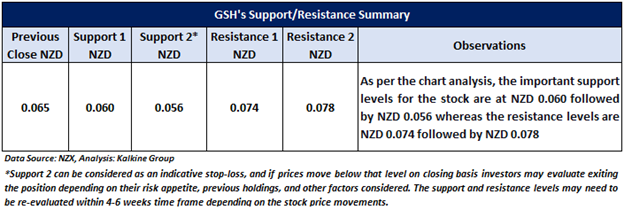
The company launched The Fox and a London pub in the Auckland Viaduct. It is also planning to relocate O’Hagan’s bar and investigate other growth opportunities. These acquisitions and additional options will present the company in a better place.
On 28 April 2022, the company announced that it would not be proceeding with the acquisition of The Nourish Group.
Technical Overview:
Daily Price Chart
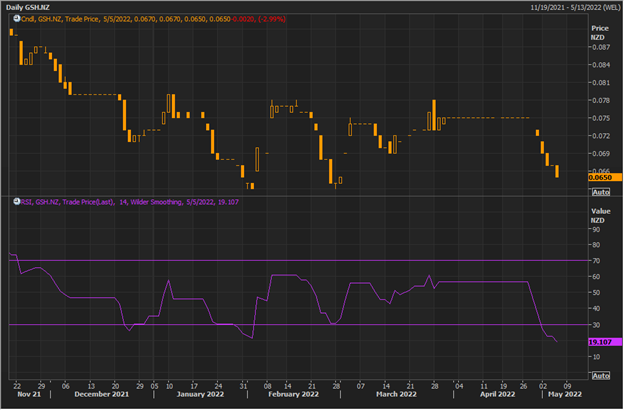
Source: REFINITIV, Note: Purple color line reflects Relative Strength Index (14-Period)
Stock Recommendation
Considering the facts above, we give a “Speculative Buy” recommendation on the stock at the closing market price of $0.065 per share, down 2.99% as of 5th May 2022.
4) Millennium & Copthorne Hotels New Zealand Limited (Recommendation: Hold, Potential Upside: Low Double-Digit) (M-Cap: NZ$254.20 million, Gross Dividend Yield: 2.043%)
Business Description:
Millennium & Copthorne Hotels New Zealand Limited (NZX: MCK) is engaged in the hotel and resort business. MCK is also involved in building residential properties. MCK has 19 hotels spread across the country.
Outlook:
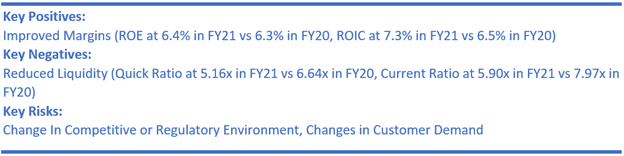
The company stated that the current state of the business would depend on international travel, occupancy level and domestic orientation environment. Further, it aims at a half year of break-even results for H1FY22 for the hotel operations and positive momentum throughout 2022 for property development activities. Broadly, it continues to take the opportunity to upgrade and refurbish hotels across the network in anticipation of better times in 2023 and 2024. With the rapid pace of vaccination rates globally, the company is confident of witnessing a resumption in international travel in some form during 2022, resulting in a gradual and managed way of reopening New Zealand’s international borders.
Technical Overview:
Daily Price Chart
Source: REFINITIV, Note: Purple color line reflects Relative Strength Index (14-Period)
Stock Recommendation
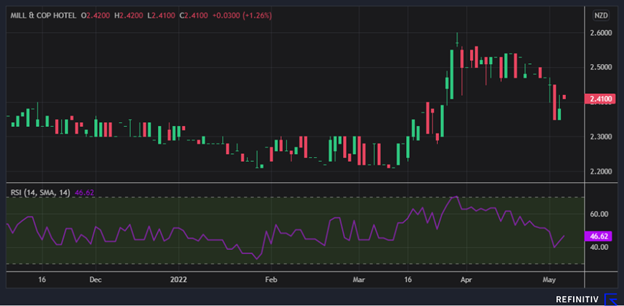
Considering the facts above, we give a “Hold” recommendation on the stock at the closing market price of $2.41 per share, up 2.77% as of 5th May 2022.
Markets are trading in a highly volatile zone currently due to certain macro-economic issues and geopolitical tensions prevailing. Therefore, it is prudent to follow a cautious approach while investing.
Note 1: The reference data in this report has been partly sourced from REFINITIV.
Note 2: Investment decisions should be made depending on the investors’ appetite on upside potential, risks, holding duration, and any previous holdings. Investors can consider exiting from the stock if the Target Price mentioned as per the analysis has been achieved and subject to the factors discussed above alongside support levels provided.
Technical Indicators Defined: -
Support: A level where-in the stock prices tend to find support if they are falling, and downtrend may take a pause backed by demand or buying interest.
Resistance: A level where-in the stock prices tend to find resistance when they are rising, and uptrend may take a pause due to profit booking or selling interest.
Stop-loss: It is a level to protect further losses in case of unfavourable movement in the stock prices.
Disclaimer
Kalkine New Zealand Limited is authorised to provide general advice only. The information on this website does not take into account any of your investment objectives, financial situation or needs. Before you make a decision about whether to acquire a financial product, you should obtain the Product Disclosure Statement from the product issuer. You should consider the appropriateness of advice taking into account your own objectives, financial situation and needs and seek independent financial advice before making any financial decisions.
Past performance is not a reliable indicator of future performance.
 Please wait processing your request...