
 AU
AU
 UK
UK
 CA
CA
 US
US
 IND
IND

 NZ
NZ

This report is an updated version of the report published on 8th May 2025 at 4:58 PM (GMT +12)
Company Overview:
Contact Energy Limited (NZX: CEN) is a New Zealand-based energy generators and retailers. The segments include Wholesale and Retail. Genesis Energy Limited (NZX: GNE) is a NZ-owned energy company.
Kalkine’s Sector Report covers the Investment Highlights, Key Financial Metrics, Risks, Outlook, Technical Analysis along with the Valuation, Target Price, and Recommendation on the stock.
1.Sector Landscape and Outlook
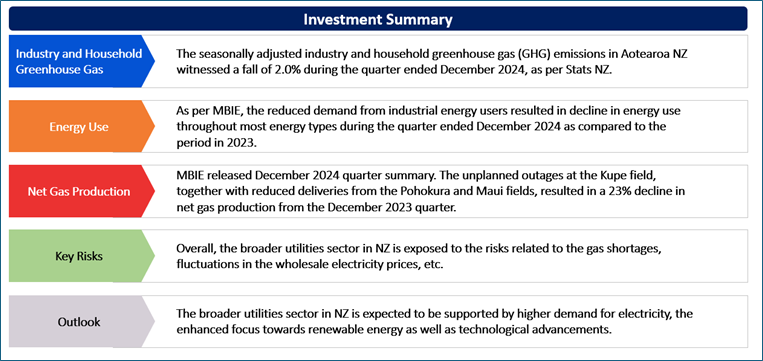
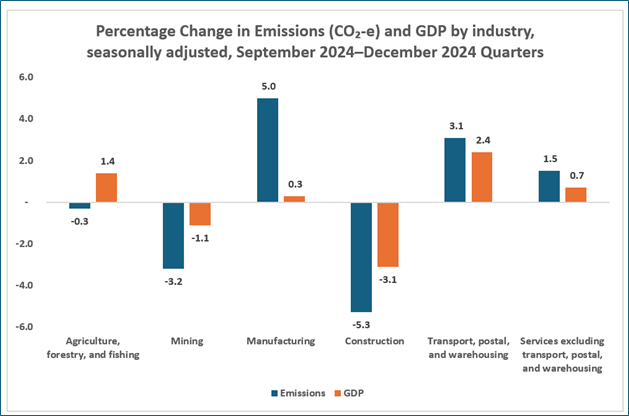
The seasonally adjusted industry and household greenhouse gas (GHG) emissions in Aotearoa NZ witnessed a fall of 2.0% during the quarter ended December 2024, as per Stats NZ. This decline was mainly because of 45% reduction in emissions from electricity, gas, water, and waste services during the December 2024 quarter. As per the release, there were significant fall in the amount of fossil fuels which were utilised for electricity generation in the December 2024 quarter. Therefore, there was an overall decline in carbon dioxide emissions from industry. However, there was an increase in emissions from manufacturing (a rise of 5.0%), and transport, postal, and warehousing (up 3.1%) which partly offset the decline. Notably, both the industries witnessed increases in GDP during the quarter.
Over the quarter ended December 2024, the seasonally adjusted industry emissions (excluding households) witnessed a decline of 2.2%. By comparison, the GDP rose by 0.7%. During the same period, seasonally adjusted household emissions rose by 0.2%.
Exhibit 1: Percentage Change in Emissions (CO₂-e) and GDP By Industry (Seasonally Adjusted) September 2024–December 2024 Quarters
Data Source: This work is owned by the Ministry of Business, Innovation and Employment on behalf of the Crown which are licensed for reuse under the Creative Commons Attribution 4.0 International Licence; Chart Created by Kalkine Group
Increase In Renewable Generation
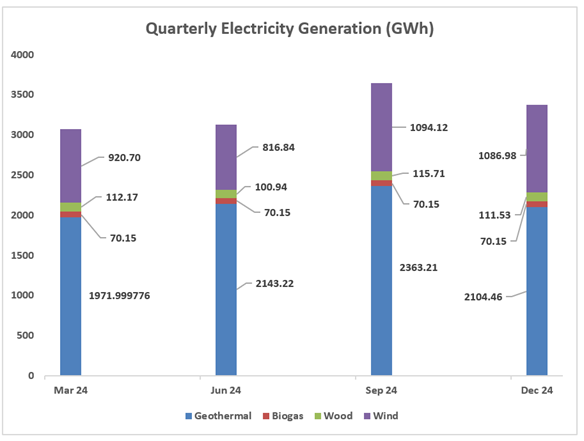
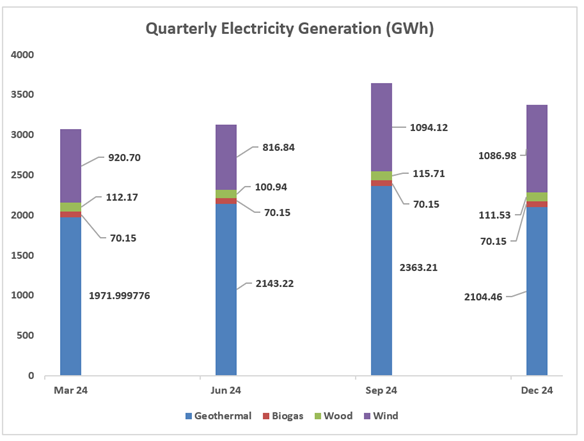
As per MBIE, the reduced demand from industrial energy users resulted in decline in energy use throughout most energy types during the quarter ended December 2024 as compared to the period in 2023. Notably, reduced electricity uses by NZ Aluminium Smelters, after the demand response agreement with Meridian being called on in the September 2024 quarter, resulted in a 9% YoY decline in electricity demand arising from industrial sector. With reduced electricity demand, the total electricity generation declined to the lowest level for quarter ended December since 2016.
Notably, there was an increase of 12.45% in hydro generation as compared to the September 2024 quarter. This was supported by new geothermal as well as solar capacity coming online during the quarter ended December 2024. Considering the lower electricity demand as well as increased generation from renewables, there was a lesser requirement for gas- and coal-fired generation.
Exhibit 2: Quarterly Electricity Generation (GWh)
Data Source: This work is owned by the Ministry of Business, Innovation and Employment on behalf of the Crown which are licensed for reuse under the Creative Commons Attribution 4.0 International Licence; Chart Created by Kalkine Group
Net Gas Production- December 2024 Quarter
MBIE released December 2024 quarter summary, wherein, gas generation declined 29.9% YoY, and coal fired generation declined 64.1%. Therefore, the renewable share of generation rose to 94.3% this quarter, which marks the 4th highest quarter on record, with emissions from electricity generation declining accordingly. Furthermore, the unplanned outages at the Kupe field, together with reduced deliveries from the Pohokura and Maui fields, resulted in a 23% decline in net gas production from the December 2023 quarter. Therefore, net gas production stood at 26.16 PJ for the quarter. For the quarter ended December 2024, there was a continuation in lower gas use, with Methanex’s temporary idling of the manufacturing operations resulting in a 32% YoY decline in total gas use.
Key Risks and Challenges:
As per the recent FEU dated 2nd May, the central bank policy decisions demonstrate increased uncertainty due to the trade tensions impact as well as increasing focus towards avoiding recession rather than worries related to the possible trade-related inflationary pressure. The macroeconomic uncertainty can result in increased volatility in the global commodity prices. Overall, the broader utilities sector in NZ is exposed to the risks related to the gas shortages, fluctuations in the wholesale electricity prices, etc. Also, tougher regulatory requirements, increased competition, and uncertain geopolitical situations can weigh over the utilities sector.
Exhibit 3. Key Risks in Utilities Sector:
Source: - Analysis: Kalkine Group
Outlook:
EECA stated that with energy costs fluctuating and grids evolving, the energy flexibility continues to become a critical advantage for industrial operations. It supports businesses in reducing the costs, enhancing grid stability, and integrating more renewable energy without the disruption in the production. Energy flexibility allows the energy users to adjust electricity use. This can be done in response to grid and network conditions, energy prices, sustainability goals, or the operational demands. EECA stated that effective production scheduling and optimisation can help enhance energy efficiency and flexibility when it comes to industrial processes, resulting in lower costs, improvement in productivity, and better responses to grid conditions. Furthermore, strategies such as digitalisation, advanced controls, and digital twinning can also help in unlocking significant gains in both energy efficiency and flexibility.
There are several benefits of energy flexibility for industrial businesses. The flexibility can help in reducing, delaying, or even eliminating the requirement for major upgrades to the energy supply infrastructure. Such avoided expenses can occur well beyond the site boundary. These can also ‘shared’ with other users. Overall, the broader utilities sector in NZ is expected to be supported by higher demand for electricity, the enhanced focus towards renewable energy as well as technological advancements.
from the sector-specific factors, an analysis on two NZX-listed companies is provided. This report covers their insights, outlook, performance and potential as expected to be delivered in the near to medium term.
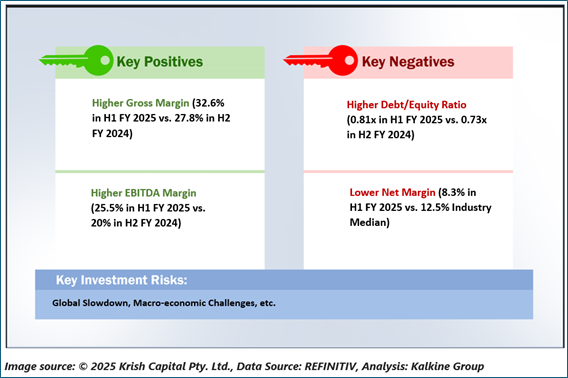
1. Contact Energy Limited (NZX: CEN) (Recommendation: Buy, Potential Upside: Low Double-Digit) (M-Cap: NZD 7.1 Billion, Annual Dividend Yield: 5.89%)
Business Description:
Contact Energy Limited (NZX: CEN) is a New Zealand-based energy generators and retailers.
Outlook:
CEN has made an agreement with Methanex to purchase ~2.8PJ of gas, which would be supplied over an 8-week period. Notably, the additional fuel supply, operating in tandem with the Ahuroa Gas Storage Facility (AGS), is expected to support CEN’s intention to run its Taranaki Combined Cycle gas-fired power station (TCC) along with the gas peaking units at Stratford through winter 2025, as needed. Also, CEN has received clearance from the New Zealand Commerce Commission for the proposed acquisition of Manawa Energy Limited. The combination can help in the NZ energy transition. This would also offer increased ability to make investment in future generation capacity, improving the market security as well as contributing to reduction of wholesale prices long-term.
Technical Overview:
Technical Commentary:
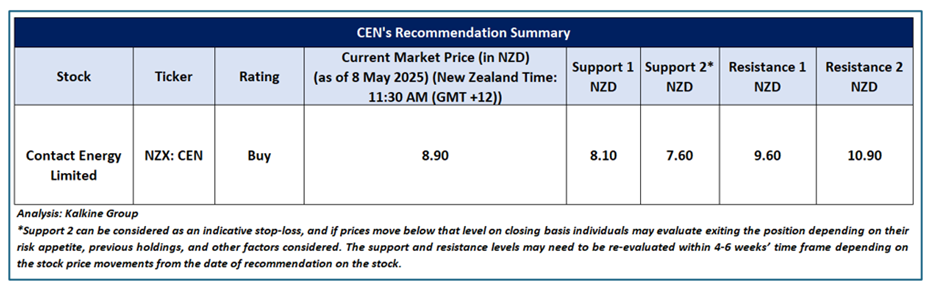
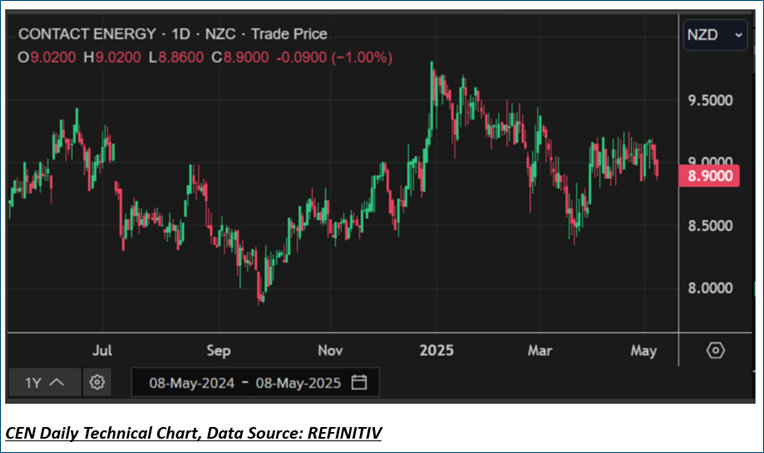
On the daily chart, CEN’s stock prices are forming a trading range characterized by lower highs and higher lows, suggesting that the current sideways period in the stock might continue to persist in the near future. Moreover, the momentum oscillator RSI (14-period) is trading near its midpoint, providing more support to the previous observation. Prices are trading between its previous peak and trough, which might function as resistance and support levels for the stock, respectively. A significant support level for the stock is located at NZD 8.10, while critical resistance level is placed at NZD 9.60
Fundamental Valuation
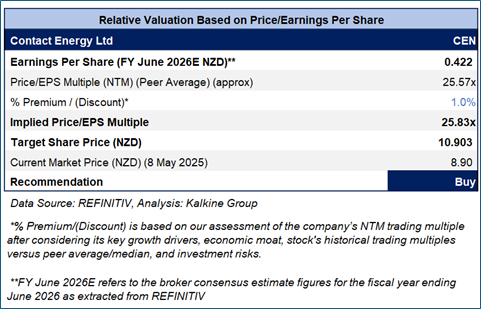
P/E Based Relative Valuation
Stock Recommendation
Considering the facts above, a ‘Buy’ recommendation on the stock has been provided at the current market price of NZD 8.90 per share (New Zealand Time: 11:30 AM (GMT +12)) as on 8th May 2025.
2. Genesis Energy Limited (Recommendation: Hold, Potential Upside: Low Double-Digit) (M-Cap: NZD 2.5 Bn, Annual Dividend Yield: 8.72%)
Business Description:
Genesis Energy Limited (NZX: GNE) is a New Zealand-based diversified energy company.
Outlook:
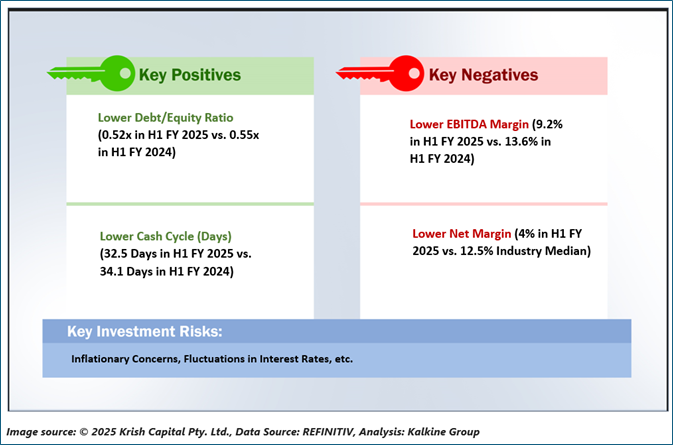
GNE released Q3 FY 2025 performance report, which highlighted that the Huntly portfolio displayed robust flexibility, and the portfolio is now able to flex by around 1,000MW a day in a bid to accommodate wind as well as hydro volatility. Notably, the preparations for winter 2025 was the critical focus during Q3 FY 2025. This is because of below average hydrology and lower national gas supply. The company highlighted that first site works for 1st stage of the company’s battery project at Huntly Power Station were completed successfully. Notably, the construction of first 100 MW/200 MWh stage would be starting shortly. The project timeline is on track.
Technical Overview:
Technical Commentary
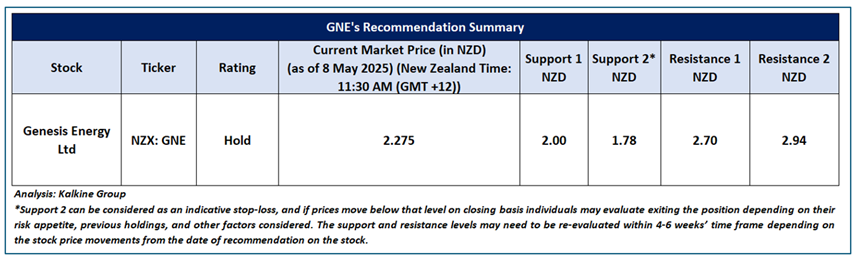
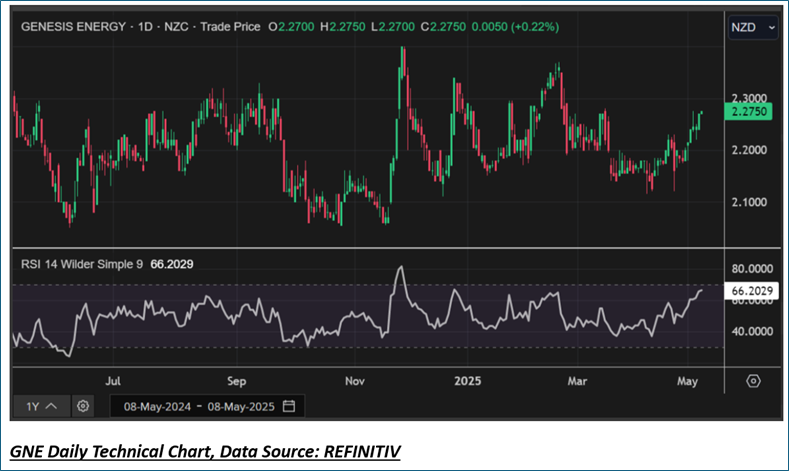
On the daily chart, GNE’s stock prices are forming a trading range characterized by lower highs and higher lows, suggesting that the sideways period in the stock might continue to persist in the near future. Moreover, the momentum oscillator RSI (14-period) is hovering around its midpoint, giving more evidence to the mentioned recommendation. Prices are trading between its previous peak and trough, which might function resistance and support levels for the stock, respectively. A significant support level for the stock is positioned at NZD 2.0, while critical resistance level is located at NZD 2.70
P/E Based Relative Valuation
Stock Recommendation
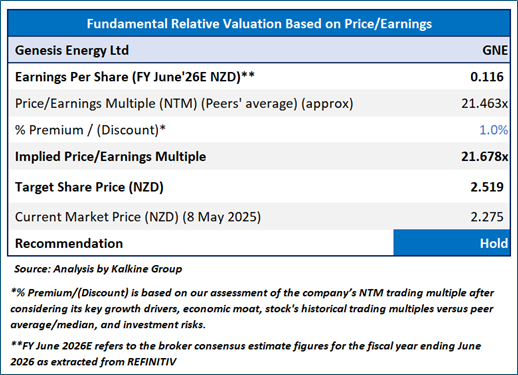
Considering the aforementioned factors, a “Hold” rating is given on the stock at the current market price of NZD 2.275 per share (New Zealand Time: 11:30 AM (GMT +12)) as on 8th May 2025.
Markets are trading in a highly volatile zone currently due to certain macro-economic issues and geopolitical tensions prevailing. Therefore, it is prudent to follow a cautious approach while investing.
Note 1: Past performance is neither an indicator nor a guarantee of future performance.
Note 2: The reference date for all price data, currency, technical indicators, support, and resistance levels is 8 May 2025. The reference data in this report has been partly sourced from REFINITIV.
Note 3: Investment decisions should be made depending on an individual's appetite for upside potential, risks, holding duration, and any previous holdings. An 'Exit' from the stock can be considered if the Target Price mentioned as per the Valuation and or the technical levels provided has been achieved and is subject to the factors discussed above.
Note 4: Kalkine reports are prepared based on the stock prices captured either from REFINITIV or Trading View. Typically, REFINITIV or Trading View may reflect stock prices with a delay which could be a lag of 25-30 minutes. There can be no assurance that future results or events will be consistent with the information provided in the report. The information is subject to change without any prior notice.
Technical Indicators Defined: -
Support: A level at which the stock prices tend to find support if they are falling, and a downtrend may take a pause backed by demand or buying interest. Support 1 refers to the nearby support level for the stock and if the price breaches the level, then Support 2 may act as the crucial support level for the stock.
Resistance: A level at which the stock prices tend to find resistance when they are rising, and an uptrend may take a pause due to profit booking or selling interest. Resistance 1 refers to the nearby resistance level for the stock and if the price surpasses the level, then Resistance 2 may act as the crucial resistance level for the stock.
Stop-loss: It is a level to protect further losses in case of unfavourable movement in the stock prices.
Disclaimer This report has been issued by Kalkine New Zealand Limited (FSP691351) (NZBN:9429047678101) (“Kalkine”). Kalkine is a Financial Advice Provider (“FAP”) and is authorised by a Class 1 Financial Advice Provider Licence issued by Financial Markets Authority (“FMA”) to provide financial advice. Kalkine provides only general financial advice through its research reports following a person becoming a member. The reports contain buy/sell/hold and other recommendations in relation to equity securities, managed funds and other managed investment schemes and other financial advice products. The recommendations and opinions in this report and on Kalkine website do not take into account any of your investment objectives, financial situation or needs. Before you make a decision about whether to acquire a financial product, you should obtain the Product Disclosure Statement from the product issuer. You should consider the appropriateness of advice taking into account your own objectives, financial situation and needs and seek independent financial advice before making any financial decisions. If you act on the advice in the research reports, you may have to pay fees, expenses or other amounts (but not to Kalkine). Further information about the complaints and dispute resolution process, as well as information about Kalkine’s duties are available on Kalkine’s website. Please read our Financial Advice Provider (FAP) disclosure statement and Complaints Handling Guide, which are available on the website.
Past performance is not a reliable indicator of future performance.
 Please wait processing your request...