
 AU
AU
 UK
UK
 CA
CA
 US
US
 IND
IND

 NZ
NZ

Company Overview: Vital Healthcare Property Trust (NZX: VHP) is a New Zealand-based unit trust. The Trust's principal activity is the investment in high quality health sector-related properties. The Trust operates in both Australia and New Zealand. Its tenants are hospital and healthcare operators, providing a range of medical and health services and carry out vital research. The principal objectives of the Trust are to acquire or design, build, manage and enhance properties associated with the healthcare services; build the Trust's capital base; maximize the return to investors, consistent with the objective of the stable, long-term development of the property portfolio; provide investors with access to scale properties in a diversified portfolio across healthcare sectors; maintain a structured, low-risk capital and treasury management policy, and focus on the New Zealand and Australian markets. The Trust is managed by Vital Healthcare Management Limited.
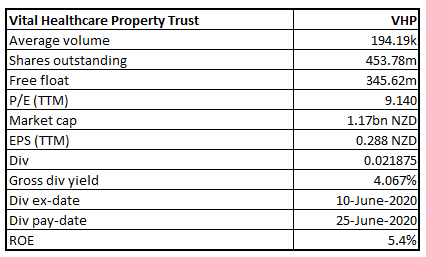
VHP Details
Investment Summary:
Decent CAGR Witnessed in Topline: Vital Healthcare Property Trust (NZX: VHP) is an NZX-listed investment fund that invests in high-quality healthcare-related properties in New Zealand and Australia including private hospitals (~82% of rent), Medical Office Buildings (~11% of rent) and aged care (~7% of rent). It has a market capitalization of ~$1.17 billion as on July 20, 2020.
Looking at the past performance over FY15 to FY19, top-line of the company witnessed a compounded annual growth rate (CAGR) of ~13.26%. The company’s total revenue improved from $67.7 million in FY15 to $111.4 million in FY19.
During the March quarter, the company settled the acquisition of three Australian aged care assets for a total of NZ$59.1 million. The assets are leased to one of Australasia’s oldest and most reputable operators, Bolton Clarke, for a weighted average lease expiry (WALE) of 16.5 years and provide a 6.5% yield on the purchase price. Vital’s six aged care assets (~8% of Vital’s revenue) have performed well despite COVID-19 with no cases reported in any of these facilities. Restrictions on elective surgery and accessing premises have had a significant impact on most of VHP’s tenants. Its focus has been on helping small-medium sized tenants (specialists, consultants, allied health professionals, small retailers, GPs etc.) experiencing up to a 100% loss of revenue with minimal government support and limited ability to recoup their losses in the future. Hospital operators in Australia (~60% of Vital’s revenue) have either agreed, or are in the process of finalising agreements, with each State government to provide facilities and services during the pandemic. In return, operators are expected to recover a substantial portion of their costs from Australian governments. The company recently highlighted that its results for the year ended 30 June 2020 will be released on 10 August 2020.
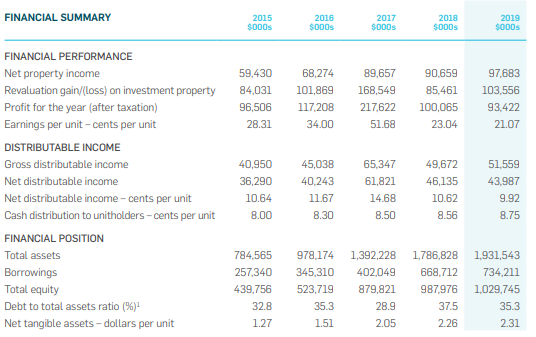
Historical Performance (Source: Company Reports)
Top 10 Shareholders: The top 10 shareholders have been highlighted in the table below:
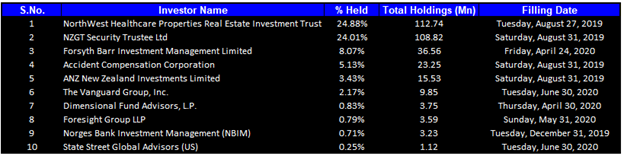
Top 10 Shareholders (Source: Refinitiv (Thomson Reuters))
A Quick Look at Key Metrics: Its gross margin and net margin for H1FY20 stood at 87.4% and 99.6%, better than the industry median of 68.0% and 60.5%, respectively, implying stronger operating efficiency of the company. RoE for H1FY20 stood at 5.4%, better than the industry median of 1.3%, implying that the company generated better returns for its shareholders than its peer group.
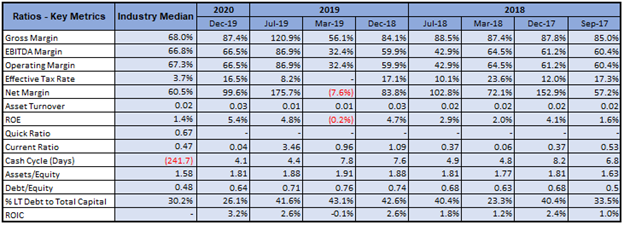
Key Metrics (Source: Refinitiv (Thomson Reuters))
High Portfolio Occupancy in Q3FY20: During the third quarter of FY20 (ended 31 March 2020), portfolio occupancy remained high at 99.4%, slightly down from 99.9% at 31 December 2019, reflecting temporary relocations to accommodate the Epworth Eastern East Tower development. Due to rent review in Australian portfolio, the company recorded revaluation gains of NZ$8 million. Revaluations, acquisitions and developments have caused VHP’s portfolio being valued at NZ$2 billion.
Net property income for the nine months ended 31 March 2020 grew by 2.1% from the prior corresponding period (on the same currency basis).
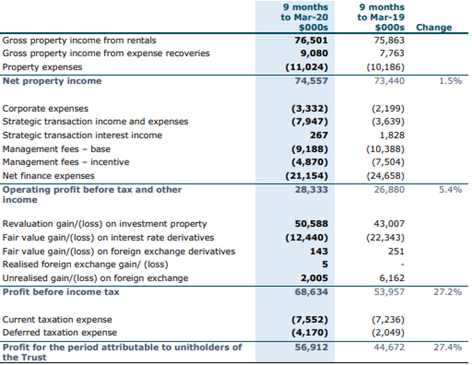
Key Data (Source: Company Reports)
Company Outlook: Towards the end of the quarter, VHP's major development projects in New Zealand were impacted by the overall lockdown of construction for non-essential projects in accordance with Government Guidelines. However, projects in Australia continued to be progressed, including at Epworth Eastern, rather at lower levels of efficiency given COVID-19 related protocols. The exception being small scale projects where it has been deemed prudent to suspend works. Currently, the company anticipates that this may result in delays in VHP's income (rather than a loss of income).
Healthcare Sector Outlook: As per Centers for Medicare & Medicaid Services, National health spending is anticipated to witness a growth at an average annual rate of 5.4% for 2019-28 and, by 2028, it could touch $6.2 trillion mark. Since national health expenditures might grow 1.1 percentage points faster than the gross domestic product per year on an average over the time span of 2019–28, the health share of the economy could rise from 17.7% in 2018 to 19.7% in 2028.
Key Risks: The group’s activities are exposed primarily to credit risk, market risk (interest rate risk and foreign exchange risk) and liquidity risk. Its overall risk management programme focuses on the unpredictability of financial markets and seeks to minimise potential adverse effects on the group’s financial performance. It uses financial derivatives to manage market risks.
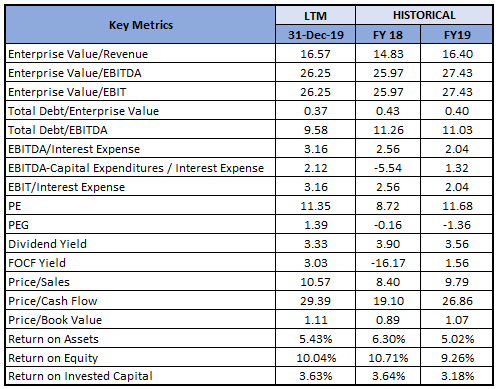
Key Valuation Metrics (Source: Refinitiv (Thomson Reuters))
Valuation Methodology: EV/Sales Multiple Based Relative Valuation (Illustrative)
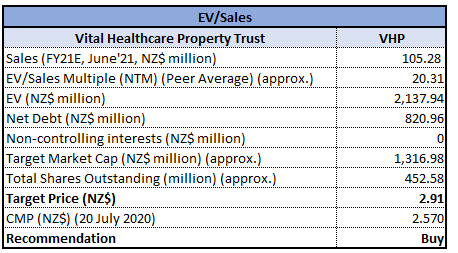
EV/Sales Multiple Based Relative Valuation (Source: Refinitiv (Thomson Reuters))
Note: All forecasted figures and peers have been taken from Thomson Reuters, NTM-Next Twelve Months
Technical Overview:
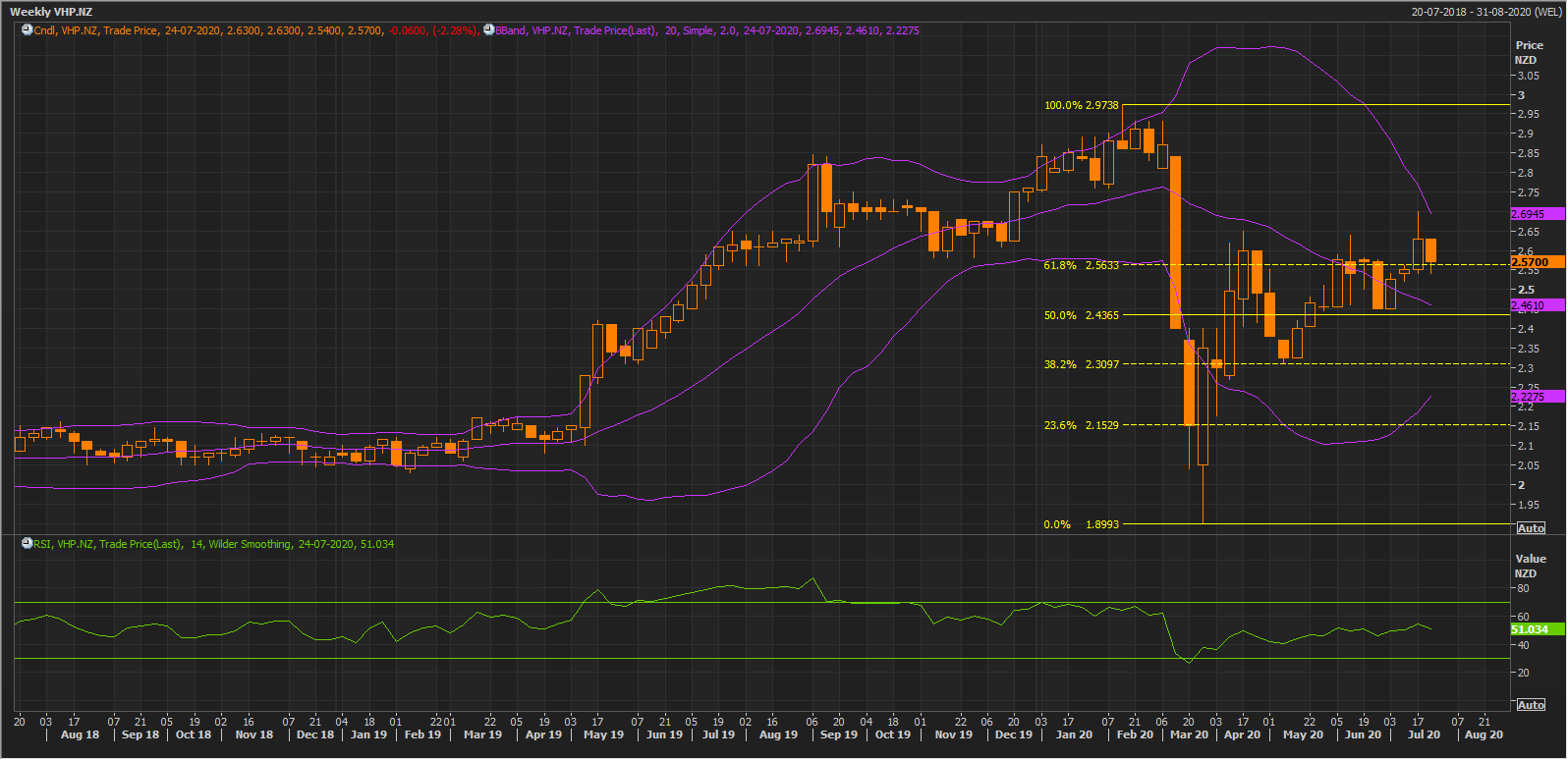
Weekly Chart –
Source: Refinitiv (Thomson Reuters)
Note: Purple colour lines are Bollinger Bands with upper band suggesting overbought status while lower band oversold status, and yellow lines are Fibonacci retracement lines which measure price rebound and backtrack.
The stock has given close at $2.57 at 61.8% retracement level on the first day of the on-going week. Although, the closing is softer as against the previous week close, yet it is still towards confirmation that uptrend for the stock is intact and correction that has taken place is a minor one. Technical indicator RSI with 51 reading, suggests strong bullish momentum for the stock.
Going forward, the stock may have resistance around $2.91 which has thrice been tested in the recent past while support could around $2.46, as provided by 20 periods SMA.
Stock Recommendation: The company’s balance sheet has recently been strengthened by NZ$107 million of additional debt facilities and term extensions for near-term debt expiries. These enhancements to Vital’s financial flexibility and liquidity mean that Vital Healthcare Property Trust now has over NZ$243 million in undrawn debt facilities available from its long-term financiers and no debt expiring before March 2021 and only NZ$128.5 million expiring before September 2021.
Considering the aforesaid facts, recent updates and Q3FY20 results, we have valued the stock using a relative valuation method, i.e., EV/Sales multiple (on an illustrative basis), and we have arrived at a target price of lower double-digit growth (in % terms).
Hence, we give a “Buy” recommendation on the stock at the current market price of NZ$2.570 per share, down by 2.28% on July 20, 2020.
.png)
VHP Daily Technical Chart (Source: Refinitiv (Thomson Reuters))
Disclaimer
Kalkine New Zealand Limited is authorised to provide class advice only. The information on this site does not take into account any of your investment objectives, financial situation or needs. Before you make a decision about whether to acquire a financial product, you should obtain the Product Disclosure Statement from the product issuer. You should consider the appropriateness of advice taking into account your own objectives, financial situation and needs and seek independent financial advice before making any financial decisions.
Past performance is not a reliable indicator of future performance.
 Please wait processing your request...