
 AU
AU
 UK
UK
 CA
CA
 US
US
 IND
IND

 NZ
NZ

New Zealand possesses internationally recognised strengths with regards to the health research. Considering these strengths, the country has an ability to contribute to international scientific endeavour, address local problems as well as make the best use of knowledge generated offshore. The capacity that New Zealand needs to generate innovative ideas, tap into the global science and effectively translate research findings to policy and practice in the health, disability, social and science sectors is backed by the dedicated investment towards health research. History has shown the developing importance for healthcare space - Budget 2016 witnessed largest-ever increase in the funding towards health research in New Zealand.
Healthcare has emerged as one of the largest sectors in New Zealand in terms of employment and revenue. The sector is comprising hospitals, medical devices, clinical trials, medical tourism, medical equipment and health insurance. There are around 40 public hospitals and many private hospitals around New Zealand.
The healthcare and social support services sector employs one in 11 workers, or around 200,000 full-time equivalents (FTEs).
In a nutshell:
S&P/NZX All Healthcare Sector v/s S&P/NZX50
The global financial markets are going through a very tough time as a result of COVID-19 outbreak. Several fiscal and monetary packages have been rolled out to combat the impact of this deadly disease. While the impact has been felt across the sectors, there are some sectors which have managed to limit their downtrend. S&P/NZX50 fell by 10.77% while S&P/NZX All Health Care have outperformed the broader index as it fell marginally by 2.49% in the span of three months.
As on April 16, 2020, S&P/NZX50 has a market capitalisation of around $243.84 billion out of which NZ$29.92 billion is made up by S&P/NZX All Healthcare Index.

Performance (Source: Thomson Reuters)
Overview of Demand and Barriers
The aging population of NZ influences public healthcare expenditure plans and the people expect access to the advanced equipment to manage chronic diseases. Notably, these diseases account for approximately 80% of the healthcare use. New innovative technologies are crucial to meet the objective. The US companies which are specializing in the healthcare products possess a strong reputation in NZ on the basis of performance, cost and reliability.
NZ happens to be an open market and there are few (if any) barriers to the US companies.
The country’s health care system is strong, and the strengths include:
The contribution of healthcare and social support services sector in the growth of GDP has been stronger than employment growth, indicating some productivity gains.
By 2014, the sector accounted for 6.6% of total GDP, up from 5.6% in 2000. At a sub-sector level, the strongest productivity gains have been in hospitals, up 21% in the 14 years to 2014, followed by senior care services, which supports the view earlier that senior care services are becoming more efficient as they scale up.
National Health Expenditure Projections: What Lies Ahead?
As per Centers for Medicare & Medicaid Services, National health spending is anticipated to witness a growth at average annual rate of 5.4% for 2019-28 and, by 2028, it could touch $6.2 trillion mark. Since national health expenditures might grow 1.1 percentage points faster than the gross domestic product per year on an average over the time span of 2019–28, health share of the economy could rise from 17.7% in 2018 to 19.7% in 2028.
Let us now discuss the key trends:
Structure of Health and Disability Sector in NZ
Health and disability services in New Zealand are delivered by the complex network of organisations and people. The Minister of Health (along with Cabinet and government) develops policy for health and disability sector and also provides leadership.
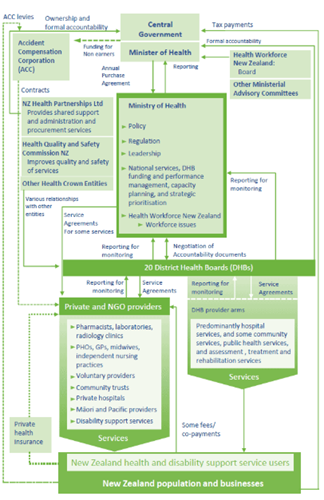
Working of Health Sector in NZ (Source: Ministry of Health)
The Ministry of Health has range of roles in the system apart from being the principal advisor and support to Minister. It finances a range of national services, including disability support and public health services, and has numerous regulatory functions. Notably, accident services are financed by Accident Compensation Corporation (or ACC).
A Glimpse of Funding Structure
The health and disability system in New Zealand is primarily funded from general taxation. The financing of health system is mainly backed by Vote Health, which totalled just more than $16.142 billion in 2016/17. However, other significant sources of financing consist the Accident Compensation Corporation, other government agencies, local government, and private sources like insurance and out-of-pocket payments.
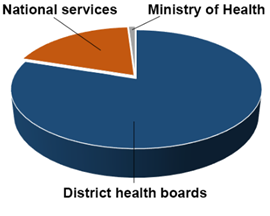
Source: Ministry of Health
The Ministry of Health allocates over three-quarters of public funds it manages through Vote Health to DHBs (or District Health Boards), who utilise this financing to plan, purchase and provide health services, including the public hospitals and majority of public health services, within their areas. The government gets money for the health system with the help of taxes, ACC levies and premiums. Every year, government decides how much of the public funds would be spent towards healthcare. This is what is termed as Vote: Health. As per The Treasury, Vote Health ($19,871 million in 2019/20) happens to be a large public investment towards wellbeing of the people of NZ and their families.
How Tech Has Been Revolutionising Health Systems in NZ
The technology world has been advancing rapidly and it is affecting many aspects of the day-to-day lives like the way we shop, bank and travel. As a matter of fact, health services are being transformed with the help of emerging technologies.
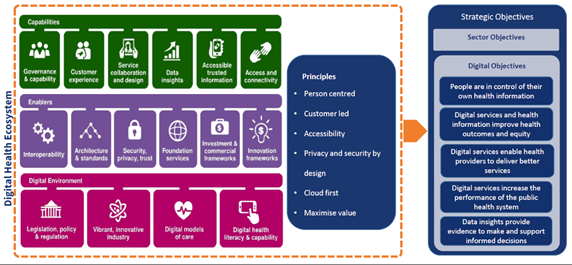
Digital Health Ecosystem (Source: Ministry of Health)
The strategic framework consists of aspirational goals and enabling priorities, guidelines and resources that would be evolving over the span of time in response to changing digital world in which the people of New Zealand live in.
Opportunities for Robotics in Healthcare
There are significant opportunities for robotics in healthcare domain which could help the broader healthcare sector in NZ to witness significant growth moving forward.
Some of the companies in NZ have been using robotics like Auckland’s Mercy Ascot has been utilising Robotic Process Automation to process all ACC invoicing as well as receipting for Mercy Radiology. From the past few years, Carterton Pharmacy is utilising dispensing robots to help with managing the medications in Age-Related residential care facilities and in the community for customers benefiting from this sort of service.
Assessing Contribution of Biotechnology in Healthcare
BiotechNZ has been supporting organisations in order to find out the state and future opportunities for biotechnology to contribute towards NZ’s economic growth. The Executive Director of BiotechNZ named Dr Zahra Champion stated that the focus is towards raising the profile of biotech in NZ and globally, so that the country can be seen not just a tourist destination or known for primary produce, but also for the cutting-edge biotech developments.
The strength of NZ’s medical science, R&D, and biotech ecosystems give perfect base from which to grow the sector. The successful medical cannabis production would need to leverage medical and technical knowhow including biotechnology as well as latest digital production processes.
Aged Care Business: How Overall Occupancy Rate Has Trended?
There are four types of full-time residential care and these can be classified as rest homes, long-stay hospitals, dementia units and psycho-geriatric units. The New Zealand Aged Care Association (or NZACA) has released aged residential care occupancy for the quarter ended December 31, 2019. Following were the main highlights:
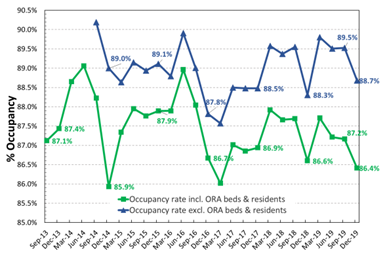
Overall Occupancy Rate (Source: NZACA)
Demand in Aged Care: What Drives It?
The population of New Zealand, like any other developed nation, is ageing. The number of people aged over 65 is expected to be double in the next 25 years.
Can NZ’s Healthcare Sector Stay Afloat Amidst COVID-19 Pandemic?
As the investors are aware, the COVID-19 outbreak has been devastating the global financial markets and it has actually weighed over the performances of several sectors. In NZ, some of the sectors which have witnessed a hit include tourism and hospitality.
However, while New Zealanders are still on their toes as to what could be done amidst COVID-19 fears, healthcare sector in the country can be one of the sectors which could provide some hope. In order to combat COVID-19 impact on the economy, the government of New Zealand has announced a spending package of NZ$12.1 billion, equivalent to 4% of GDP. The package is one of the largest on the per capita basis. The stimulus includes bolstering of healthcare sector.
As COVID-19 positive cases mount, the demand for ventilators and other equipment and aged care and retirement villages has surged across the world providing for great opportunities to healthcare sectors to capitalize on. The government of New Zealand has placed aged care centres and retirement villages under essential service and, thus, healthcare companies dealing in these products will remain operational.
What are the measures adopted by NZ government to withstand this global pandemic? Let us have a look!
The above bunch of deployments could significantly strengthen NZ’s ability to contain COVID-19. Moving forward, these measures together are likely to bear fruit.
Growth Drivers and Opportunities for Healthcare Sector in New Zealand
The health system in NZ is strong and is connected to the changing world. Since people move around the world, technology markets are becoming global and internet spreads knowledge as well as cultural practices, NZ is connected with the rest of the world even though it is geographically distant from it. There are ample of opportunities for the NZ healthcare which could help the broader sector moving forward. Let’s have a glimpse:
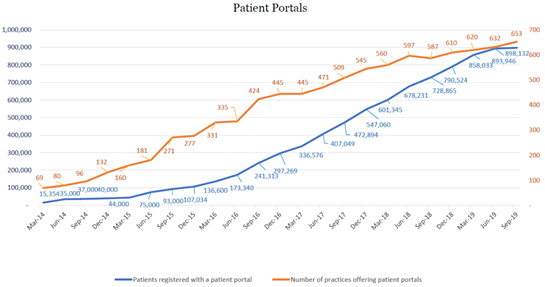
Patient Portal (Source: Ministry of Health)
Let’s have a look at the leading companies listed on NZX in healthcare sector
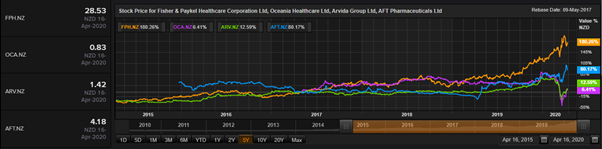
Comparative Price Chart (Source: Thomson Reuters)
1. NZX: FPH (Fisher & Paykel Healthcare Corporation Limited) (Recommendation: Buy, Potential Upside: Lower single digit to lower double digit)
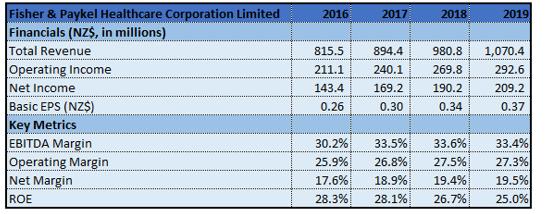
Key Metrics (Source: Thomson Reuters)
Outlook: The company’s performance, in terms of top line and bottom line, has improved between FY 2016- FY 2019. The growth in top line reflects that FPH is possessing decent capabilities to garner revenues. The company has also benefited from stronger sales in Homecare product group and a weakening of the NZ dollar. Earlier, in February, the company provided guidance based on an NZ: US exchange rate of 64 cents. Earlier, operating revenue was expected to be $1.2 billion and net profit after tax to be approximately $260 million to $270 million. However, the NZ dollar has weakened against most currencies. After expecting an NZ: US exchange rate of about 61 cents and an NZ: EU exchange rate of about 55 cents for the rest of the financial year, the company expects full-year operating revenue to be approximately $1.24 billion and net profit after tax to be within the range of approximately $275 million to $280 million.
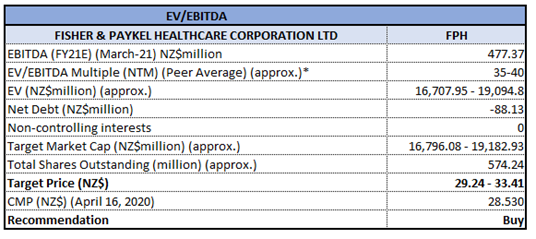
EV/EBITDA Based Relative Valuation (Illustrative) (Source: Thomson Reuters)
*Industry multiple figure has been adjusted. The facts like FPH’s suppliers of raw materials are based in China and the fluctuations in the currency markets have been factored in.
Valuation:
The company’s respiratory humidifiers and consumables are directly involved in treating patients with coronavirus. There is an increase in demand globally and FPH has increased its manufacturing output. With respect to valuations, we have applied EV/EBITDA based relative valuation (on an illustrative basis) and the target price reflects that the stock price might witness an increase of lower single-digit to lower double-digit (in % terms). The company has also upgraded its guidance which could attract the attention of market players moving forward is an adjusted value.
2. NZX: OCA (Oceania Healthcare Limited) (Recommendation: Buy, Potential Upside: Lower double digit)
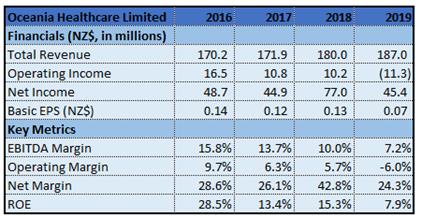
Outlook: The company has improved its revenues performance between FY 2016- FY 2019. The company is well-prepared to manage an outbreak of COVID-19. It has activated a pandemic plan and response team and has implemented several steps to reduce the risk of COVID-19 entering any one of its aged care centres or retirement villages. New Zealand’s population is continuing to age, and the increasing needs of the elderly to access residential care will not change, irrespective of the current pandemic. The company has not observed any material impact on retirement village unit sales or admissions to residential aged care centres.
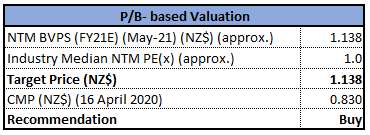
P/BV Based Relative Valuation (Illustrative) (Source: Thomson Reuters)
Valuation:
The company has stated that New Zealand is well recognised as it possesses a strong, integrated public health system, and aged care residential services happen to be an integral part. Moreover, the Ministry of Health has stated that, in the event of an outbreak, aged care providers would be having access to national stock of infection control materials as well as pharmaceuticals. Coming to valuations, we have applied P/B based relative valuation (on an illustrative basis) and the target price reflects an increase of lower double-digit (in % terms).
3. NZX: ARV (Arvida Group Limited) (Recommendation: Buy, Potential Upside: Higher single digit)
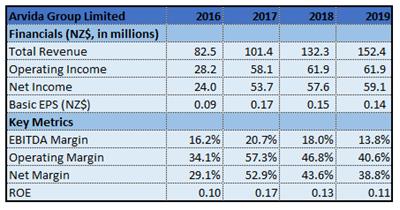
Key Metrics (Source: Thomson Reuters)
Outlook: Between FY 2016- FY 2019, its revenues and net income has witnessed an improvement which could help it in gaining traction moving forward. All the villages and aged care centres are classified as an essential service and will continue to operate. Construction activities at all sites have been safely and securely closed, with only essential weather tightness or health and safety-related works to be completed. A total of 209 new units have been delivered in the FY20 financial year, slightly ahead of market guidance. Whilst the sale of occupation rights in the second half of March has been impacted, the company expects just under 400 settlements to be completed in FY20.
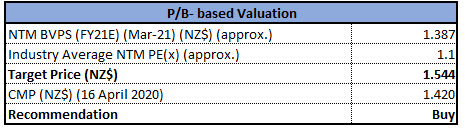
P/BV Based Relative Valuation (Illustrative) (Source: Thomson Reuters)
Valuation:
The company has recently confirmed that legal documentation has been executed to effect refinancing of the bank debt facility. Notably, the effective date of the refinance was April 6, 2020. ARV happens to be in the robust financial position and has current drawn debt of $313 million and $162 million of the undrawn credit. We have applied P/B based relative valuation (on an illustrative basis) and the target price reflects an increase of lower double digit (in % terms).
4. NZX: AFT (AFT Pharmaceuticals Limited) (Recommendation: Watch)
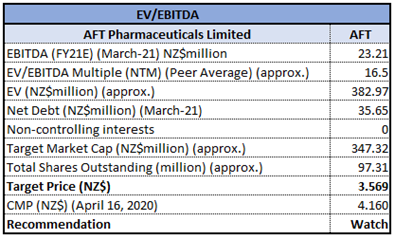
EV/EBITDA Based Relative Valuation (Illustrative) (Source: Thomson Reuters)
Valuation:
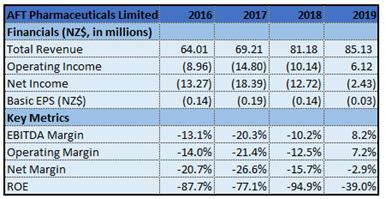
The company has recently made an announcement that it has concluded an agreement with Bank of New Zealand (or BNZ) to refinance the current 6-year CRG loan facility maturing on March 31, 2020. It was stated that refinancing gives AFT funding certainty and is expected to result in the finance cost savings amounting to $2 million per year over three-year term of the facility. The stock of the company is trading closer to its 52-week higher levels and, therefore, we advise the investors to wait for better entry levels. Also, the investors should watch for some more growth catalysts. Coming to the valuations, we have applied EV/EBITDA based relative valuation (on an illustrative basis) and there are expectations that the stock price might witness a correction of lower double-digit (in % terms) moving forward.
Disclaimer
Kalkine New Zealand Limited is authorised to provide class advice only. The information on this site does not take into account any of your investment objectives, financial situation or needs. Before you make a decision about whether to acquire a financial product, you should obtain the Product Disclosure Statement from the product issuer. You should consider the appropriateness of advice taking into account your own objectives, financial situation and needs and seek independent financial advice before making any financial decisions.
Past performance is not a reliable indicator of future performance.
 Please wait processing your request...