
 AU
AU
 UK
UK
 CA
CA
 US
US
 IND
IND

 NZ
NZ

Company Overview: Precinct Properties New Zealand Limited is engaged in investing prime central business district (CBD) properties in New Zealand. The Company owns inner-city business space in Auckland and Wellington.
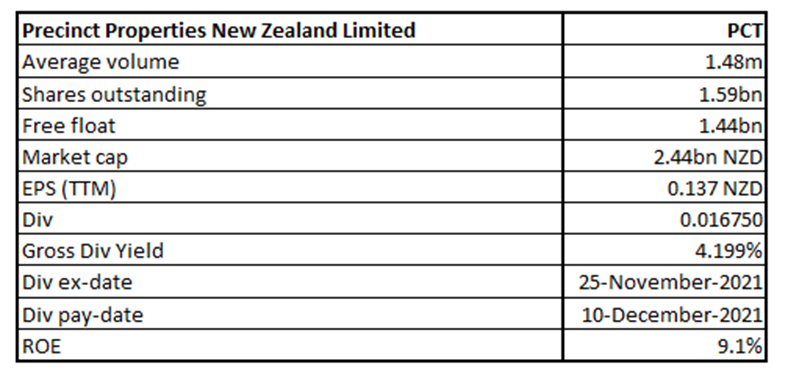
PCT Details
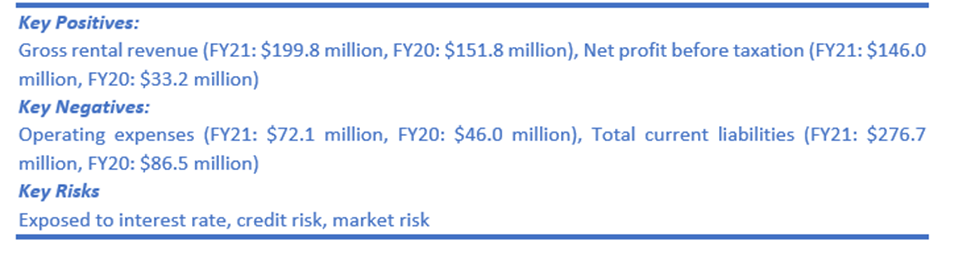
Precinct Properties New Zealand Limited (NZX: PCT) is the largest owner and developer of premium inner-city business space in Auckland and Wellington
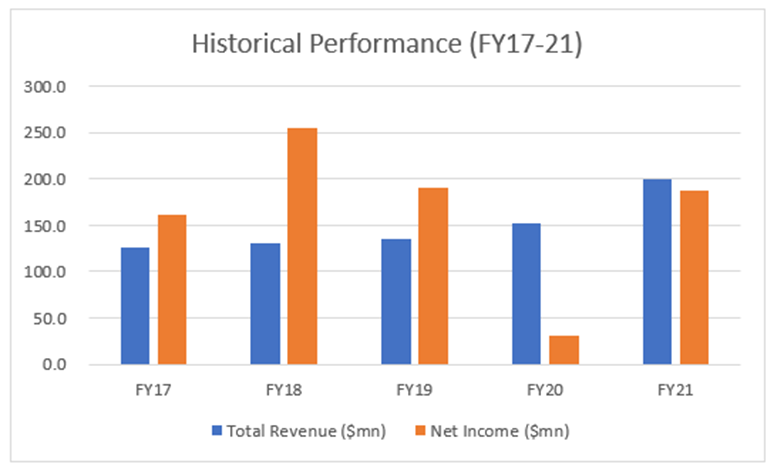
Looking at the past performance, PCT’s topline and bottomline for FY17-21 grew with a compounded annual growth rate (CAGR) of 12.17% and 3.73%, respectively. Its total revenue for FY21 stood at $199.8 million, as compared to $126.2 million in FY17. Its net income for FY21 stood at $187.7 million, as compared to $162.1 million in FY17.
Exhibit 1: Historical Performance
Source: Company Reports, Analysis By Kalkine Group
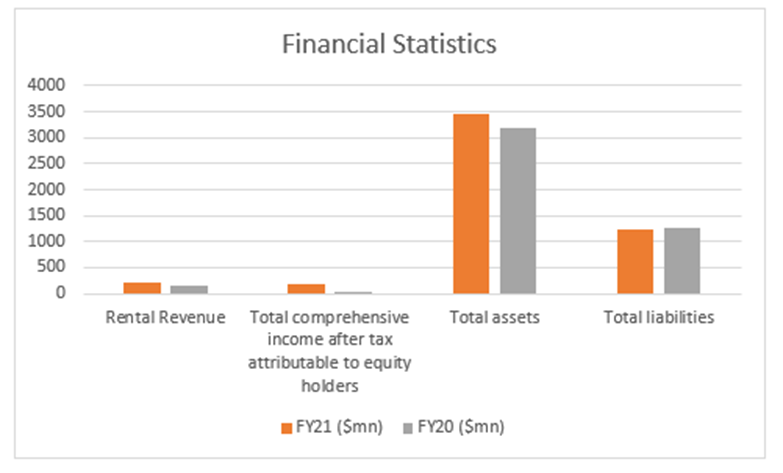
Result Performance (FY21 Ended 30 June 2021)
Exhibit 2: Financial Statistics
Source: Company Reports, Analysis By Kalkine Group
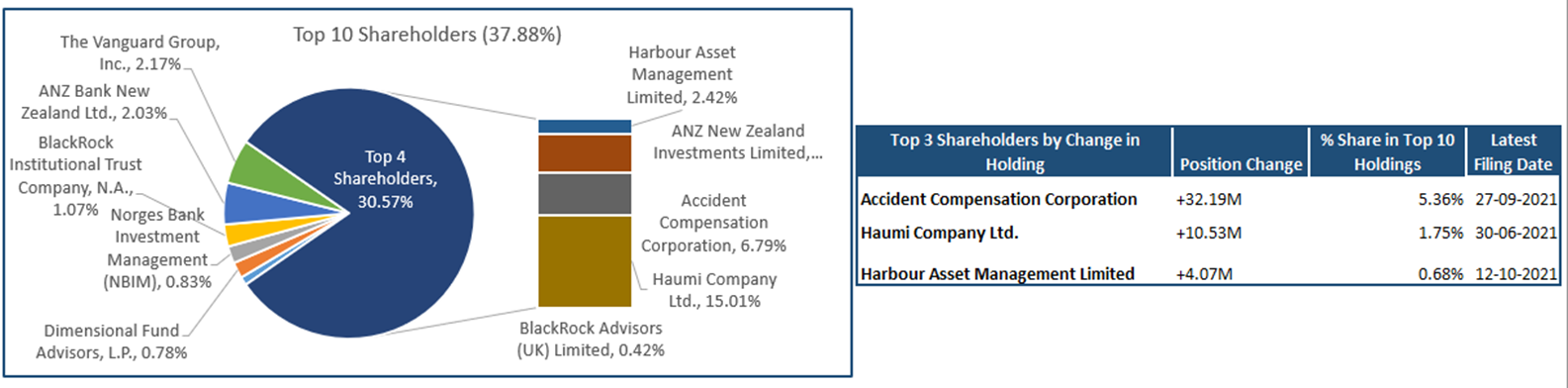
Top 10 Shareholders: The top 10 shareholders have been highlighted in the table, which together forms around 37.88% of the total shareholding. Haumi Company Ltd. and Accident Compensation Corporation are holding maximum stake in the company at 15.01% and 6.79%, respectively, as provided in the table below:
Exhibit 3: Top 10 Shareholders
Source: Company Reports, Analysis By Kalkine Group
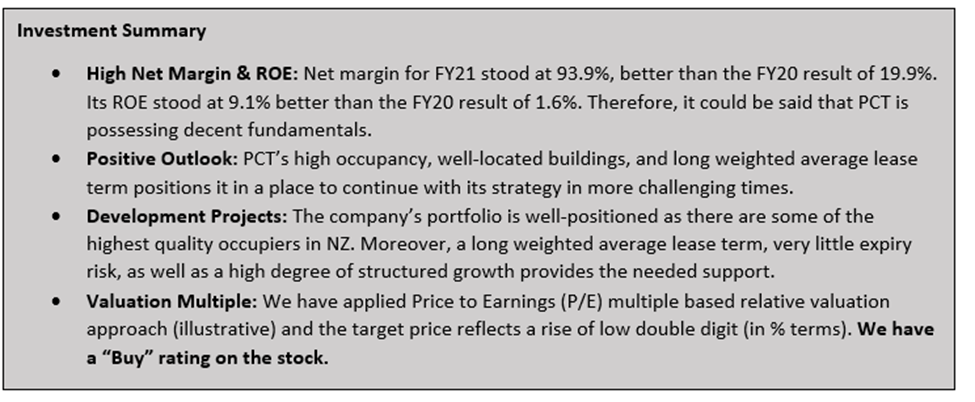
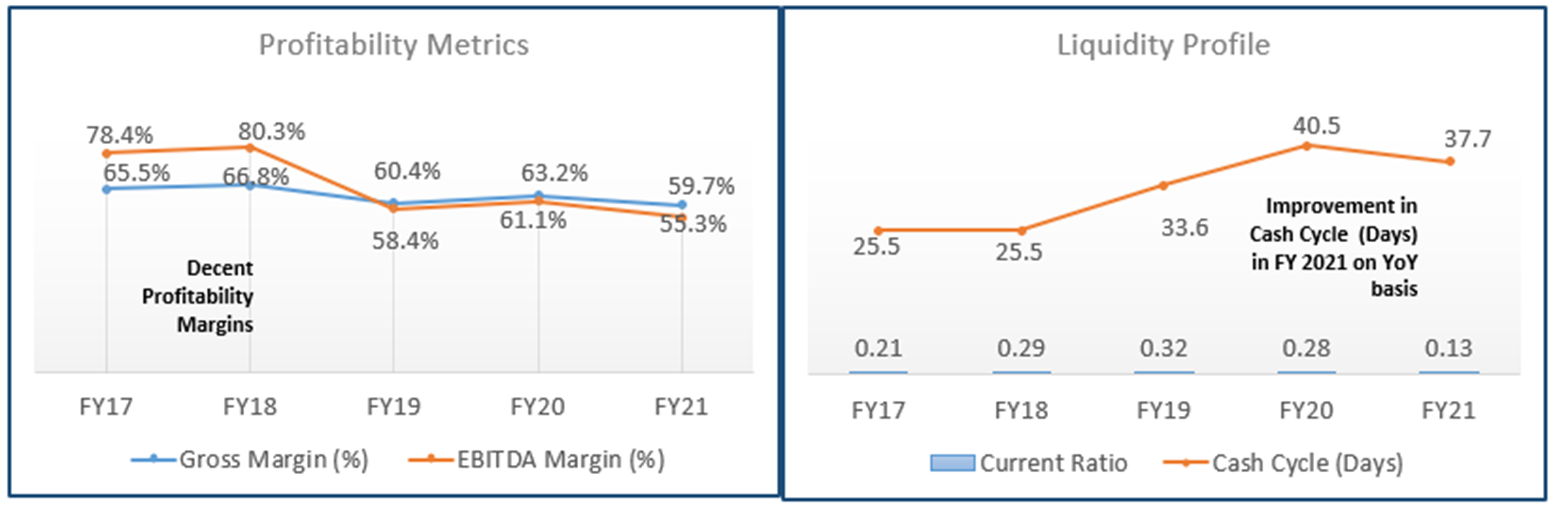
A Quick Look at Key Metrics: The company’s net margin for FY21 stood at 93.9%, better than the industry median of 49.8%. ROE for FY21 stood at 9.1%, better than the industry median of 6.1%, implying that the company generated better return for its shareholders than its peer group.
Exhibit 4: Key Metrics
Source: Company Reports, Analysis By Kalkine Group
Outlook:
The company’s portfolio is well positioned benefiting from some of the highest quality occupiers in New Zealand, a long weighted average lease term, very little expiry risk, and a high degree of structured growth. It completed $1.5 billion of development projects over the past 6 years. FY22 dividend has been anticipated at around 6.70 cps, which is 3.1% year-on-year growth in total cash dividends to shareholders.
Key Risks:
The company is susceptible to certain risks such as Market risk which arises from adverse changes in the New Zealand economic environment, regulatory environment and the broader investment market. The risk of being unable to continue to obtain insurance cover, or following an event, not having sufficient cover in place to repay creditors. This could result in significant business interruption. Climate risk includes physical risks (acute and chronic) and transitional risks.
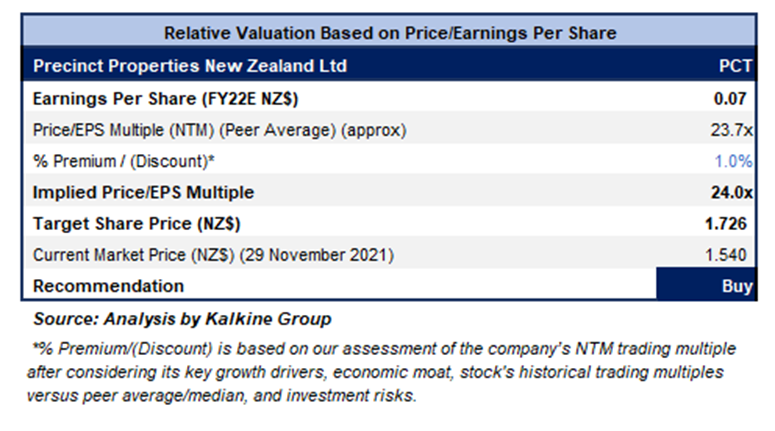
Valuation Methodology: Price to Earnings Multiple Based Relative Valuation (Illustrative)
Technical Overview:
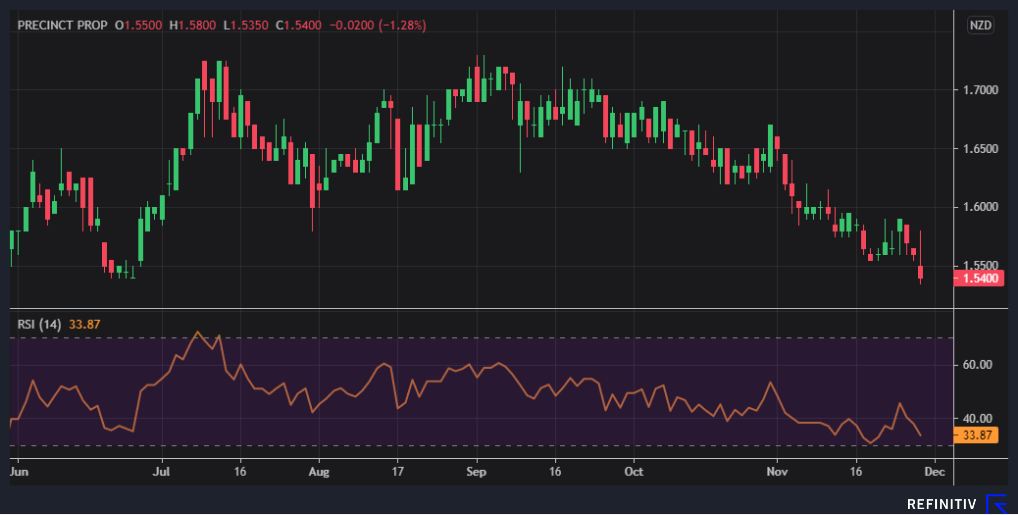
Chart:
Source: REFINITIV
Note: Orange Color Line Reflects RSI (14-Period)
Stock Recommendation:
The company’s stock declined by ~9.4% in 3 months and ~11.4% in 1 year. It has made a 52-week low and high of $1.54 and $1.79, respectively.
The stock has been valued using Price/Earnings Per Share- based relative valuation (on an illustrative basis) and the target price so arrived reflects a rise of low double-digit (in % terms). A slight premium has been applied to Price/Earnings Per Share Multiple (NTM) (Peer Average) considering decent outlook as well as high net margin & ROE.
Considering the aforesaid facts, and current trading levels, we give a “Buy” recommendation on the stock at the current market price of $1.54 per share, down by 1.28% on 29th November 2021.
Note 1: The reference data in this report has been partly sourced from REFINITIV.
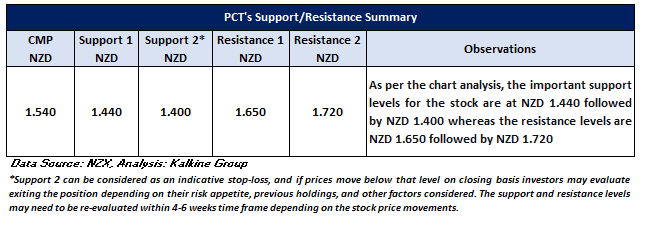
Note 2: Investment decisions should be made depending on the investors’ appetite on upside potential, risks, holding duration, and any previous holdings. Investors can consider exiting from the stock if the Target Price mentioned as per the analysis has been achieved and subject to the factors discussed above alongside support levels provided.
Technical Indicators Defined: -
Support: A level where-in the stock prices tend to find support if they are falling, and downtrend may take a pause backed by demand or buying interest.
Resistance: A level where-in the stock prices tend to find resistance when they are rising, and uptrend may take a pause due to profit booking or selling interest.
Stop-loss: It is a level to protect further losses in case of unfavourable movement in the stock prices.
Disclaimer
Kalkine New Zealand Limited is authorised to provide general advice only. The information on this website does not take into account any of your investment objectives, financial situation or needs. Before you make a decision about whether to acquire a financial product, you should obtain the Product Disclosure Statement from the product issuer. You should consider the appropriateness of advice taking into account your own objectives, financial situation and needs and seek independent financial advice before making any financial decisions.
Past performance is not a reliable indicator of future performance.
 Please wait processing your request...