
 AU
AU
 UK
UK
 CA
CA
 US
US
 IND
IND

 NZ
NZ

I. Sector Landscape and Outlook
As per the Government Policy Statement on land transport (GPS), the government has strategized four key challenges: preventing deaths and serious injuries, decarbonization, better transport choices and improving freight connections. Prioritizing these elements would accelerate growth in infrastructure and related sectors, thereby resulting in a buoyant economy. Further, the government has announced a crown infrastructure investment of $57.3 billion for the next four years. The government has already recorded $42 billion of infrastructure investment in progress for roads and rail, schools and hospitals, housing and energy generation.
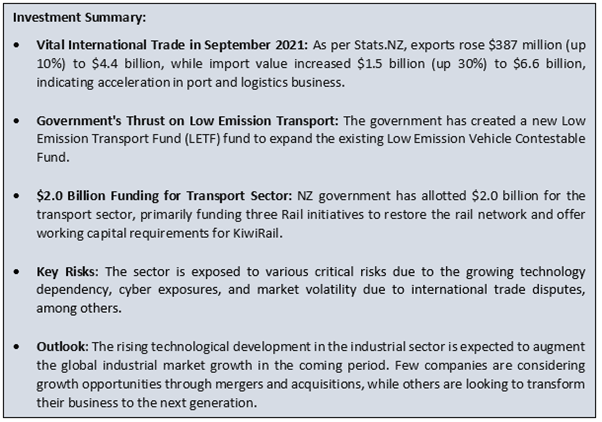
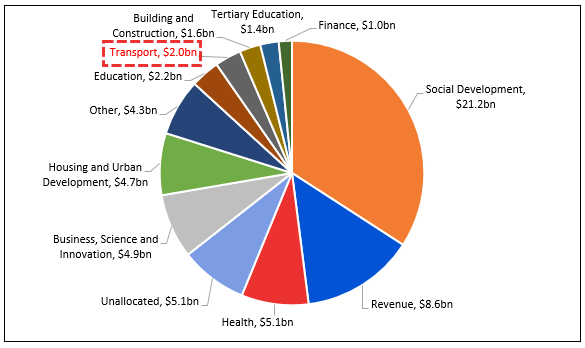
As per the ‘Wellbeing Budget 2021, released by Treasury.govt.nz, the government has allotted $2.0 billion for the Transport sector. The funding is for three Rail initiatives to purchase 60 new locomotives and 1,900 new wagons and provide support to the National Land Transport Fund. This would restore the rail network and offer working capital requirements for KiwiRail to ensure the maintenance of core freight, tourism, property, and ICT assets. In addition, the government has parked $1.3 billion as an operating and capital fund.
Exhibit 1: COVID-19 Response and Recovery Fund – Wellbeing Budget 2021
Data Source: This work is based on/includes treasury.govt.nz data which are licensed by Treasury on behalf of the Crown for reuse under the Creative Commons Attribution 4.0 International Licence; Chart Created by Kalkine Group
International Trade Continues to Accelerate in September 2021
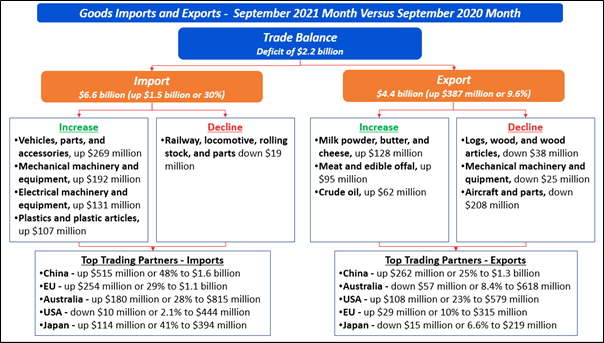
As per Stats.NZ, the goods exported by NZ stood at $387 million, up 10%, to $4.4 billion, while the goods imported increased $1.5 billion (up 30%) to $6.6 billion. Therefore, the September 2021 monthly trade balance was a deficit of $2.2 billion. Broadly, China continued to trade firmly on top of other trade partners. As per the New Zealand Foreign Affairs & Trade, China is NZs biggest trading partner, with exports and imports of goods and services exceeding NZ$33 billion.
Exhibit 2: Overseas Merchandise Trade of September 2021
Data Source: This work is based on/includes Stats NZ’s data which are licensed by Stats NZ for reuse under the Creative Commons Attribution 4.0 International Licence; Chart Created by Kalkine Group
Government’s Thrust on Low Emission Transport Technologies and Fuels
The government has created a new Low Emission Transport Fund (LETF) fund, as per the “Wellbeing Budget 2021”. This fund is expected to expand (both in scope and size), which the Energy Efficiency and Conservation Authority delivers. The LETF will part-fund the delivery of both demonstration projects and the broader diffusion of low-emission technologies in the transport sector. Across the forecast period (2021 to 2025), there will be $10 billion in roads and public transport projects through Waka Kotahi.
Index Performance:
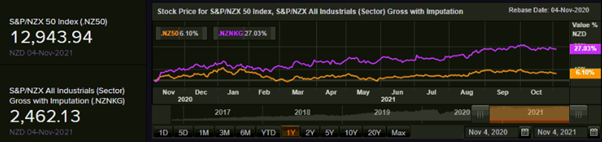
The S&P/NZX All Industrials Index generated a 1-year return of ~27.03% versus ~6.10% by the S&P/NZX 50 Index. Therefore, NZX All Industrials Index overperformed NZX50 Index by ~20.93% in 1 year.
Exhibit 3: S&P/NZX All Industrials (Sector) vs S&P/NZX50 Index
Source: REFINITIV
Key Risks and Challenges:
The pandemic created boundaries for the industrial sector. Supply chains were interrupted, rail, road, and air cargo service providers battled to transit essential goods, labor shortages became relentless, and factories and warehouses closed or mirrored operational challenges. Further, the world, including NZ, is experiencing the impacts of climate change (like more frequent severe storm events, flooding, and coastal inundation) on the transport network. Being ready to cover this risk requires the systematic coordination and collaboration of multiple stakeholders in the supply chain.
Exhibit 4. Key Risks in Industrials Sector:
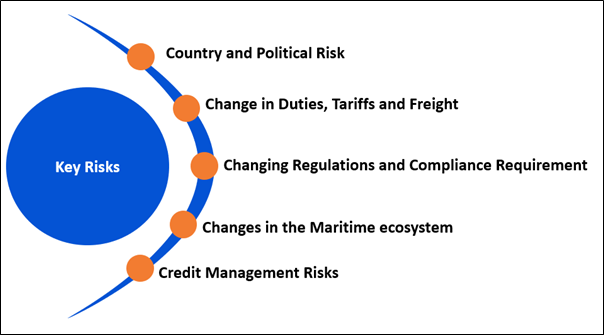
Sources: Analysis by Kalkine Group
Outlook:
As per the ‘Auckland Transport Alignment Project (ATAP) 2021-31’, $31 billion has been allocated for critical transport infrastructure and services in Auckland. This programme invests phenomenally to reduce emissions, which is expected to decrease by 13% by 2031 and public transport trips increase by 91%.
As per New Zealand Foreign Affairs & Trade, the ‘Organisation for Economic Cooperation and Development (OECD)’ released its latest Global Economic Outlook, projecting to return to pre-pandemic activity levels earlier than expected. As a result, the OECD anticipates global growth rates to be 5.8% in 2021 and 4.4% in 2022. New Zealand’s economic performance versus other OECD economies remained strong as the GDP contraction was just 1.1% in 2020, among the smallest in the OECD. Further, NZ’s GDP growth is expected to grow by 3.5% in 2021 and by 3.8% in 2022, primarily driven by domestic and international trade.
Apart from the sector-specific factors, we have also analysed four NZX-listed companies operating in the same sector. This report covers their insights, outlook, performance and potential as expected to be delivered in the near to medium term.
1) Marsden Maritime Holdings Limited (Recommendation: Speculative Buy, Potential Upside: Low Double-Digit) (M-Cap: NZ$264.32 million, Gross Dividend Yield: 3.906%)
Business Description:
Marsden Maritime Holdings Limited (NZX: MMH) offers customizable land and infrastructure packages for lease, tailor-made for businesses. The company has diverse business interests in the Greater Marsden Area, including the port operator, Northport Ltd.
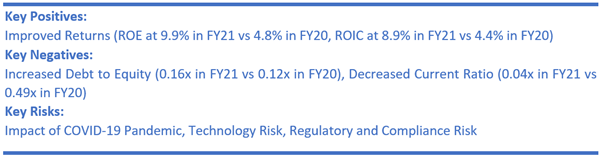
Outlook
The company plans a strategy roadmap to complete a capital structure review. Also, it is emphasising on non-port areas of activity, thereby investing in infrastructure development. The Northport continues to be part of the national discussion around the future of the Upper North Island’s supply chain. Along with this, the port's role in developing a shipyard and dry-dock that could contribute phenomenally to the emergence of a specialist marine construction hub locally continues to attract interest in commercial opportunities.
Technical Overview:
Daily Price Chart
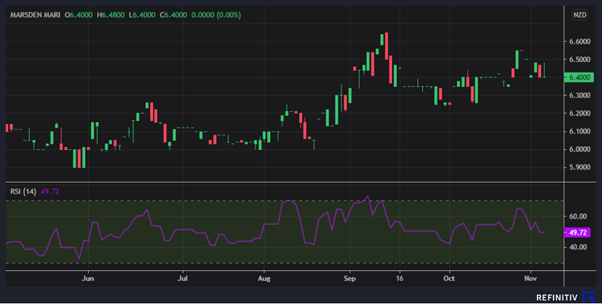
Source: REFINITIV, Note: Purple color line reflects Relative Strength Index (14-Period)
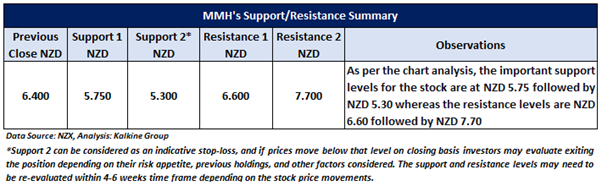
Stock Recommendation
Considering the facts above, current trading level, and risks associated with the stock, we give a “Speculative Buy” recommendation on the stock at the closing market price of $6.40 per share as of 4th November 2021.
2) Scott Technology Limited (Recommendation: Buy, Potential Upside: Low Double-Digit) (M-Cap: NZ$249.37 million, Gross Dividend Yield: 0.641%)
Business Description:
Scott Technology Limited (NZX: SCT) is engaged in designing and manufacturing advanced automation systems and solutions. This aids in boosting the output, reliability, yield, and safety of manufacturers and processors worldwide.
Outlook
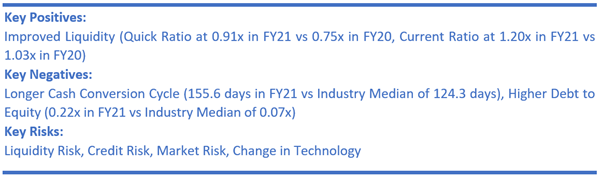
2025 Strategy Update: The company has secured significant repeat business across all sectors. Further, it has extended its focus on Rocklabs sample preparation and BladeStop product businesses. Phenomenal reduction in lost time injuries and continued focus on employee retention, development, and wellness. It continues to deliver sustainable margin improvement across all regions—moreover, a strategically aligned pipeline of forwarding work operating off a decreased and streamlined cost structure.
On 21 October 2021, the company announced the signing of a $20 million contract to deliver an automation solution for a US-based appliance manufacturer. The project will feature high volume production capabilities, advanced diagnostics, model change-on-the-fly and mixed batch production.
Technical Overview:
Daily Price Chart
Source: REFINITIV, Note: Purple color line reflects Relative Strength Index (14-Period)
Stock Recommendation:
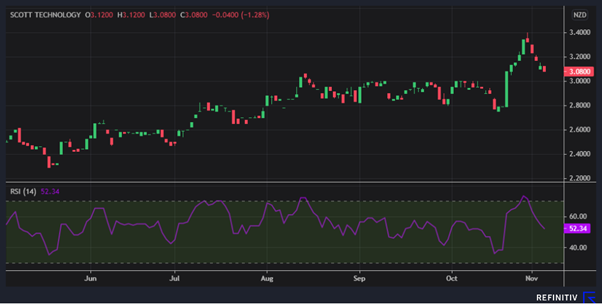
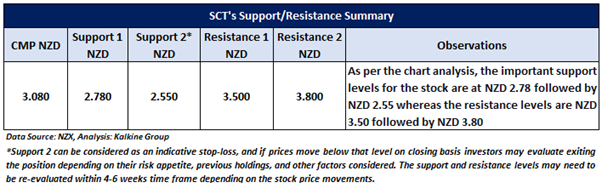
Considering existing momentum in the NZ market, growth revival in the international market, and risk associated with the business, we give a “Buy” recommendation on the stock at the current market price of $3.08 per share as of 4th November 2021 (New Zealand Time: 1:24 PM (GMT +12).
3) Auckland International Airport Limited (Recommendation: Hold, Potential Upside: Low Double-Digit) (M-Cap: NZ$11.75 billion)
Business Description:
Auckland International Airport Limited (NZX: AIA) is the third busiest international airport in Australasia. The airport plays a significant role in supporting New Zealand businesses, with around $15 billion worth of freight passing through the airport every year.
Outlook
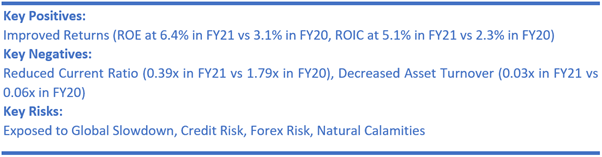
The management continues to plan for a future period on the back of extended COVID-19 related circumstances. As per the company, full recovery in the sector may take a longer time horizon. Broadly, the financial performance is directly linked to an uptick in passenger volumes. Hence, the company's economic recovery will highly be influenced by the return of domestic and international travel and liberal border settings. Meanwhile, large vaccination programmes are signalling a steady recovery in aviation. Due to uncertainty in the market, the company is unable to provide underlying earnings guidance for FY22.
Further, the company released its August 2021 monthly traffic update and September 2021 preview on 14 October 2021. As per the update, Auckland Airport total passenger volumes rose by 68.4% YoY in August 2021. International passengers (excl. transits) increased 61.6%, transit passengers decreased 94.3%, and domestic passengers increased by 74.5%.
Valuation Methodology: EV/Sales Based Relative Valuation (Illustrative)
.png)
Technical Overview:
Daily Price Chart
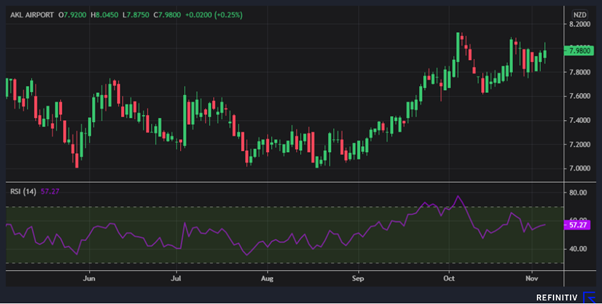
Source: REFINITIV, Note: Purple color line reflects Relative Strength Index (14-Period)
Stock Recommendation
The stock has been valued using an EV/Sales multiple based relative valuation (on an illustrative basis), and the target price so arrived reflects a rise of low double-digit (in % terms). In addition, a slight premium has been applied to EV/Sales Multiple (NTM) (Peer Average), considering a shorter cash conversion cycle at 34.5 days in FY21 versus the industry median of 68.5 days and a better EBITDA margin at 61.9% in FY21 versus 41.8% in FY20.
For the valuation purpose, we have taken peers such as Atlas Arteria Group. (ALX.AX), and Sydney Airport. (SYD.AX), to name a few.
Considering the facts above, we give a “Hold” recommendation on the stock at the closing market price of $7.98 per share, up 0.25% as of 4th November 2021.
4) Air New Zealand Limited (Recommendation: Hold, Potential Upside: Low Double-Digit) (M-Cap: NZ$1.84 billion)
Business Description:
Air New Zealand Limited (NZX: AIR) is a flagship carrier airline of New Zealand. It provides air passenger services and cargo transport services to, from and within New Zealand.
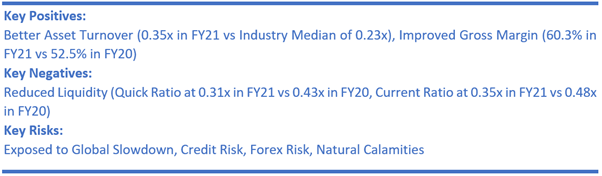
Outlook
The management is focused on offering sustainable earnings, followed by its plan to invest in cargo to improve customer service and support long-haul international flying. Also, it continues to seek sustainable aviation fuel (SAF) and zero emissions aircraft technologies to reach the decarbonisation targets. Amid uncertainty in the current system due to COVID-19 related circumstances and uncertainty regarding the level of demand as these restrictions lift, the company has suspended FY22 earnings guidance.
As per the release dated 12 October 2021, the company has been awarded a further five months of support for cargo flights under an extension of the Government’s Maintaining International Air Connectivity (MIAC) scheme. This agreement includes extra air freight capacity operating from 1 November 2021 through 31 March 2022.
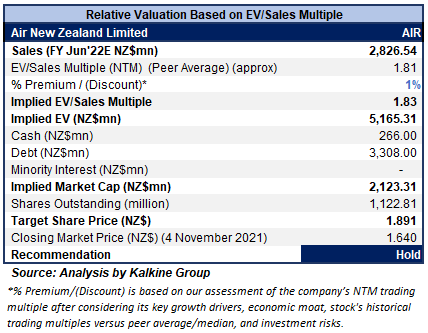
Valuation Methodology: EV/Sales Based Relative Valuation (Illustrative)
Technical Overview:
Daily Price Chart
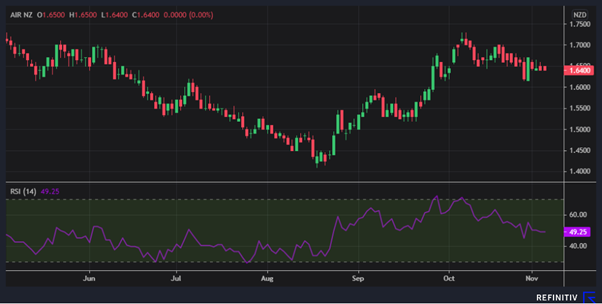
Source: REFINITIV, Note: Purple color line reflects Relative Strength Index (14-Period)
Stock Recommendation
The stock has been valued using an EV/Sales multiple based relative valuation (on an illustrative basis), and the target price so arrived reflects a rise of low double-digit (in % terms). In addition, a slight premium has been applied to EV/Sales Multiple (NTM) (Peer Average), considering a better asset turnover at 0.35x in FY21 versus the industry median of 0.23x and an increased EBITDA margin at 16.9% in FY21 versus the industry median of 13.5%.
For the valuation purpose, we have taken peers such as Freightways Ltd. (FRE.NZ), Mainfreight Ltd. (MFT.NZ), and Orbital Corporation Ltd (OEC.AX), to name a few.
Considering the facts above, we give a “Hold” recommendation on the stock at the closing market price of $1.64 per share as of 4th November 2021.
Note 1: The reference data in this report has been partly sourced from REFINITIV.
Note 2: Investment decisions should be made depending on the investors’ appetite on upside potential, risks, holding duration, and any previous holdings. Investors can consider exiting from the stock if the Target Price mentioned as per the analysis has been achieved and subject to the factors discussed above alongside support levels provided.
Technical Indicators Defined: -
Support: A level where-in the stock prices tend to find support if they are falling, and downtrend may take a pause backed by demand or buying interest.
Resistance: A level where-in the stock prices tend to find resistance when they are rising, and uptrend may take a pause due to profit booking or selling interest.
Stop-loss: It is a level to protect further losses in case of unfavourable movement in the stock prices.
Disclaimer
Kalkine New Zealand Limited is authorised to provide general advice only. The information on this website does not take into account any of your investment objectives, financial situation or needs. Before you make a decision about whether to acquire a financial product, you should obtain the Product Disclosure Statement from the product issuer. You should consider the appropriateness of advice taking into account your own objectives, financial situation and needs and seek independent financial advice before making any financial decisions.
Past performance is not a reliable indicator of future performance.
 Please wait processing your request...