
 AU
AU
 UK
UK
 CA
CA
 US
US
 IND
IND

 NZ
NZ

This report is an updated version of the report published on 19th May 2022 at 5:00 PM (GMT +12)
I. Sector Landscape and Outlook
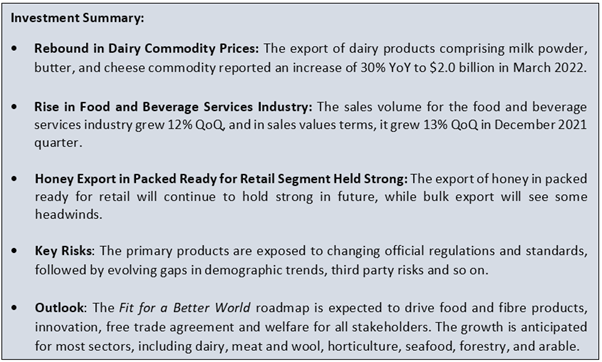
As per the Ministry for Primary Industries (MPI), food and fibre sector export revenue are anticipated to surpass the $50 billion level in FY22, up 6% YoY, primarily driven by dairy, meat, and wool horticulture, seafood, forestry and arable. Further, the government is working on free trade agreement (FTA) with major exporting countries to broaden market opportunities, streamline processes, decrease costs, and create additional certainty and security for companies.
Rebound in Dairy Commodity Prices in August–March 2022
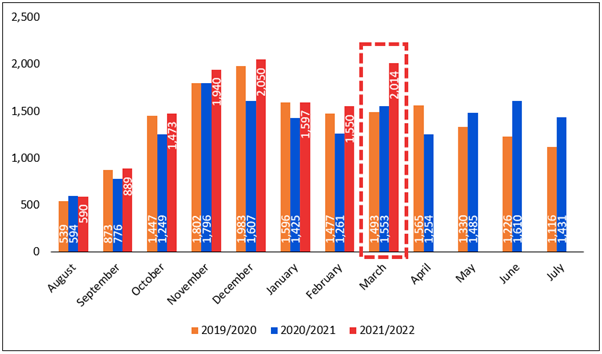
As per Stats.NZ, in March 2022, total export goods increased by $978 million (up 17%) from March 2021 to get to $6.7 billion. The export of dairy products comprising milk powder, butter, and cheese commodity reported an increase of 30% YoY to $2.0 billion in March 2022, primarily driven by the rise in milk powder, which grew by $180 million YoY. Output prices primarily drove this rise in value as quantities of goods exported decreased by 9.3%. The rise in butter (up $111 million), cheese (up $71 million), and milk & cream (up $56 million) were the result of favourable price changes. In the 2021-22 season (August–March), milk powder, butter, and cheese exports were 18% above value but 6.7% below quantity in 2020/21.
Exhibit 1: Dairy Value Accelerated in March 2022 Export Season
Data Source: This work is based on/includes Stats NZ’s data which are licensed by Stats NZ for reuse under the Creative Commons Attribution 4.0 International Licence; Chart Created by Kalkine Group
Growth Continues in Food and Beverage Services Industry in December 2021 Quarter
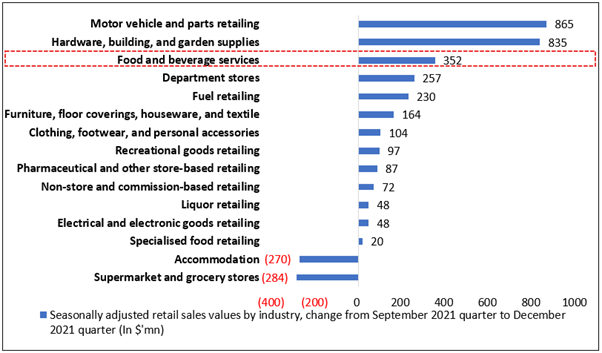
As per Stats.NZ, the total retail sales volume grew 8.6%, and total retail sales value (with price effects included) increased by 10% to $2.6 billion for the December 2021 quarter versus September 2021 quarter. At the industry level, one of the largest sales volumes was seen in the food and beverage services industry, which grew by 12% QoQ. In terms of sales values, the industry grew by 13% QoQ ($352 million) for the December 2021 quarter versus September 2021 quarter. The department store sales values grew by 21% ($257 million).
Exhibit 2: Food & Beverages Industry Continues to Report Strength in December 2021 Quarter
Data Source: This work is based on/includes Stats NZ’s data which are licensed by Stats NZ for reuse under the Creative Commons Attribution 4.0 International Licence; Chart Created by Kalkine Group
Short-term Headwinds for Honey Market
As per MPI, the honey export was recorded at 12,790 tonnes in FY21, where the average price stood at $37.66 per kg, down by 9% YoY. The broad-based exporting of honey was packed and ready for retail. In contrast, a significant proportion of monofloral mānuka and non-mānuka honey were exported in bulk at lower prices than last year. Export prices for honey in retail packs held strong. Continuous bumper honey harvests, including a record estimate of 27,000 tonnes in 2020, and a phenomenal contraction of the domestic tourism market due to COVID-19 related environment, have contributed to elevated domestic honey stocks. These high levels of honey ready for export are unlikely to be exported quickly, even with an expectation of a subdued domestic honey crop estimate of 20,500 tonnes in 2021.
Index Performance:
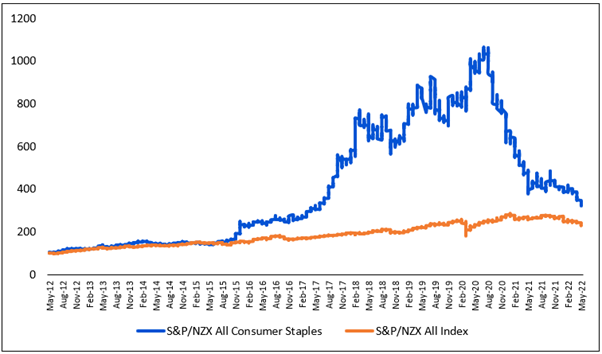
The S&P/NZX All Consumer Staples Index generated a 10-year return of ~232.1% versus ~129.1% by the S&P/NZX All Index. Therefore, S&P/NZX All Consumer Staples Index overperformed S&P/NZX All Index by ~103.0% in 10-year.
Exhibit 3: S&P/NZX All Consumer Staples Index vs S&P/NZX All Index
Source: REFINITIV, Chart Created by Kalkine
Key Risks and Challenges:
The low temperature in spring impacts wine grape harvest, flooding will impact arable farms, and dry autumn will slow down autumn-sown crops. Further, the vital parts of food ecosystems are turning into more capital-intensive, vertically integrated and concentrated in fewer hands. Moreover, crises and natural disasters are growing in number and intensity.
Exhibit 4. Key Risks in Consumer Staples Sector:

Source: Analysis by Kalkine Group
Outlook:
The government is projecting total export revenue for food and fibre exports to reach $50.8 billion in FY22, mainly driven by most sectors, despite COVID-19 related challenges. The focus is on producing higher-value food and fibre products, innovation, reducing environmental impacts and ensuring a quality workforce culture. Further, the government is progressing to deliver the Fit for a Better World roadmap to support farmers and growers to capitalize on opportunities as consumer values are shifting to drive the recovery from the pandemic. Meanwhile, MPI reached a significant milestone in October 2021, agreeing to the New Zealand-United Kingdom Free Trade Agreement (NZ-UK FTA) that will eliminate customs tariffs on food and fibre exports to the UK.
Apart from the sector-specific factors, we have also analysed four NZX-listed companies operating in the same sector. This report covers their insights, outlook, performance and potential as expected to be delivered in the near to medium term.
1. The a2 Milk Company Limited (Recommendation: Buy, Potential Upside: Low Double-Digit (M-Cap: NZ$3.44 billion)
Business Description:
The a2 Milk Company Limited (NZX: ATM) is engaged in the branded milk business, and it produces from cows that produce only the A2 protein type. It has products and trading activities across New Zealand, Australia, Greater China, North America, and selected emerging markets.
Outlook:
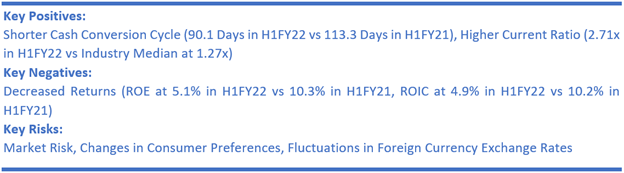
The company anticipates better H2FY22 revenue than H2FY21, primarily driven by growth in China label and English label IMF. However, this revenue growth is not projected to translate into better earnings as the company is significantly investing in brand building and other reinvestment strategies for growth. China label IMF sales growth is expected to continue in FY22, primarily driven by the positive impact on MBS and DOL sales. In English label IMF, sales will gain momentum due to solid inventory levels, pricing, and better execution in ANZ reseller and CBEC channels. However, the input costs are significantly higher than FY21, partially nullified by the rise in pricing that took effect from November 2021.
On 18 May 2022, the company announced that it'd been informed that a representative proceeding had been filed in the High Court of New Zealand, which named ATM the defendant.
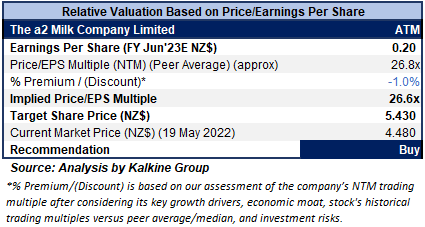
Valuation Methodology: Price/Earnings Per Share Based Relative Valuation (Illustrative)
Technical Overview:
Daily Price Chart
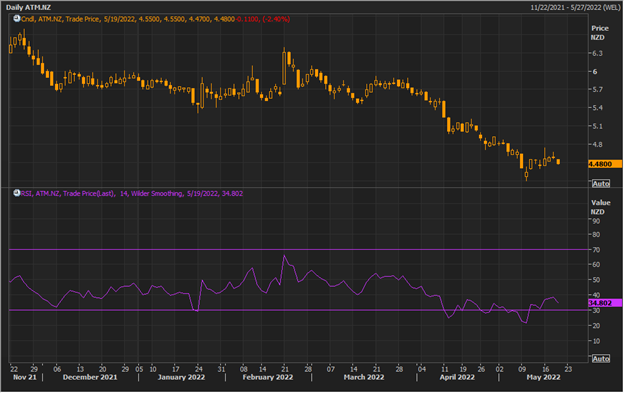
Source: REFINITIV, Note: Purple color line reflects Relative Strength Index (14-Period)
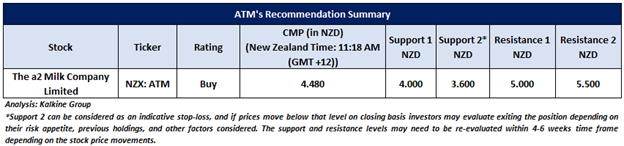
Stock Recommendation
The stock has been valued using P/E multiple-based illustrative relative valuation, and the target price so arrived reflects a rise of low double-digit (in % terms). A slight discount has been applied to P/E Multiple (NTM) (Peer Average), considering the risks of the COVID-19 pandemic and supply chain disruption and challenging China IMF market dynamics.
Considering the facts above, we give a “Buy” recommendation on the stock at the current market price of $4.48 per share as of 19th May 2022 (New Zealand Time: 11:18 AM (GMT +12)).
2. Comvita Limited (Recommendation: Buy, Potential Upside: Low Double-Digit) (M-Cap: NZ$225.16 million, Gross Dividend Yield: 2.821%)
Business Description:
Comvita Limited (NZX: CVT) is currently one of the leading players globally in producing Manuka honey. The company has a decent geographical presence across Australia, New Zealand, China, and North America.
.png)
Outlook
Backed by decent H1FY22 financial performance, the company indicates better FY22 results, primarily driven by a focused business model, cost controlling measures, investment in brand and excellent execution chain. Also, the guidance for 2025 is on track as the company is accelerating at its pace. The investments made in long term brand and business building activity are expected to drive revenue, margin, and earnings growth. The EBITDA is likely to be in the ambit of $27-$30 million for FY22. The company announced a fully imputed interim dividend of 2.5 cps, reflecting the strengths of its guidance despite ongoing Covid disruptions.
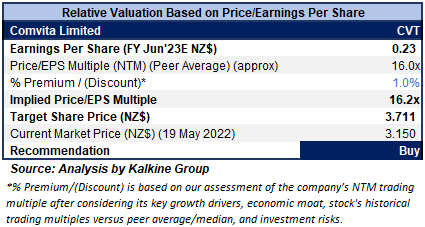
Valuation Methodology: Price/Earnings Per Share Based Relative Valuation (Illustrative)
Technical Overview:
Daily Price Chart
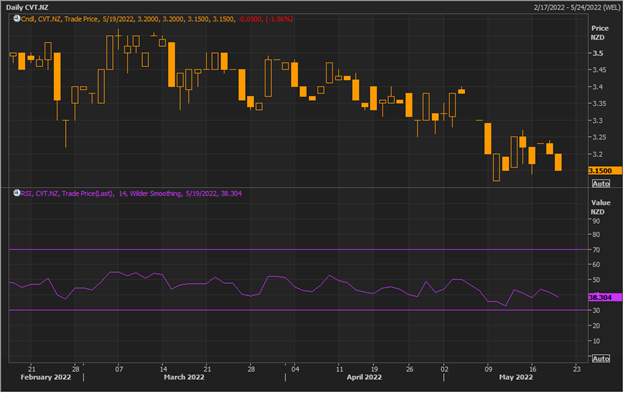
Source: REFINITIV, Note: Purple color line reflects Relative Strength Index (14-Period)
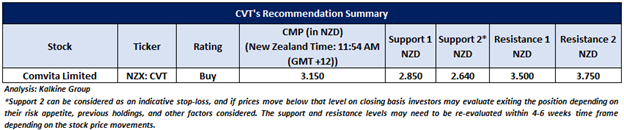
Stock Recommendation
The stock has been valued using P/E Per Share multiple-based illustrative relative valuation, and the target price so arrived reflects a rise of low double-digit (in % terms). A slight premium has been assigned to P/E Multiple (NTM) (Peer Average), considering strategic investments in digitisation with its new web platform having enhanced functionality. The company plans to increase digital sales to 50% (currently 33%) of total revenue by FY25 at accretive gross margins.
Considering the facts above, we give a “Buy” recommendation on the stock at the current market price of $3.15 per share as of 19th May 2022 (New Zealand Time: 11:54 AM (GMT +12)).
3. Cooks Coffee Company Limited (Recommendation: Speculative Buy, Potential Upside: Low Double-Digit) (M-Cap: NZ$22.24 million)
Business Description:
Cooks Coffee Company Limited (NZX: CCC), formerly known as Cooks Global Foods Limited (NZX: CGF), is engaged in the business of owning the intellectual property and master franchising rights to Esquires Coffee Houses worldwide (excluding New Zealand and Australia).
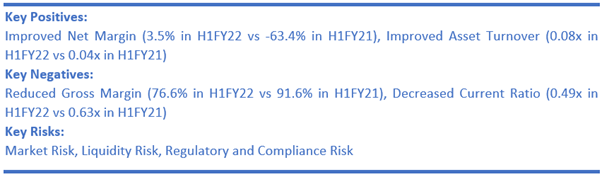
Outlook:
The company is anticipating improved H2FY22 than H1FY22, despite COVID-19 related disruptions and business risk. Further, the store opening program is expected to sustain in the long run with some short-term headwinds. Concerning the shortfall placement of the rights issue, the company is looking at finalising contracts with lenders and creditors to convert further debt into shares and anticipates further advancement in 2022.
On 6 April 2022, the company announced that it completed a significant repositioning, following on from a capital raising completed in mid-March 2022. This indicates that the company is well-positioned and looking forward to the business's strategic structure that will take the company into the future.
Technical Overview:
Daily Price Chart
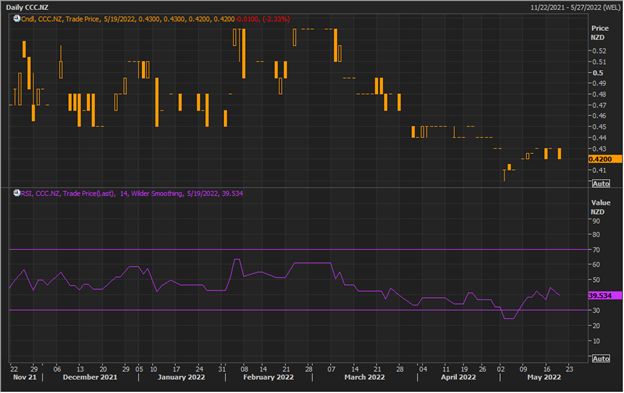
Source: REFINITIV, Note: Purple color line reflects Relative Strength Index (14-Period)
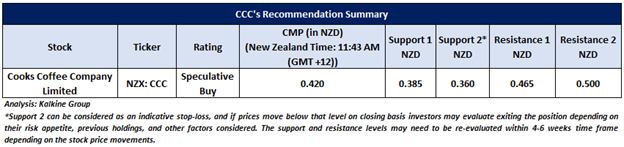
Stock Recommendation
Considering the facts above, we give a “Speculative Buy” recommendation on the stock at the current market price of $0.42 per share as of 19th May 2022 (New Zealand Time: 11:43 AM (GMT +12)).
Markets are trading in a highly volatile zone currently due to certain macro-economic issues and geopolitical tensions prevailing. Therefore, it is prudent to follow a cautious approach while investing.
Note 2: Investment decisions should be made depending on the investors’ appetite on upside potential, risks, holding duration, and any previous holdings. Investors can consider exiting from the stock if the Target Price mentioned as per the analysis has been achieved and subject to the factors discussed above alongside support levels provided.
Technical Indicators Defined: -
Support: A level where-in the stock prices tend to find support if they are falling, and downtrend may take a pause backed by demand or buying interest.
Resistance: A level where-in the stock prices tend to find resistance when they are rising, and uptrend may take a pause due to profit booking or selling interest.
Stop-loss: It is a level to protect further losses in case of unfavourable movement in the stock prices.
Disclaimer
Kalkine New Zealand Limited is authorised to provide general advice only. The information on this website does not take into account any of your investment objectives, financial situation or needs. Before you make a decision about whether to acquire a financial product, you should obtain the Product Disclosure Statement from the product issuer. You should consider the appropriateness of advice taking into account your own objectives, financial situation and needs and seek independent financial advice before making any financial decisions.
Past performance is not a reliable indicator of future performance.
 Please wait processing your request...