
 AU
AU
 UK
UK
 CA
CA
 US
US
 IND
IND

 NZ
NZ

Company Overview:
Kathmandu Holdings Limited (NZX: KMD) is a specialist outdoor retailer. The Company is engaged in designing, marketing and retailing of clothing and equipment for travel and adventure. The Company's segments include New Zealand, Australia and the United Kingdom. It offers a range of apparels, including waterproof jackets, down jackets, thermals, fleece jackets, shirts and pants, merino apparel and thermals, and footwear and socks. It also offers equipment, including packs, bags, sleeping bags, tents, travel accessories and camping accessories.
Kathmandu Holdings Limited
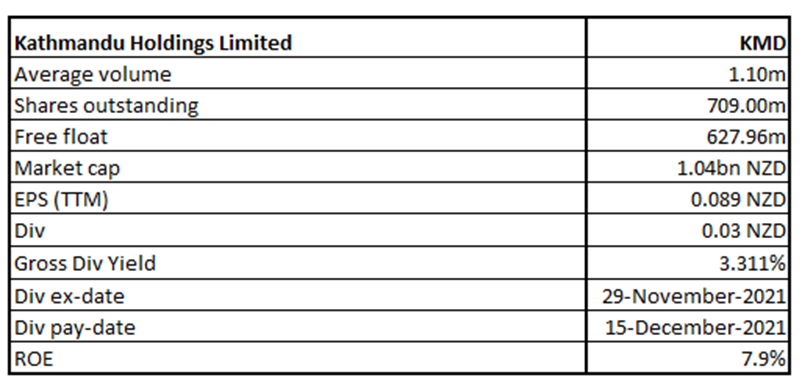
KMD Details
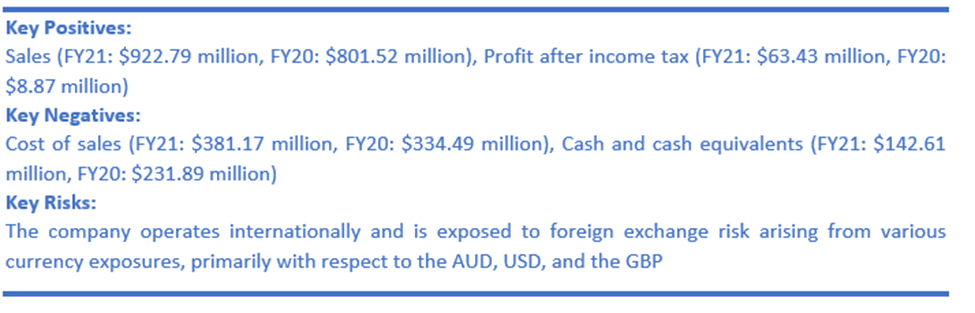
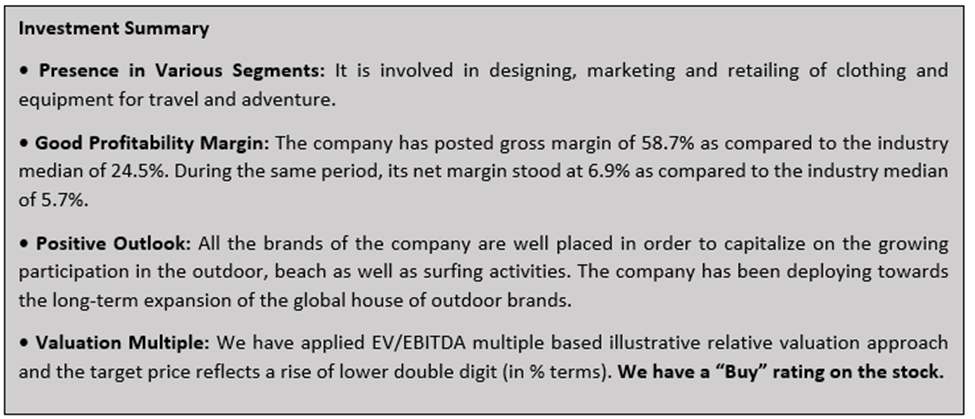
Kathmandu Holdings Limited (NZX: KMD) is a marketer, designer, wholesaler, and retailer of footwear, clothing, and equipment for travel and adventure. The company operates in New Zealand, the United Kingdom, the United States of America, and Australia.
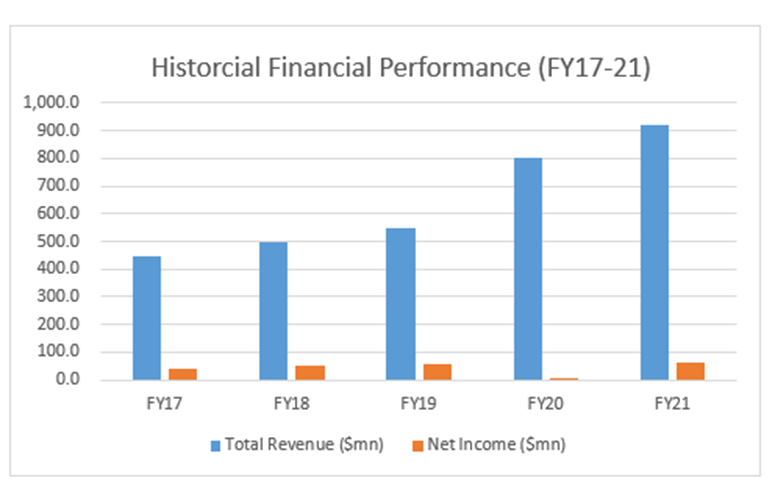
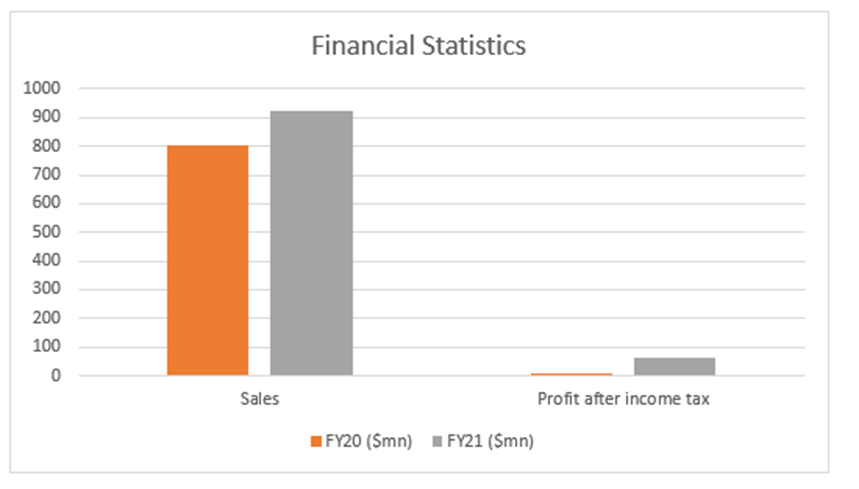
Looking at the past performance, KMD’s topline and bottomline for FY17-21 grew with a compounded annual growth rate (CAGR) of 19.98% and 13.52%, respectively. Its total revenue for FY21 stood at $922.8 million, as compared to $445.3 million in FY17. Its net income for FY21 stood at $63.1 million, as compared to $38.0 million in FY17.
Exhibit 1: Historical Financial Performance
Source: Analysis by Kalkine Group
Results Performance (FY21 ended 31 July 2021)
Exhibit 2: Financial Statistics
Source: Analysis by Kalkine Group
Key Ratios
The company’s gross margin, EBITDA margin and net margin for FY21 stood at 58.7%, 22.9% and 6.9%, better than the industry median of 24.5%, 10.8% and 5.7%, respectively, implying the company’s decent fundamentals. However, its ROE for FY21 stood at 7.9%, lower than the industry median of 21.1%.
Exhibit 3: Key Ratios

Source: Analysis by Kalkine Group
Top 10 Shareholders
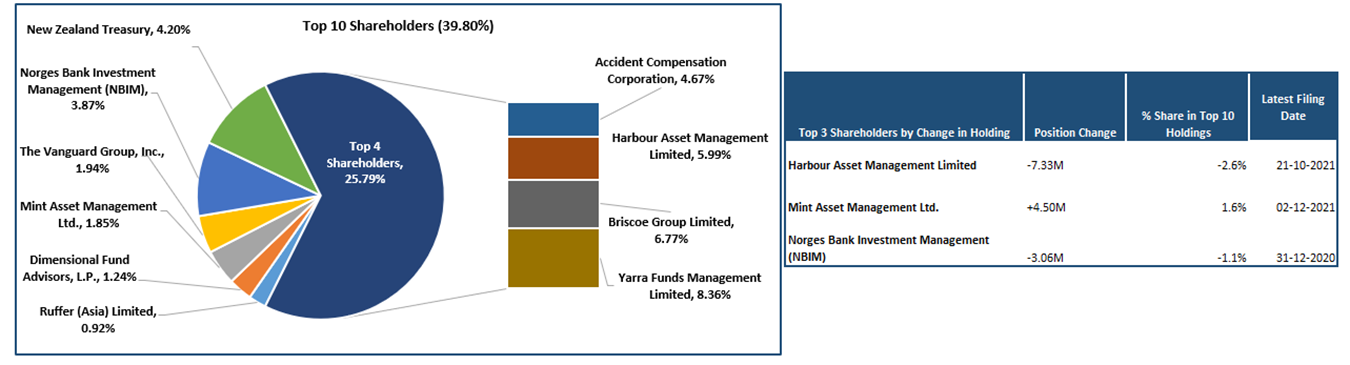
The top 10 shareholders have been highlighted in the below charts, which together forms ~39.80% of the total shareholding. Yarra Funds Management Limited and Briscoe Group Limited are holding 8.36% and 6.77%, respectively.
Exhibit 4: Top 10 Shareholders
Source: Analysis by Kalkine Group
Recent Updates
Outlook:
Rip Curl and Kathmandu are well prepared for the key Black Friday and Christmas trading period, and inventory remains sufficient to meet expected demand. Due to the uncertain COVID trading environment, the Group will not provide forward guidance, however as markets reopen, trading is expected to improve with growth opportunity in the second half of FY22.
The Group is actively managing ongoing supply chain disruption globally, particularly impacting the timely flow of products into its North American markets. Oboz product deliveries will be impacted for Q2 as Vietnam footwear factories slowly ramp up production following COVID closures during Q1. Demand for Rip Curl wetsuits continues to exceed available supply. Freight, logistics and raw material costs remain elevated as the outlook for supply chain remains challenging. This will be managed where possible through pricing and raw material substitution.
Key Risks:
The company experienced store disruptions due to the COVID-19 associated travel restrictions and government authorised closures and shutdowns. In Q1, COVID-19 was a major disruption, with Australasian retail stores impacted by the lockdowns. Also, the supply chain disruption impacted the ability to fulfil the robust wholesale demand.
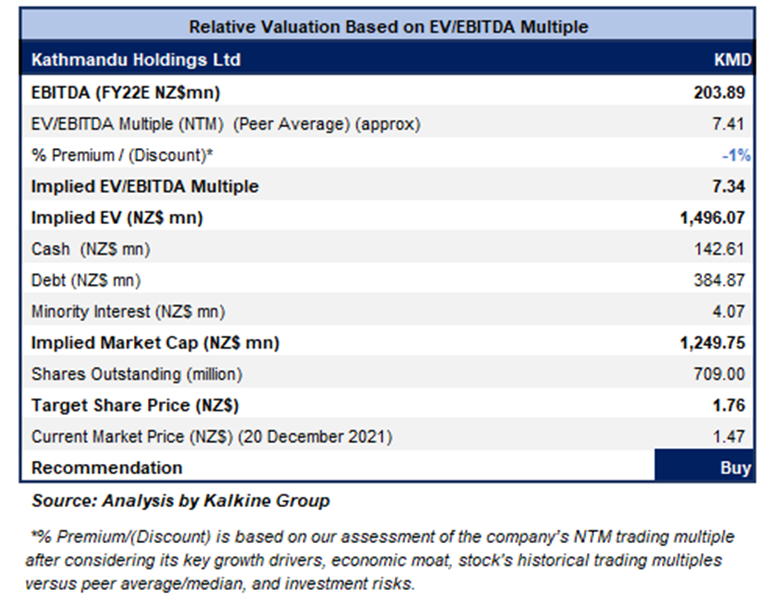
Valuation Methodology: EV to EBITDA Multiple Based Relative Valuation (illustrative)
Technical Overview:
Chart:
Source: REFINITIV
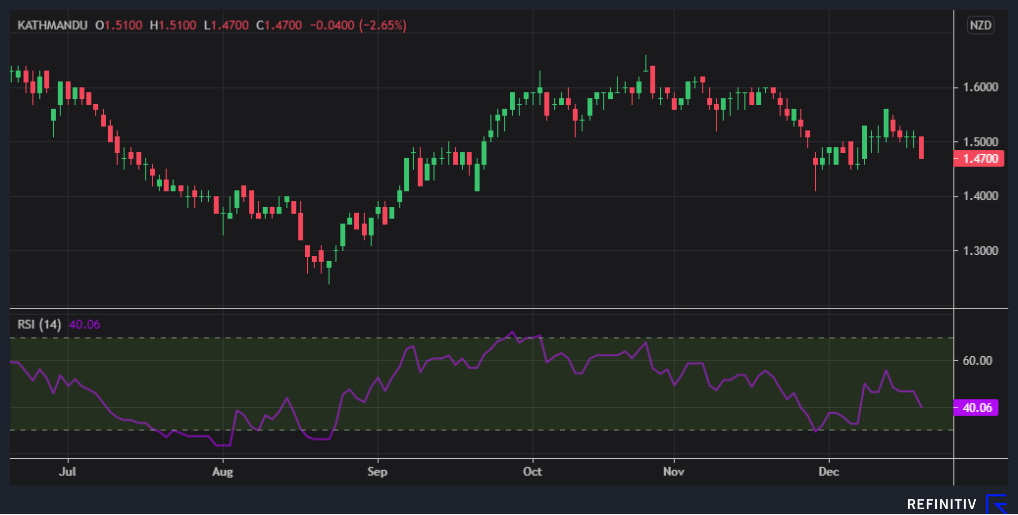
Note: Purple Color Line Reflects RSI (14-Period)
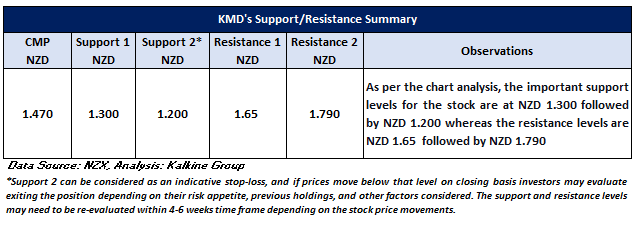
Stock Recommendation:
Despite the challenging trading conditions, the company has been focusing towards capitalizing on the growth opportunities. Notably, the company has been deploying towards the long-term expansion of the global house of outdoor brands.
The stock has been valued using EV/EBITDA multiple-based illustrative relative valuation and the target price so arrived reflects the potential rise of low double-digit (in % terms). A slight discount has been applied to EV/EBITDA Multiple (NTM) (Peer Average) considering the risks related to the COVID-19 pandemic as well as the associated lockdowns. However, the company has posted higher sales in FY 2021 on the YoY basis.
Considering the aforesaid facts, we give a “Buy” recommendation on the stock at the current market price of $1.47 per share, down by 2.65% on 20th December 2021.
Note 1: The reference data in this report has been partly sourced from REFINITIV.
Note 2: Investment decisions should be made depending on the investors’ appetite on upside potential, risks, holding duration, and any previous holdings. Investors can consider exiting from the stock if the Target Price mentioned as per the analysis has been achieved and subject to the factors discussed above alongside support levels provided.
Technical Indicators Defined: -
Support: A level where-in the stock prices tend to find support if they are falling, and downtrend may take a pause backed by demand or buying interest.
Resistance: A level where-in the stock prices tend to find resistance when they are rising, and uptrend may take a pause due to profit booking or selling interest.
Stop-loss: It is a level to protect further losses in case of unfavourable movement in the stock prices.
Disclaimer
Kalkine New Zealand Limited is authorised to provide general advice only. The information on this website does not take into account any of your investment objectives, financial situation or needs. Before you make a decision about whether to acquire a financial product, you should obtain the Product Disclosure Statement from the product issuer. You should consider the appropriateness of advice taking into account your own objectives, financial situation and needs and seek independent financial advice before making any financial decisions.
Past performance is not a reliable indicator of future performance.
 Please wait processing your request...