
 AU
AU
 UK
UK
 CA
CA
 US
US
 IND
IND

 NZ
NZ

Section 1: Company Overview and Fundamentals
1.1 Company Overview:
JD. Com Inc (NASDAQ: JD) is a company principally engaged in the e-commerce business, including online retail and online marketplace mainly through its retail mobile apps and www.jd.com website (collectively, JD Platform). The Company operates its businesses through four segments. JD Retail segment, including JD Health, JD Industrials, and other components, mainly engage in online retail, online marketplace and marketing services in China.
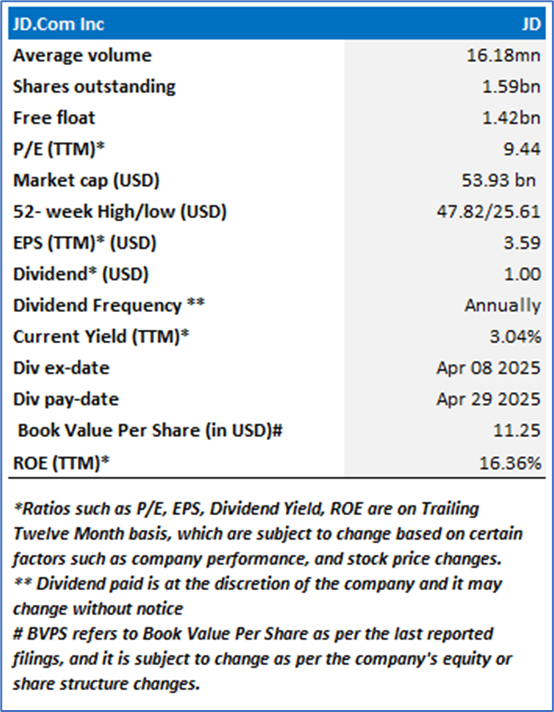
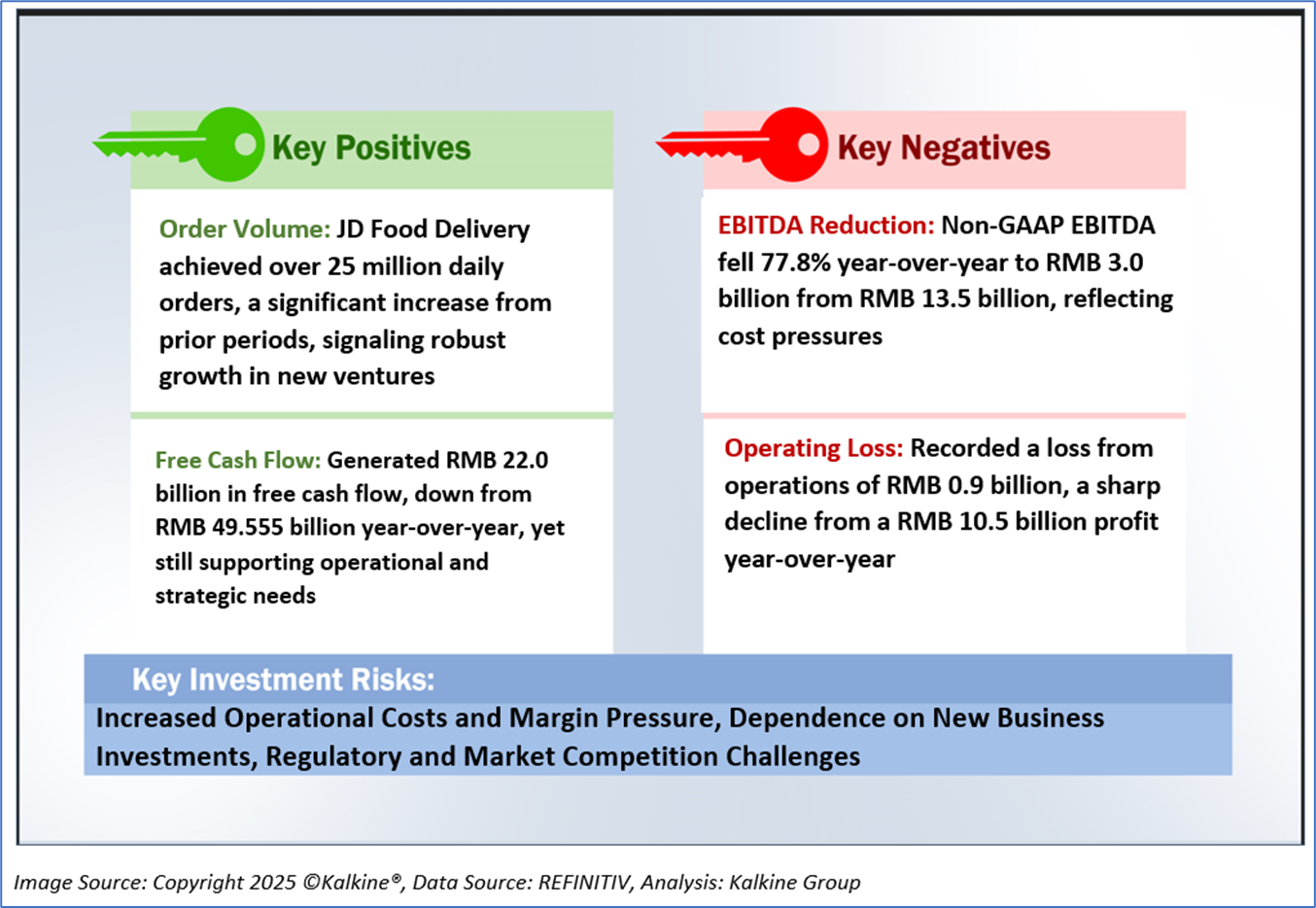
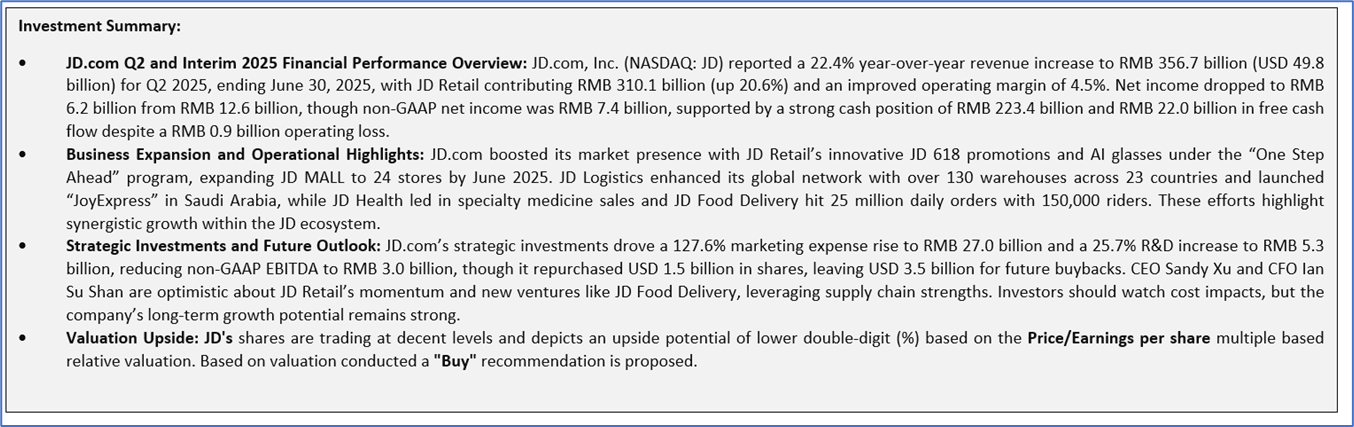
Kalkine’s Dividend Income Report covers the Company Overview, Key positives & negatives, Investment summary, Key investment metrics, Top 10 shareholding, Business updates and insights into company recent financial results, Key Risks & Outlook, Price performance and technical summary, Target Price, and Recommendation on the stock.
Price Performance:
1.2 The Key Positives, Negatives, and Investment summary
1.3 Top 10 shareholders:
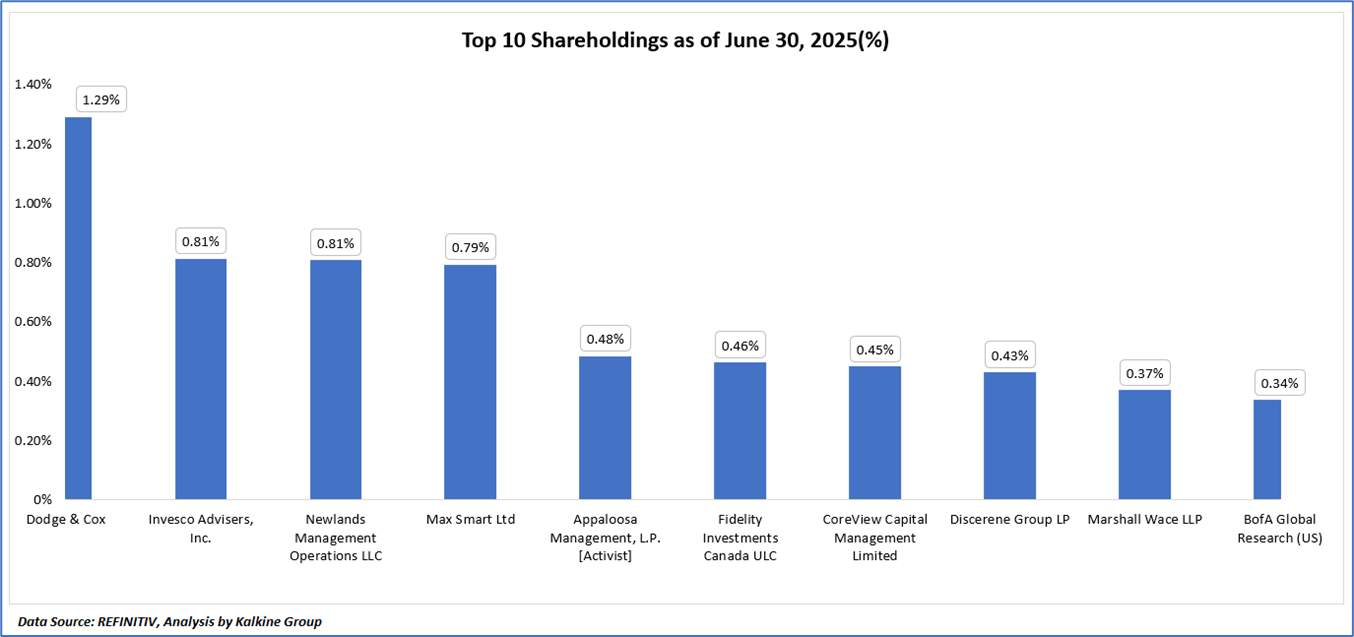
The top 10 shareholders together form ~6.23% of the total shareholding, signifying diverse shareholding. Dodge & Cox, and Invesco Advisers, Inc. are the biggest shareholders, holding the maximum stake in the company at ~1.29% and ~0.81%, respectively.
1.4 Dividend payments with impressive dividend yield:
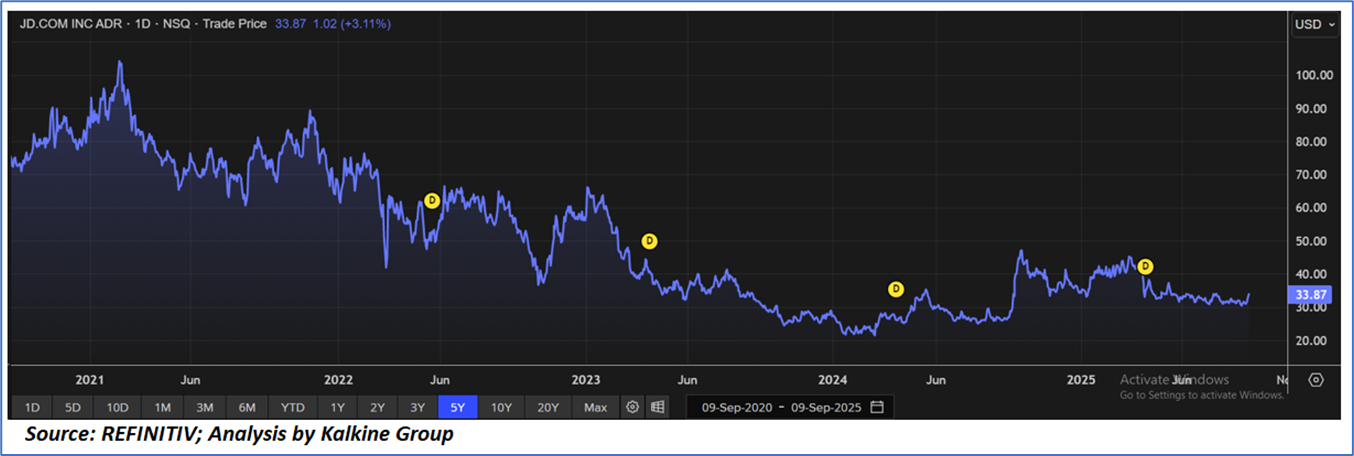
JD.com, Inc. (NASDAQ: JD), a leading supply chain-based technology provider, has maintained a shareholder-friendly dividend policy since initiating regular quarterly payouts in 2021, with the most recent declaration on August 14, 2025, following its Q2 2025 results, reflecting a commitment to returning value amid robust financials, including a 22.4% year-over-year revenue increase to RMB 356.7 billion and a solid cash position of RMB 223.4 billion as of June 30, 2025. The company’s dividends, typically in the range of USD 0.20 to USD 0.50 per ADS quarterly, are funded by distributable profits and supported by its strong free cash flow of RMB 22.0 billion in Q2, though the policy remains at the Board’s discretion, influenced by operational needs and market conditions as of September 10, 2025. Historical trends from the stock price chart (2021-2025) reveal consistent "D" markers indicating dividend ex-dates, often correlating with price stability or modest gains around payment periods, such as post-2021 launches where shares rose from USD 70 to over USD 100 amid initial payouts, though recent volatility from 2024-2025 shows dips to USD 33.87 despite dividends, suggesting dividends provide downside support but are insufficient against broader market pressures like trade tensions and economic slowdowns, with year-over-year share repurchases of USD 1.5 billion further enhancing total returns.
1.5 Key Metrics
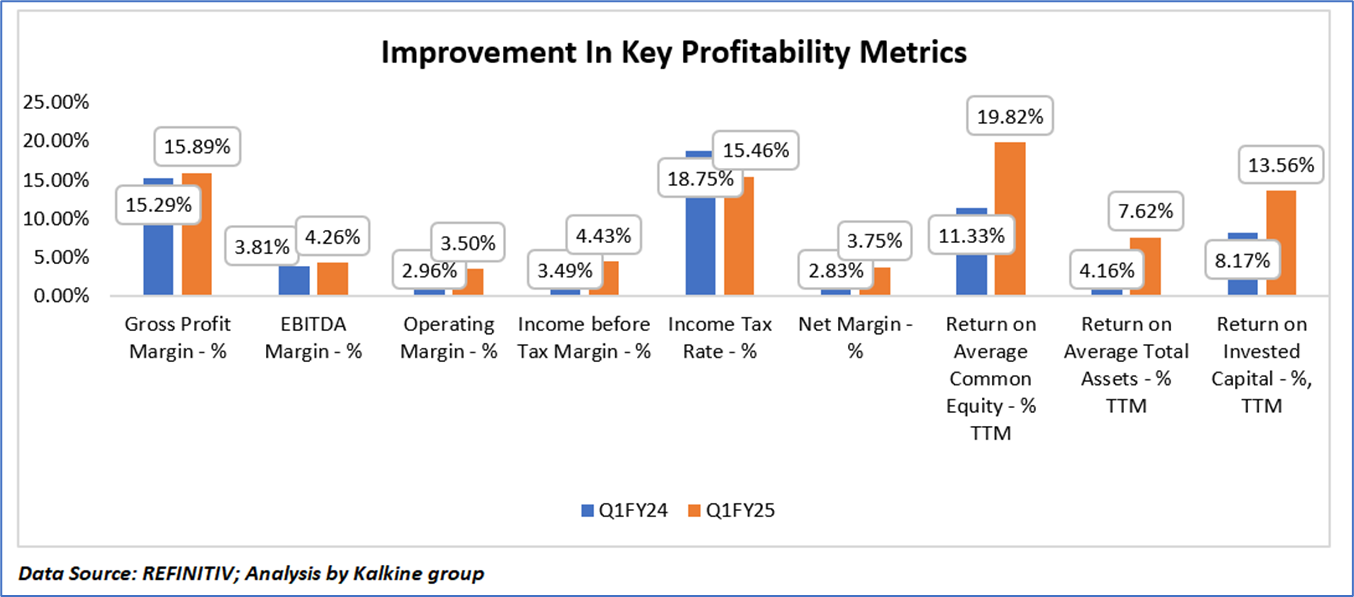
JD.com, Inc. (NASDAQ: JD), a leading supply chain-based technology and service provider, demonstrated a steady improvement in its financial metrics for the first quarter of fiscal 2025 compared to the same period in 2024, with gross profit margin rising from 15.29% to 15.89%, reflecting enhanced cost management and a 22.4% year-over-year revenue increase to RMB 356.7 billion, and analyzed as of 05:07 PM IST on Wednesday, September 10, 2025. Profitability metrics showed positive trends, with EBITDA margin increasing from 3.81% to 4.26%, operating margin advancing from 2.96% to 3.50%, and income before tax margin improving from 3.49% to 4.43%, supported by a reduced income tax rate from 18.75% to 15.46%, contributing to a net margin rise from 2.83% to 3.75%, while return on average common equity surged from 11.33% to 19.82%, return on average total assets climbed from 4.16% to 7.62%, and return on invested capital grew from 8.17% to 13.56%, indicating robust capital efficiency and operational strength. This analysis suggests that despite increased investments in marketing (up 127.6% to RMB 27.0 billion) and fulfillment, JD.com’s focus on supply chain optimization and retail growth has bolstered profitability and return metrics, positioning it for sustained value creation, though investors should remain vigilant about the impact of rising costs on future margins.
Section 2: Business Updates and Financial Highlights
2.1 Recent Updates:
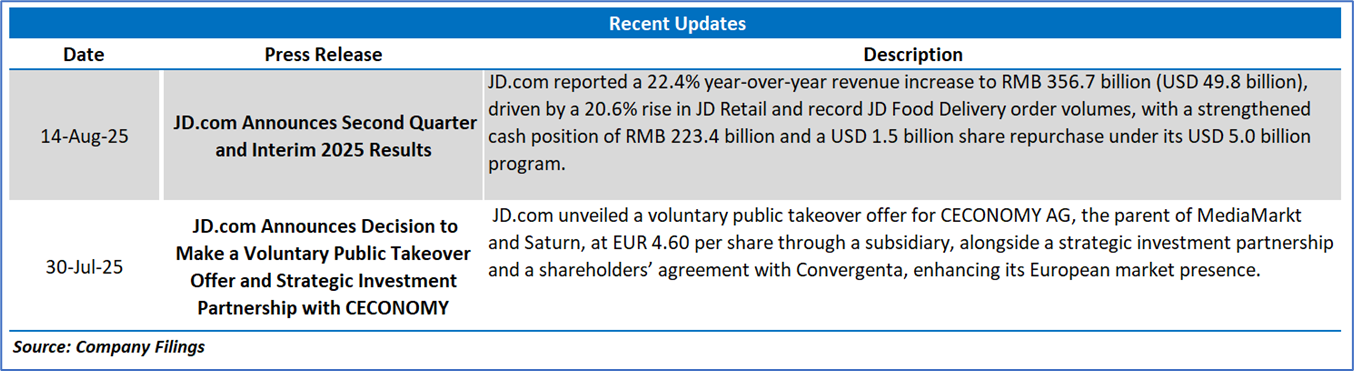
The below picture gives an overview of the recent updates:
2.2 Insights of Q2FY25:
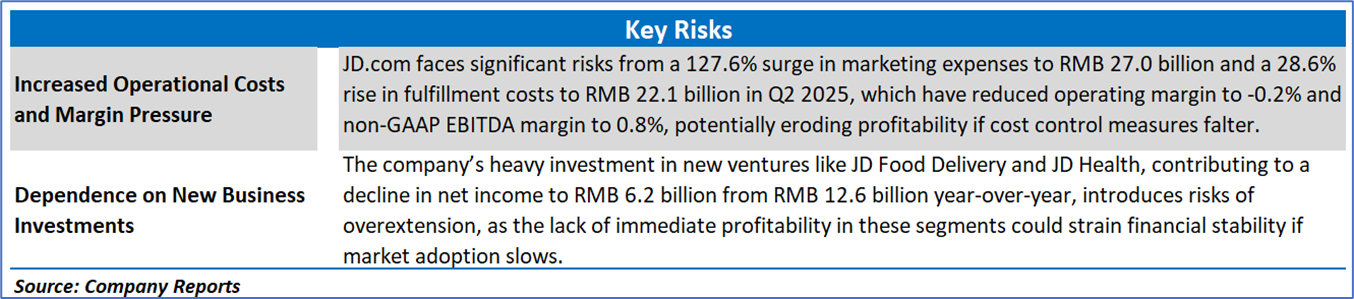
Section 3: Key Risks and Outlook for FY2025:
Section 4: Stock Recommendation Summary:
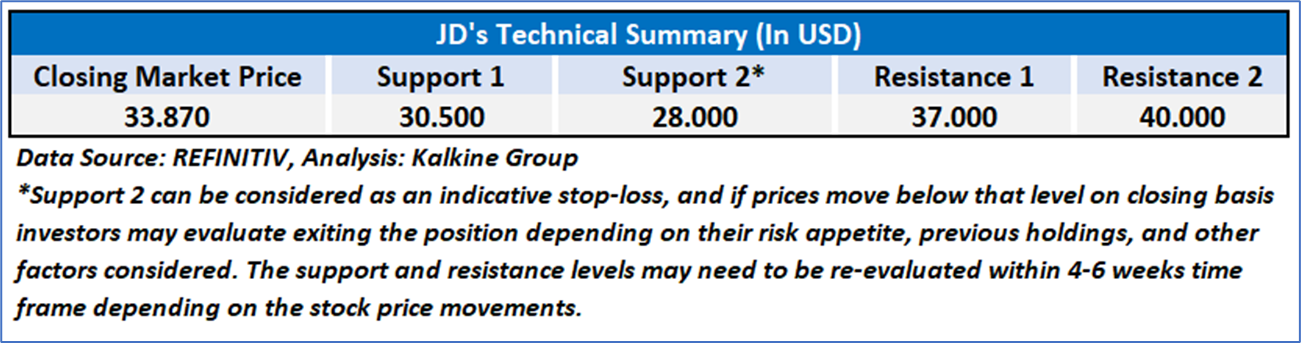
4.1 Technical Summary:
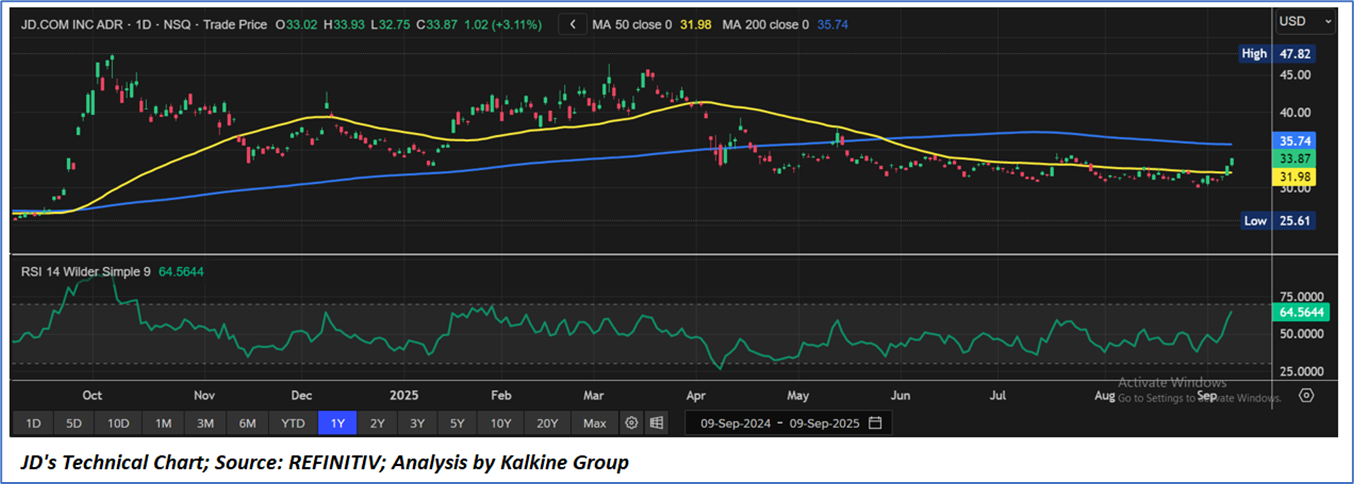
Price Performance:
4.2 Fundamental Valuation
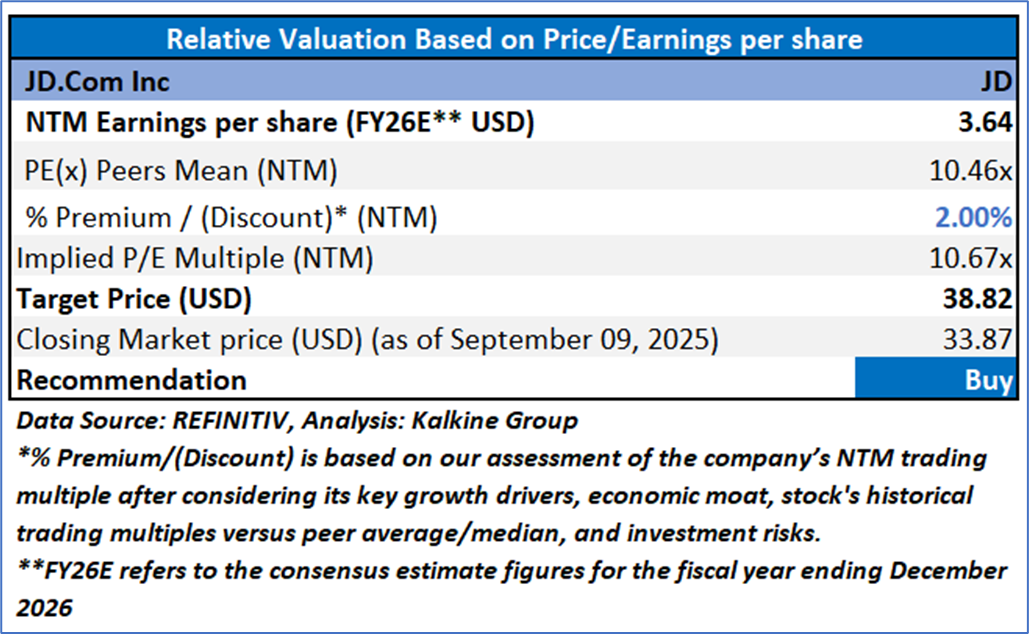
Valuation Methodology: Price/Earnings Per Share Multiple Based Relative Valuation
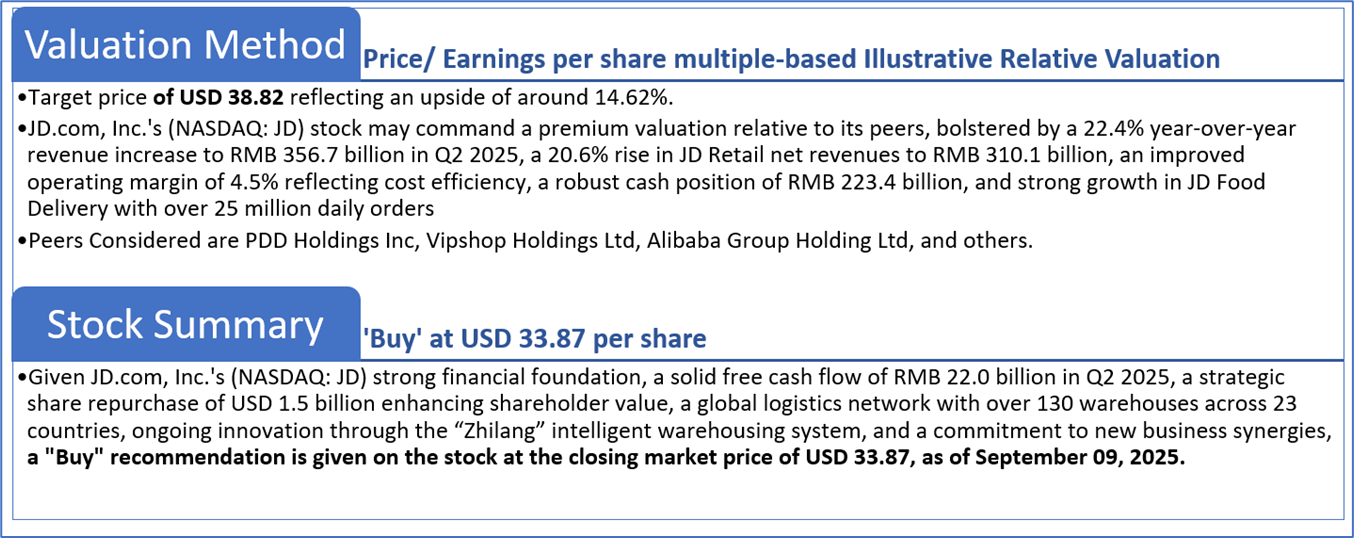
Markets are trading in a highly volatile zone currently due to certain macroeconomic issues and geopolitical tensions prevailing. Therefore, it is prudent to follow a cautious approach while investing.
Note 1: Past performance is not a reliable indicator of future performance.
Note 2: The reference date for all price data, currency, technical indicators, support, and resistance levels is September 09, 2025. The reference data in this report has been partly sourced from REFINITIV.
Note 3: Investment decisions should be made depending on an individual's appetite for upside potential, risks, holding duration, and any previous holdings. An 'Exit' from the stock can be considered if the Target Price mentioned as per the Valuation and or the technical levels provided has been achieved and is subject to the factors discussed above.
Note 4: The report publishing date is as per the Pacific Time Zone.
Technical Indicators Defined: -
Support: A level at which the stock prices tend to find support if they are falling, and a downtrend may take a pause backed by demand or buying interest. Support 1 refers to the nearby support level for the stock and if the price breaches the level, then Support 2 may act as the crucial support level for the stock.
Resistance: A level at which the stock prices tend to find resistance when they are rising, and an uptrend may take a pause due to profit booking or selling interest. Resistance 1 refers to the nearby resistance level for the stock and if the price surpasses the level, then Resistance 2 may act as the crucial resistance level for the stock.
Stop-loss: It is a level to protect against further losses in case of unfavorable movement in the stock prices.
Disclaimer This report has been issued by Kalkine New Zealand Limited (FSP691351) (NZBN:9429047678101) (“Kalkine”). Kalkine is a Financial Advice Provider (“FAP”) and is authorised by a Class 1 Financial Advice Provider Licence issued by Financial Markets Authority (“FMA”) to provide financial advice. Kalkine provides only general financial advice through its research reports following a person becoming a member. The reports contain buy/sell/hold and other recommendations in relation to equity securities, managed funds and other managed investment schemes and other financial advice products. The recommendations and opinions in this report and on Kalkine website do not take into account any of your investment objectives, financial situation or needs. Before you make a decision about whether to acquire a financial product, you should obtain the Product Disclosure Statement from the product issuer. You should consider the appropriateness of advice taking into account your own objectives, financial situation and needs and seek independent financial advice before making any financial decisions. If you act on the advice in the research reports, you may have to pay fees, expenses or other amounts (but not to Kalkine). Further information about the complaints and dispute resolution process, as well as information about Kalkine’s duties are available on Kalkine’s website. Please read our Financial Advice Provider (FAP) disclosure statement and Complaints Handling Guide, which are available on the website.
Past performance is not a reliable indicator of future performance.
 Please wait processing your request...