
 AU
AU
 UK
UK
 CA
CA
 US
US
 IND
IND

 NZ
NZ

I. Sector Landscape and Outlook
As per the Ministry of Housing and Urban Development (HUD), the government planned a $3.8 billion Housing Acceleration Fund (HAF) focused on scaling homebuilding. The focus is to develop a mix of private-sector and government-led developments in areas with the highest housing supply and affordability challenges.
As per RBNZ, the global inflation is anticipated to peak during 2022 and then moderate as supply chain restrictions gradually resolve. NZ does not have phenomenal direct trade or financial associations with Russia or Ukraine. However, in the near term, an escalation in tensions would impact NZ primarily through higher risk aversion in financial markets and increased international commodity prices, soaring inflation for the imported goods.
Demand for Housing Continued at Elevated Levels
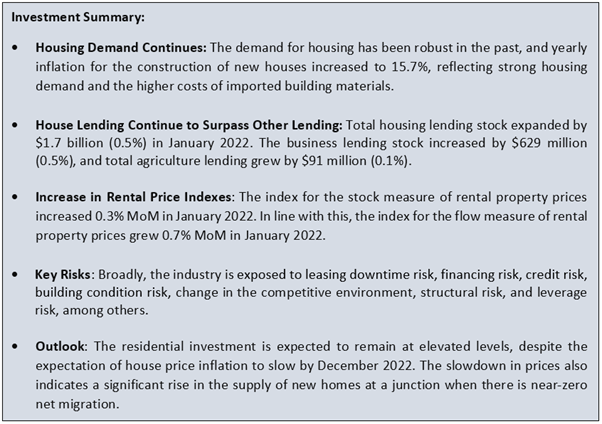
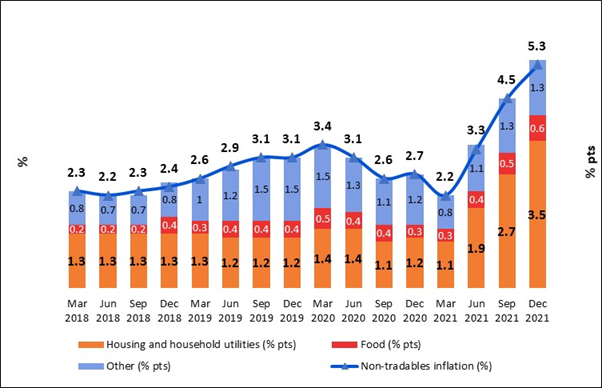
As per the Reserve Bank of New Zealand (RBNZ), demand for housing has been robust in the past and significantly contributed to the inflation of construction prices and prices of other housing-related items, thereby resulting in an acceleration of annual non-tradables inflation 5.3% in the December 2021 quarter. Yearly inflation for the construction of new houses has soared to 15.7%, reflecting strong housing demand and the higher costs of imported building materials. However, the yearly house price inflation is expected to slide in the future, declining from 27.4% in the December 2021 quarter to -5.1% in the December 2022 quarter.
Exhibit 1: Trend in Contribution to Non-Tradables Inflation
Data Source: This work is based on/includes rbnz data which are licensed by rbnz.govt for reuse under the Creative Commons Attribution 4.0 International Licence; Chart Analysis by Kalkine Group
Housing Lending Continue to Surpass Business and Other Lending in January 2022
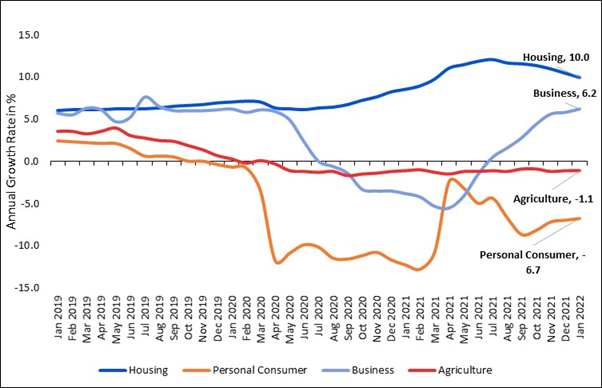
RBNZ's total housing lending stock expanded by $1.7 billion (0.5%) in January 2022, down on the $2.2 billion (0.7%) growth reported in December 2021. Annual growth slowed for the sixth consecutive month from 10.5% to 10.0%. In addition, the total personal consumer lending stock was down by $158 million (-1.1%) in January 2022. However, annual growth improved from -6.9% to -6.7%. Further, the entire business lending stock increased by $629 million (0.5%), and the annual growth rose to 6.2% from 5.8%. In line with this, total agriculture lending grew by $91 million (0.1%) following five consecutive months of decline. Meanwhile, the annual growth remained unchanged at -1.1%.
Exhibit 2: Trend in Lending Since January 2019 – Banks and NBLIs
Data Source: This work is based on/includes rbnz data which are licensed by rbnz.govt for reuse under the Creative Commons Attribution 4.0 International Licence; Chart Created by Kalkine Group
Continued Rise in Rental Price Indexes – Changes in Prices That Households Pay for Housing Rentals
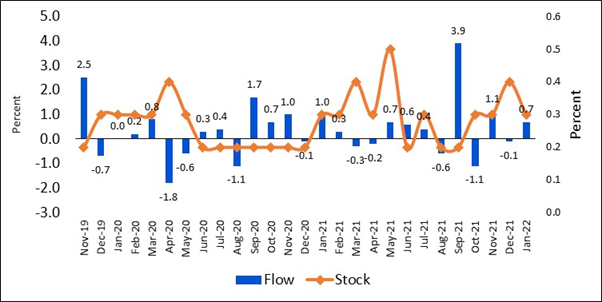
As per Stats.NZ, the index for the stock measure of rental property prices, increased 0.3% MoM in January 2022. In line with this, the index for the flow measure of rental property prices grew 0.7% MoM in January 2022. Also, the stock index rose by 3.6% YOY in January 2022, and the flow index increased by 5.5% YOY in January 2022. The flow measure captures the fluctuation in rental price only for dwellings that have a new tenancy started in the reference month, as it tends to be more volatile than the stock movement. This indicates rental price changes across the whole rental population, including renters currently in tenancies.
Exhibit 3: Trend in Monthly Percent Change in Rental Price Indexes, Nov 2019–Jan 2022
Data Source: This work is based on/includes Stats NZ’s data which are licensed by Stats NZ for reuse under the Creative Commons Attribution 4.0 International Licence; Chart Analysis by Kalkine Group
Index Performance:
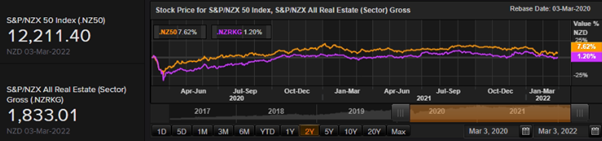
The S&P/NZX All Real Estate (Sector) Index generated a 2-year return of ~7.62% versus ~1.20% by the S&P/NZX 50 Index. Therefore, NZX All Real Estate Index overperformed NZX50 Index by ~6.42% in 2-year.
Exhibit 4: S&P/NZX All Real Estate (Sector) vs S&P/NZX50 Index
Source: REFINITIV
Key Risks and Challenges:
As per RBNZ, the robust demand for housing builds a price pressure and house price inflation, which is expected to slow by December 2022. This is projected to happen due to higher interest rates, increased home building, low net migration, changes to tax policy and tightened lending standards. House prices are forecasted to fall by ~9% from the end of 2021 to mid-2024, towards more sustainable levels. Falling house prices slash household wealth and weigh on consumption over the projection.
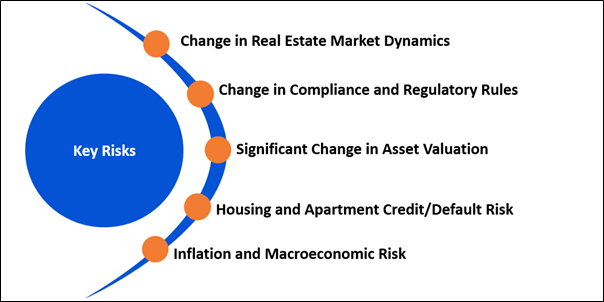
Exhibit 5. Key Risks in Real-Estate Sector:
Sources: Analysis by Kalkine Group
Outlook:
As per the ‘Homelessness Action Plan’, the government’s initiatives will provide shelter to over 10,000 individuals, families, and whanau who are at risk or experiencing homelessness. This initiative is backed by over $300 million government funding and built on phenomenal investment in the ‘Housing First’ programme and continued investment in public housing.
As per RBNZ, there would be a fall in house price inflation and an increase in interest rates, but the residential investment would continue to remain at elevated levels. The residential investment rebounds from the August 2021 lockdown, indicating home-building consents. Government policies that allow additional intensive residential builds are projected to provide further medium-term support.
Apart from the sector-specific factors, we have also analysed four NZX-listed companies operating in the same sector. This report covers their insights, outlook, performance and potential as expected to be delivered in the near to medium term.
1) Goodman Property Trust (Recommendation: Buy, Potential Upside: Low Double-Digit) (M-Cap: NZ$3.40 billion, Gross Dividend Yield: 2.863%)
Business Description:
Goodman Property Trust (NZX: GMT) is engaged in owning, developing, and managing industrial real estate globally, including logistics facilities, warehouses, and business parks.
Outlook
The economic outlook is still uncertain, and the company remains well established for sustainable long-term growth. A superior-quality portfolio focused on urban logistics is expected to benefit from the structural trends that are growing demand for distribution facilities close to consumers. With a minimal loan to value ratio of 17.5% and only partially drawn debt facilities as of 30 September 2021, the company retains over $300 million of available liquidity for future investment.
On 25 February 2022, the company confirmed that the acquisition of the Sky Network Television Campus in Mt Wellington is now unconditional.
On 10 February 2022, the company released the record date for the distribution as 3 March 2022, with payment on 17 March 2022. Unitholders would receive a cash distribution of $0.01375000 per unit with an additional $0.00251616 per unit in imputation credits.
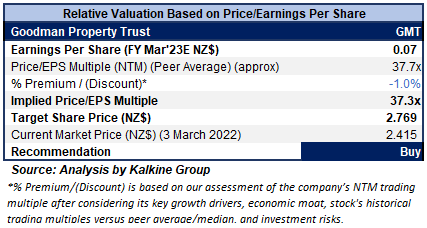
Valuation Methodology: Price/Earnings Per Share Based Relative Valuation (Illustrative)
Technical Overview:
Daily Price Chart
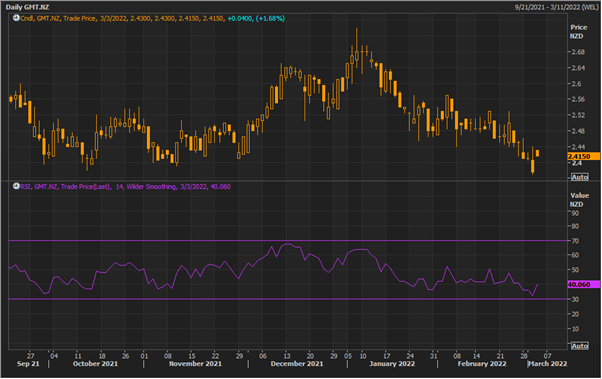
Source: REFINITIV, Note: Purple color line reflects Relative Strength Index (14-Period)
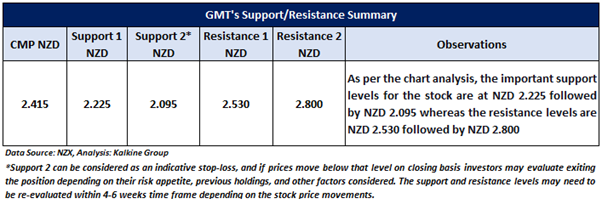
Stock Recommendation:
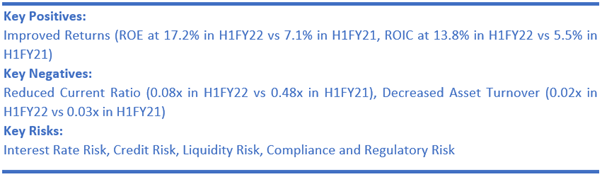
The stock has been valued using a P/E multiple-based illustrative relative valuation, and the target price so arrived reflects a rise of low double-digit (in % terms). A slight discount has been applied to P/E Multiple (NTM) (Peer Average), considering a decrease in gross margin at 83.4% in H1FY22 versus 85.1% in H1FY21 and feeble industry outlook by the Reserve Bank of New Zealand.
Considering the fact above, we give a “Buy” recommendation on the stock at the current market price of NZ$2.415 per share as of 3rd March 2022 (New Zealand Time: 2:27 PM (GMT +12)).
2) Investore Property Limited (Recommendation: Buy, Potential Upside: Low Double-Digit) (M-Cap: NZ$655.28 million, Gross Dividend Yield: 5.105%)
Business Description:
Investore Property Ltd (NZX: IPL) is engaged in a commercial property ownership business which deals in investing in quality large format retail property assets.
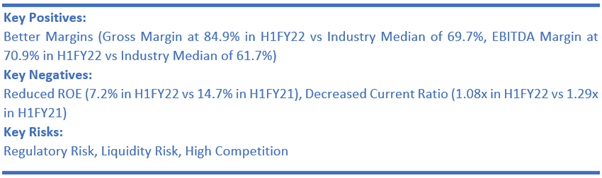
Outlook
For the rest of FY22, the company expects to continue its targeted growth strategy as opportunities arise and will ensure a disciplined focus is maintained on managing and minimising the impacts of COVID-19 on its business. The Board confirmed guidance for an annual cash dividend of 7.90 cents per share to shareholders for FY22.
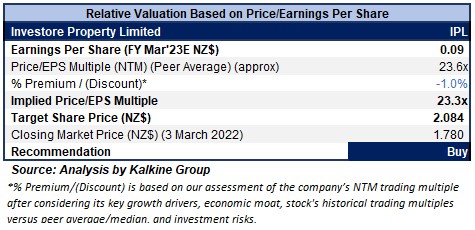
Valuation Methodology: Price/Earnings Per Share Based Relative Valuation (Illustrative)
Technical Overview:
Daily Price Chart
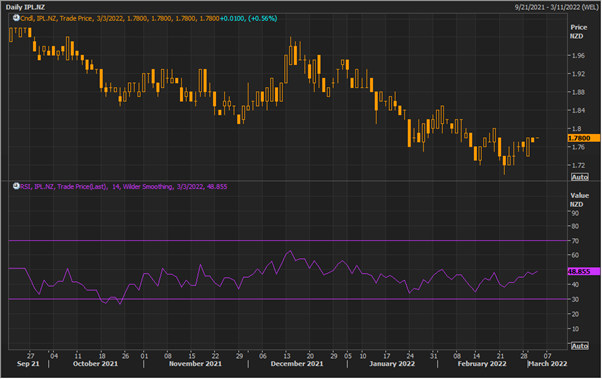
Source: REFINITIV, Note: Purple color line reflects Relative Strength Index (14-Period)
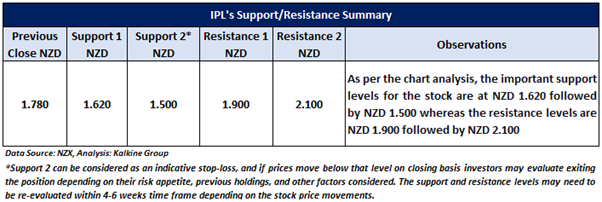
Stock Recommendation
The stock has been valued using a P/E multiple-based illustrative relative valuation, and the target price so arrived reflects a rise of low double-digit (in % terms). Accordingly, a slight discount has been applied to P/E Multiple (NTM) (Peer Average), considering increased debt to equity of 0.45x in H1FY22 versus 0.41x in H1FY2.
Considering the factors above, we give a “Buy” recommendation on the stock at the closing market price of $1.78 per share, up 0.56% as of 3rd March 2022.
3) Asset Plus Limited (Recommendation: Buy, Potential Upside: Low Double-Digit) (M-Cap: NZ$105.19 million, Gross Dividend Yield: 5.708%)
Business Description:
Asset Plus Limited (NZX: APL) is a listed property investment management company that manages a property portfolio of commercial and industrial buildings in major cities of NZ.
Outlook
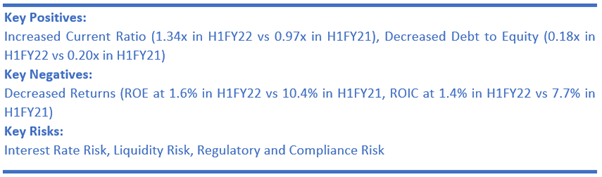
As per the management, the trend in the occupancy market will be a key focus area for the year ahead. The quality portfolio is sound, and its balance sheet is conservatively geared. Further, the company has sufficient funds for green Value Add opportunities. The focus area in the business in FY22 will be on the core operational elements – including addressing key expiries and remaining rent reviews leasing up remaining vacancies and developments. As outlined in the FY21 annual results, starting 1 April 2022, the policy will be to pay dividends between 85-100% of AFFO.
Technical Overview:
Daily Price Chart
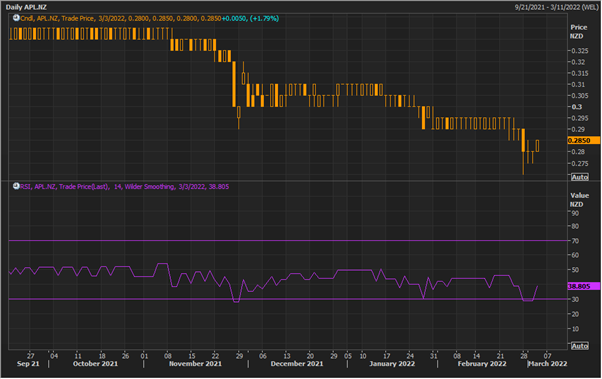
Source: REFINITIV, Note: Purple color line reflects Relative Strength Index (14-Period)
.png)
Stock Recommendation
Considering the factors above, we give a “Buy” recommendation on the stock at the current market price of $0.285 per share as of 3rd March 2022 (New Zealand Time: 12:17 PM (GMT +12)).
4) Precinct Properties New Zealand Limited (Recommendation: Hold, Potential Upside: Low Double-Digit) (M-Cap: NZ$2.51 billion, Gross Dividend Yield: 4.199%)
Business Description:
Precinct Properties New Zealand Limited (NZX: PCT) is the largest owner and developer of premium inner-city business space in Auckland and Wellington. The company has a market capitalization of $.. billion as on 17 November 2021.
Outlook
The company will continue to leverage the quality and resilience of its portfolio. Further, the company identifies that third-party capital facilitates opportunities and delivers higher returns from the capital. The Board expects an FY22 dividend of 6.70 cps to be paid, indicating a 3.1% YoY growth in total cash dividends to shareholders.
Valuation Methodology: Price/Earnings Per Share Based Relative Valuation (Illustrative)
Technical Overview:
Daily Price Chart
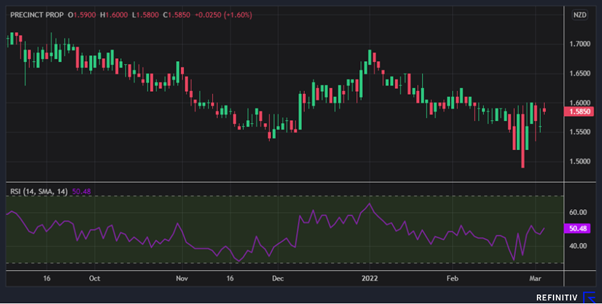
Source: REFINITIV, Note: Purple color line reflects Relative Strength Index (14-Period)
Stock Recommendation:
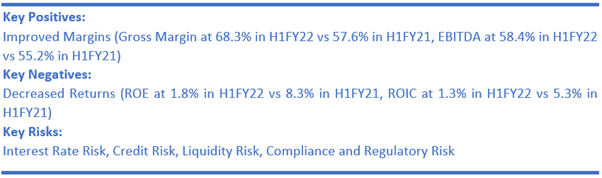
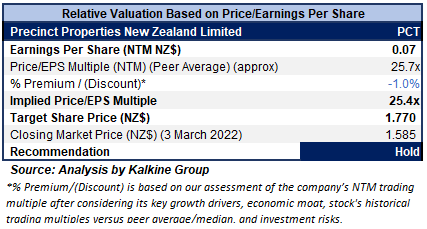
The stock has been valued using a P/E multiple-based illustrative relative valuation, and the target price so arrived reflects a rise of low double-digit (in % terms). A slight discount has been applied to P/E Multiple (NTM) (Peer Average), considering higher debt to equity at 0.48x in H1FY22 versus industry median of 0.44x and decreased returns in H1FY22.
Considering the fact above, we give a “Hold” recommendation on the stock at the closing market price of NZ$1.585 per share, up 1.60% as of 3rd March 2022.
Markets are trading in a highly volatile zone currently due to certain macro-economic issues and geopolitical tensions prevailing. Therefore, it is prudent to follow a cautious approach while investing.
Note 1: The reference data in this report has been partly sourced from REFINITIV.
Note 2: Investment decisions should be made depending on the investors’ appetite on upside potential, risks, holding duration, and any previous holdings. Investors can consider exiting from the stock if the Target Price mentioned as per the analysis has been achieved and subject to the factors discussed above alongside support levels provided.
Technical Indicators Defined: -
Support: A level where-in the stock prices tend to find support if they are falling, and downtrend may take a pause backed by demand or buying interest.
Resistance: A level where-in the stock prices tend to find resistance when they are rising, and uptrend may take a pause due to profit booking or selling interest.
Stop-loss: It is a level to protect further losses in case of unfavourable movement in the stock prices.
Disclaimer
Kalkine New Zealand Limited is authorised to provide general advice only. The information on this website does not take into account any of your investment objectives, financial situation or needs. Before you make a decision about whether to acquire a financial product, you should obtain the Product Disclosure Statement from the product issuer. You should consider the appropriateness of advice taking into account your own objectives, financial situation and needs and seek independent financial advice before making any financial decisions.
Past performance is not a reliable indicator of future performance.
 Please wait processing your request...