
 AU
AU
 UK
UK
 CA
CA
 US
US
 IND
IND

 NZ
NZ

Company Overview:
Sanford Limited (NZX: SAN) is a New Zealand-based company, which is engaged in fishing and aquaculture farming business. PGG Wrightson Limited (NZX: PGW) is an agricultural services business operating throughout New Zealand.
Kalkine’s Sector Report covers the Key Financial Metrics, Risks, Outlook, Technical Analysis along with the Valuation, Target Price, and Recommendation on the stock.
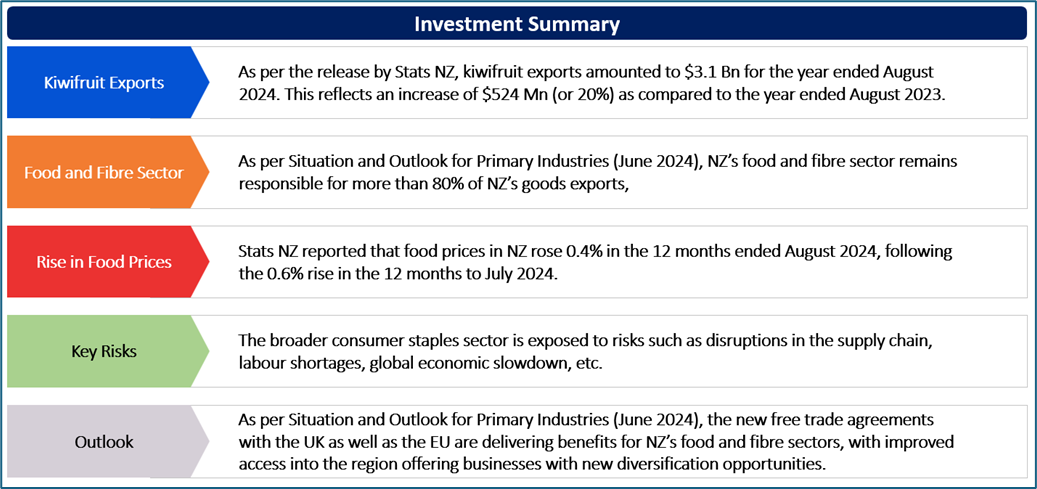
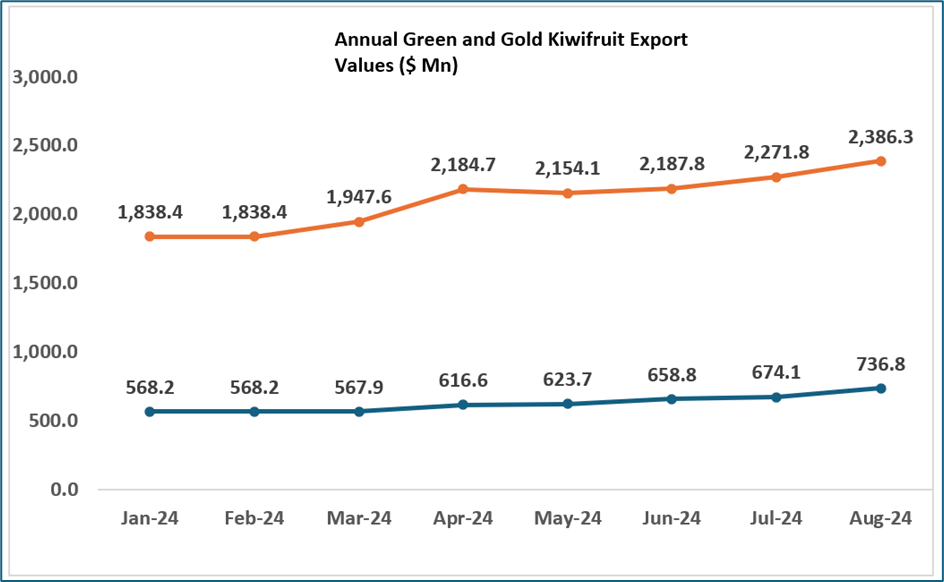
Stats NZ stated that kiwifruit exports amounted to $3.1 Bn for the year ended August 2024. This reflects an increase of $524 Mn (or 20%) as compared to the year ended August 2023. The Kiwifruit export values for the season so far were the highest they have ever been and the kiwifruit export season is typically from March to November. The gold kiwifruit exports stood at $2.4 Bn, up by $457 Mn (or 24%) from year ended August 2023. This increase was driven by an increase in quantity (up by 23%).
The green kiwifruit exports amounted to $737 Mn, up by $67 Mn (or 9.9%) over the same period. The rise in green kiwifruit export values were driven by an increase in price (up by 9.0%). The growers in NZ are increasingly planting gold, and now red, kiwifruit, in order to capture greater export value in markets like China and Japan.
As per Situation and Outlook for Primary Industries (June 2024), NZ’s food and fibre sector remains responsible for more than 80% of NZ’s goods exports, and the Government recognises the important role it plays in driving the economic success whether this is through the jobs it provides, or the rural communities it supports.
Exhibit 1: Annual Green and Gold Kiwifruit Export Values ($ Mn), year ended January 2024–August 2024
Data Source: This work is based on/includes Stats NZ’s data which are licensed by Stats NZ for reuse under the Creative Commons Attribution 4.0 International Licence; Chart Created by Kalkine Group
Rise in Food Prices
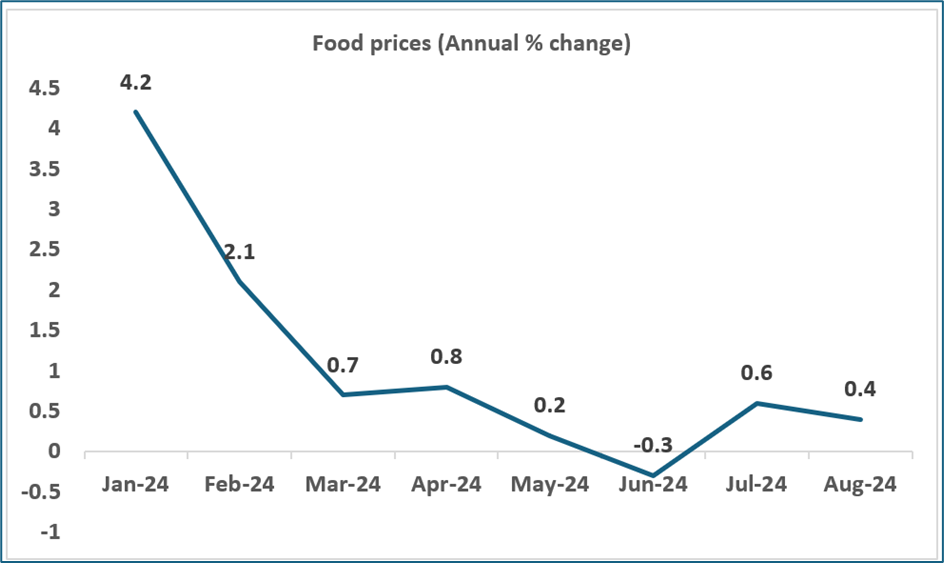
Stats NZ reported that food prices in NZ rose 0.4% in the 12 months ended August 2024, following the 0.6% rise in the 12 months to July 2024. The higher prices for restaurant meals as well as ready-to-eat food and grocery food resulted in the annual increase in food prices, up by 3.6% and 2.4%, respectively. Notably, the price rise in restaurant meals and ready-to-eat food was because of increased prices for lunch/brunch, hamburgers, and takeaway coffees.
Despite the overall rise in food prices, declining prices in the fruit and vegetables group was largest contribution to food prices, down by 12.2% for the 12 months ended August 2024.
Notably, the free trade agreements are benefiting NZ’s exports via increased quotas and reduced tariffs. The new and existing free trade agreements might provide improved commercial opportunities as well as boost food and fibre export revenue moving forward.
Exhibit 2: Food Prices (Annual % Change) ( January 2024 – August 2024)
Data Source: This work is based on/includes Stats NZ’s data which are licensed by Stats NZ for reuse under the Creative Commons Attribution 4.0 International Licence; Chart Created by Kalkine Group
Decline in Global Inflation
As per Situation and Outlook for Primary Industries (June 2024), the supply-chain disruptions during the pandemic as well as Russia’s conflict with Ukraine impacted the global economy with a series of supply shocks. Together with supportive fiscal and monetary policies during the pandemic, these shocks drove inflation in several countries to multi-decade high levels in 2022. The central banks throughout the world have raised interest rates to combat the inflation.
While inflation trends are encouraging, they are still higher as compared to the target levels in many countries.
Key Risks and Challenges:
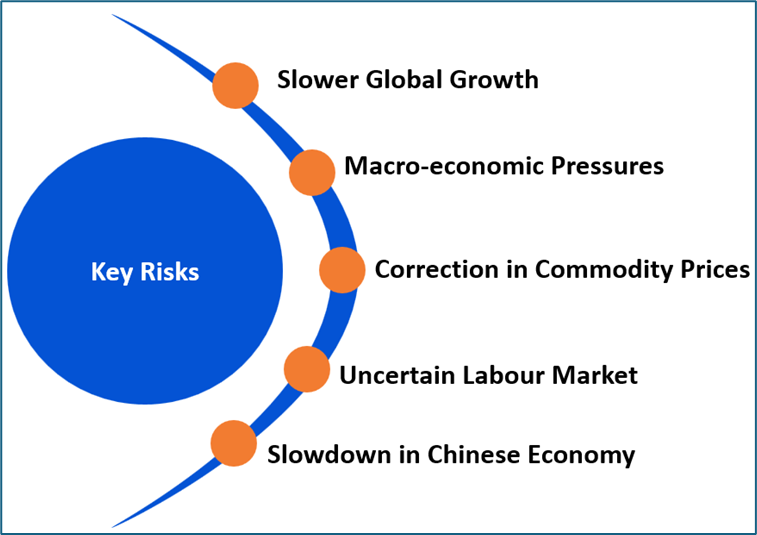
The broader consumer staples sector is exposed to risks such as global economic slowdown, inflationary impacts, etc. Also, geopolitical tensions might impact the supply chain.
Notably, the further weakening in consumer confidence might impact the broader consumer staples sector. Also, higher input costs might also reduce the producer profitability.
Exhibit 3. Key Risks in Consumer Staples Sector:
Source: Analysis by Kalkine Group
Outlook:
As per Situation and Outlook for Primary Industries (June 2024), the new free trade agreements with the UK as well as the EU are delivering benefits for NZ’s food and fibre sectors, with improved access into the region offering businesses with new diversification opportunities. For NZ’s horticultural sector, the tariffs were eliminated immediately on kiwifruit, apples, and onions, delivering savings of NZ$46 Mn per annum.
The NZ-EU FTA also strengthens NZ’s engagement with the EU throughout the key areas with a first-of-its-kind chapter on sustainable food systems creating a new platform for cooperation on topics like food loss and waste and the environmental and climate impacts of food production. Notably, agritech is expected to be a critical enabler of future productivity growth and sustainable production.
While the productivity at the farm level continues to look good in NZ overall, continuous improvements to productivity and sustainability would be made to increase the comparative and competitive advantage of food and fibre producers and future proof NZ’s farming systems.
Apart from the sector-specific factors, an analysis on three NZX-listed companies is provided. This report covers their insights, outlook, performance and potential as expected to be delivered in the near to medium term.
1) PGG Wrightson Limited (Recommendation: Buy, Potential Upside: Low Double-Digit) (M-Cap: NZD 139.6 million, Annual Dividend Yield: 7.51%)
Business Description:
PGG Wrightson Limited (NZX: PGW) is an agricultural services business operating throughout New Zealand.
Outlook:
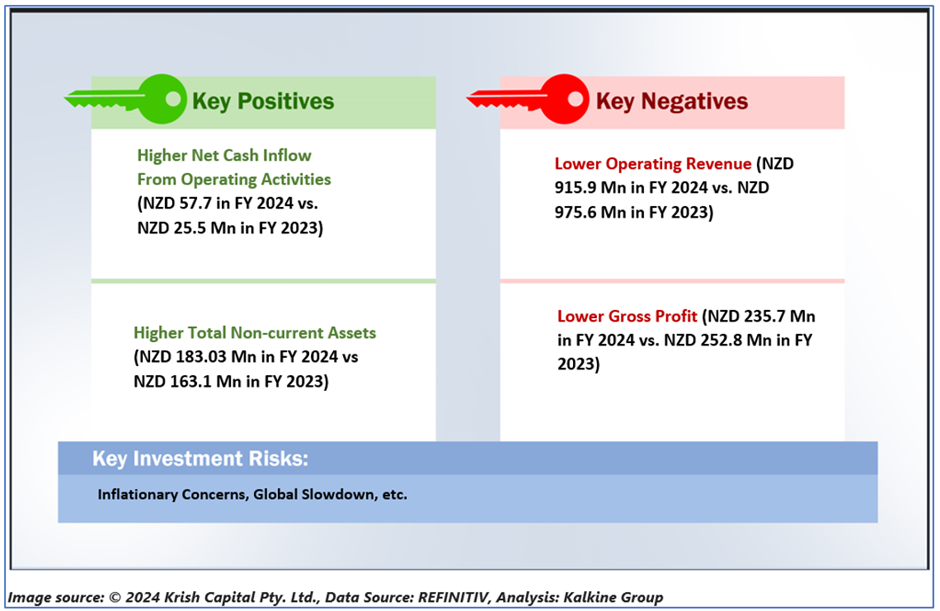
There are some positive signals with inflationary pressures easing as well as input costs stabilising. PGW is optimistic about longer term demand for sustainably produced, safe and trusted sources of food and fibre and the company expects that NZ growers are well placed to support the growth.
In view of the present operating environment, there has been increased focus within the towards cost control measures and monitoring of expenses like travel, vehicles and recruitment etc. The company renewed and extended its syndicated bank facilities during the year through to 2026. Such facilities offer extended term and working capital limits as well as allow for growth in the GO-STOCK book.
Technical Overview:
Technical Commentary
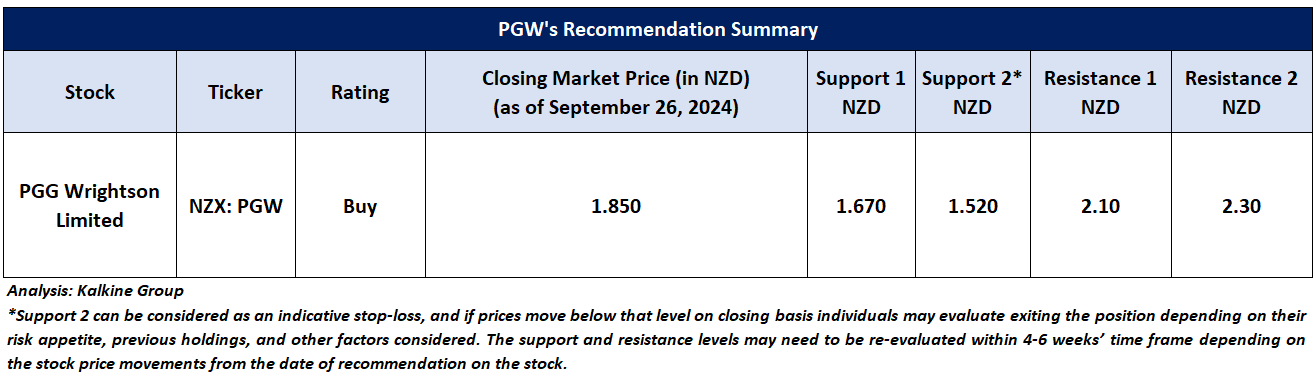
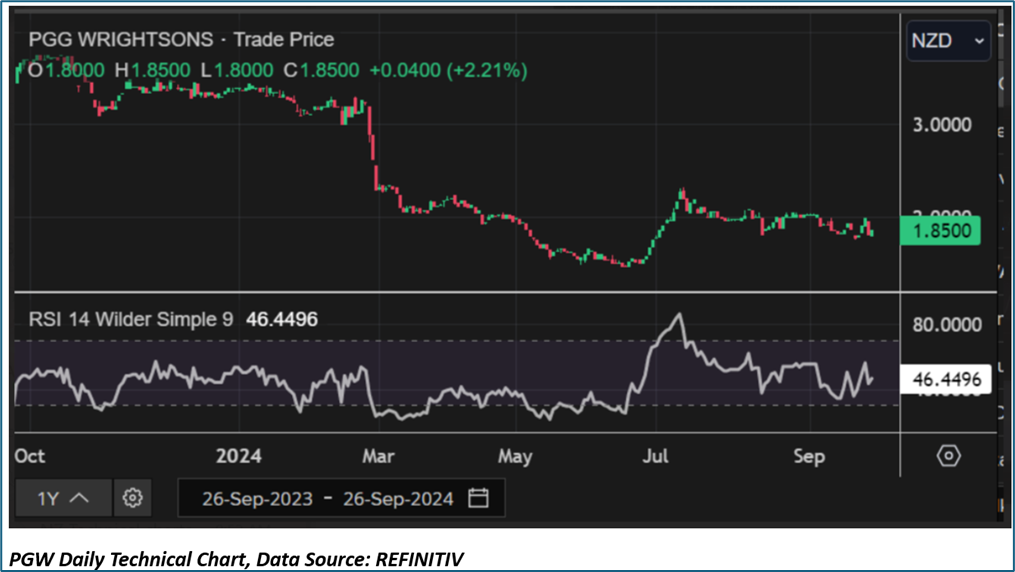
On the daily chart, PGW’s stock prices are forming a trading range characterized by identical highs and lows, suggesting that the current sideways period in the stock might remain in place in the near term. Moreover, the momentum oscillator RSI (14-period) is trading near its midpoint, adding more support to the previous recommendation. Prices are trading between its previous peak and trough, which might function as dynamic resistance and support levels for the stock, respectively. An important support level for the stock is situated at NZD 1.67, while crucial resistance level is placed at NZD 2.10.
Fundamental Valuation
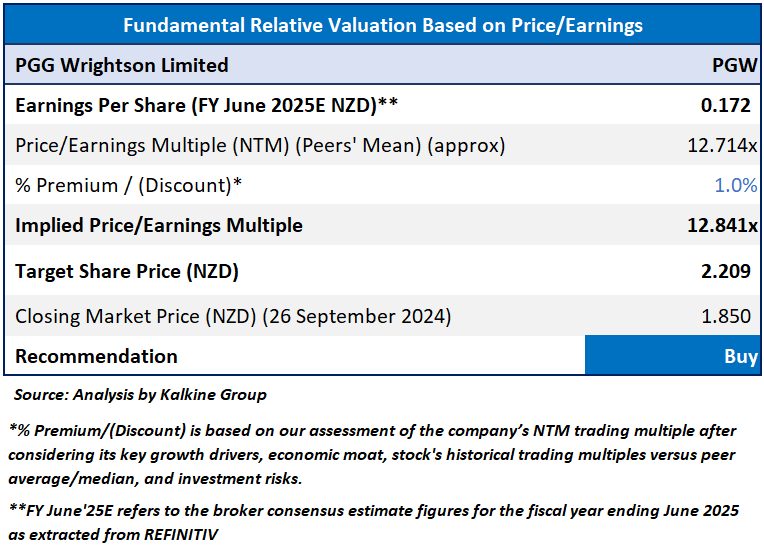
P/E Based Relative Valuation
Stock Recommendation
Considering the facts above, a ‘Buy’ recommendation on the stock has been provided at the closing market price of NZD 1.85 per share as on 26th September 2024.
2) Sanford Limited (Recommendation: Hold, Potential Upside: Low Double-Digit) (M-Cap: NZD 361.8 Mn, Annual Dividend Yield1: 3.95%)
Business Description:
Sanford Limited is a New Zealand-based company, which is engaged in fishing and aquaculture farming business.
Outlook:
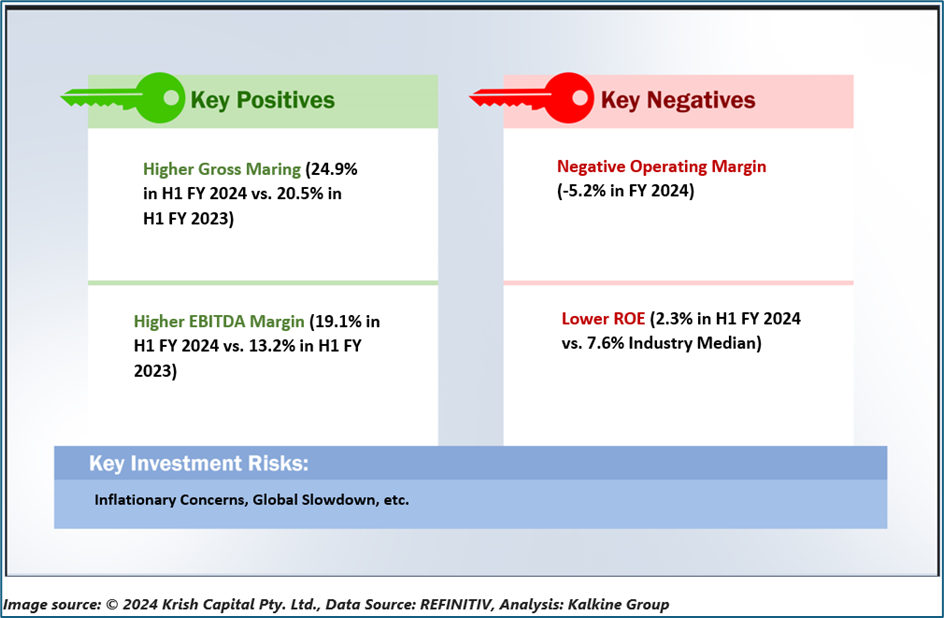
SAN is making excellent progress on its strategy and the company is moving forward with an experienced board and leadership team. The new Government has been supportive of the seafood and fishing industries, which might help the company’s growth ambitions, as SAN looks to expand the farms and increase its harvest, catch and export of quality seafood to the world. SAN is on track to deliver another improved full year performance in FY 2024.
Technical Overview:
Technical Commentary
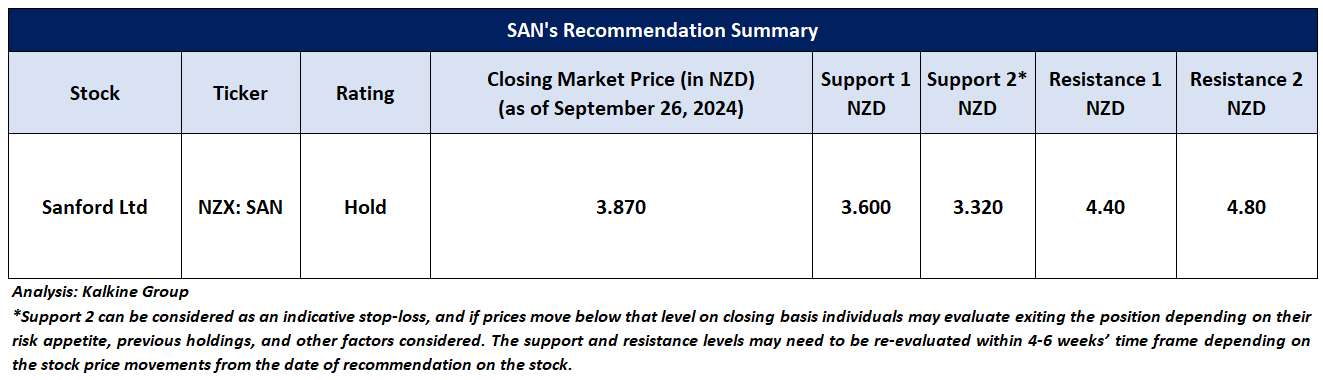
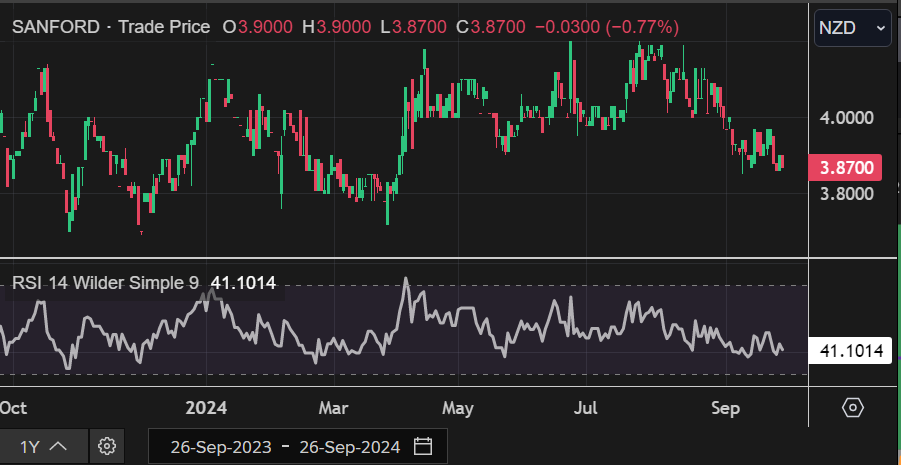
On the daily chart, SAN’s stock prices are forming a trading range characterized by identical peaks and troughs, suggesting that the current sideways period in the stock might continue to persist in the near future. Moreover, the momentum oscillator RSI (14-period) is trading near its midpoint, prividing further support to the mentioned observation. Prices are trading between its previous peak and trough, which might function as dynamic resistance and support levels for the stock, respectively. An important support level for the stock is situated at NZD 3.60, while crucial resistance level is placed at NZD 4.40.
Fundamental Valuation
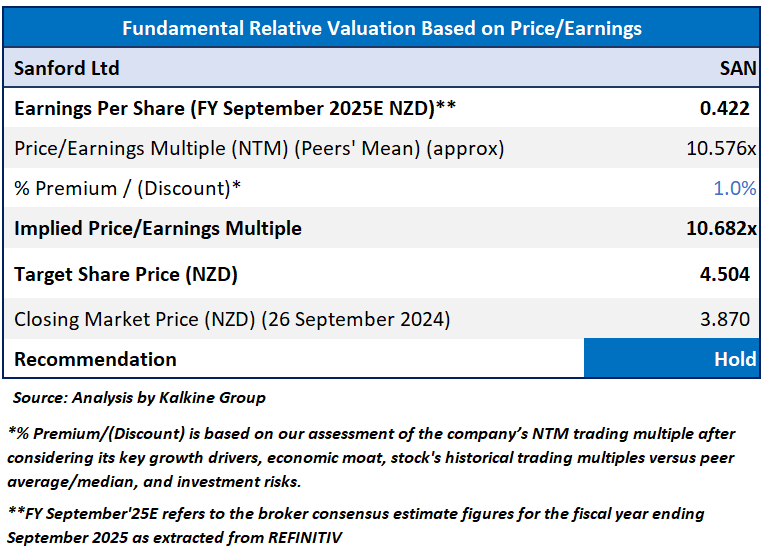
P/E Based Relative Valuation
Stock Recommendation
Considering the facts above, a ‘Hold’ recommendation on the stock has been provided at the closing market price of NZD 3.870 per share, down buy 0.77 % as on 26 September 2024 .
Markets are trading in a highly volatile zone currently due to certain macro-economic issues and geopolitical tensions prevailing. Therefore, it is prudent to follow a cautious approach while investing.
Note 1: Past performance is not a reliable indicator of future performance.
Note 2: The reference data in this report has been partly sourced from REFINITIV.
Note 3: Investment decisions should be made depending on an individual's appetite for upside potential, risks, holding duration, and any previous holdings. An 'Exit' from the stock can be considered if the Target Price mentioned as per the Valuation and or the technical levels provided has been achieved and is subject to the factors discussed above.
Note 4: Annual Dividend Yield is on a Trailing Twelve Month (TTM1) basis and are subject to change based on factors such as company performance, stock price changes, etc.
Technical Indicators Defined: -
Support: A level at which the stock prices tend to find support if they are falling, and a downtrend may take a pause backed by demand or buying interest. Support 1 refers to the nearby support level for the stock and if the price breaches the level, then Support 2 may act as the crucial support level for the stock.
Resistance: A level at which the stock prices tend to find resistance when they are rising, and an uptrend may take a pause due to profit booking or selling interest. Resistance 1 refers to the nearby resistance level for the stock and if the price surpasses the level, then Resistance 2 may act as the crucial resistance level for the stock.
Stop-loss: It is a level to protect further losses in case of unfavourable movement in the stock prices.
Disclaimer This report has been issued by Kalkine New Zealand Limited (FSP691351) (NZBN:9429047678101) (“Kalkine”). Kalkine is a Financial Advice Provider (“FAP”) and is authorised by a Class 1 Financial Advice Provider Licence issued by Financial Markets Authority (“FMA”) to provide financial advice. Kalkine provides only general financial advice through its research reports following a person becoming a member. The reports contain buy/sell/hold and other recommendations in relation to equity securities, managed funds and other managed investment schemes and other financial advice products. The recommendations and opinions in this report and on Kalkine website do not take into account any of your investment objectives, financial situation or needs. Before you make a decision about whether to acquire a financial product, you should obtain the Product Disclosure Statement from the product issuer. You should consider the appropriateness of advice taking into account your own objectives, financial situation and needs and seek independent financial advice before making any financial decisions. If you act on the advice in the research reports, you may have to pay fees, expenses or other amounts (but not to Kalkine). Further information about the complaints and dispute resolution process, as well as information about Kalkine’s duties are available on Kalkine’s website. Please read our Financial Advice Provider (FAP) disclosure statement and Complaints Handling Guide, which are available on the website.
Past performance is not a reliable indicator of future performance.
 Please wait processing your request...