
 AU
AU
 UK
UK
 CA
CA
 US
US
 IND
IND

 NZ
NZ

Company Overview:
Foley Wines Limited (NZX: FWL) is an integrated wine company. It is engaged in producing as well as distributing table wines. Marlborough Wine Estates Group Limited (NZX: MWE) owns as well as operates vineyards in Awatere Valley, Marlborough.
Kalkine’s Sector Report covers the Key Financial Metrics, Risks, Outlook, Technical Analysis along with the Valuation, Target Price, and Recommendation on the stock.
1. Sector Landscape and Outlook
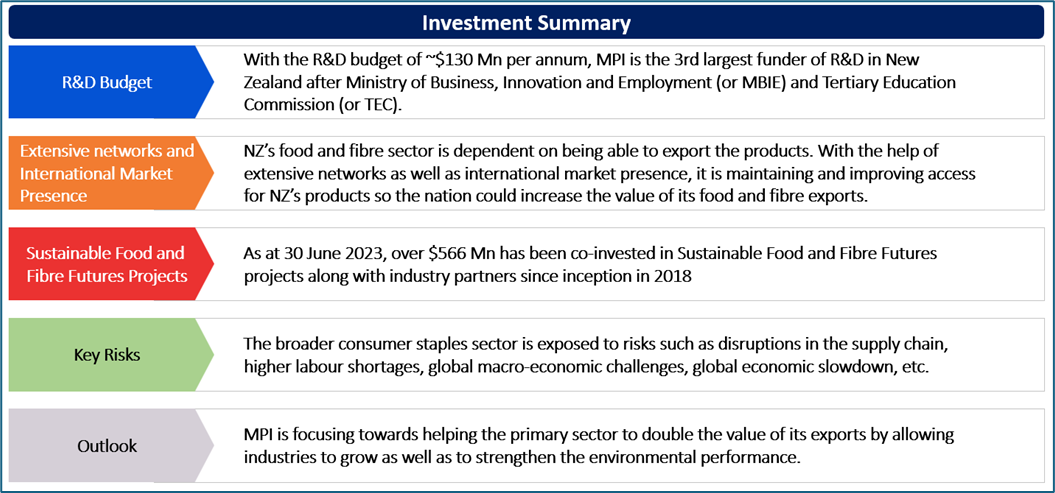
MPI is known as the credible science-based organisation which utilises and generates robust as well as relevant science in order to support and transform biosecurity, food safety, primary production and trade. Coming to the current State of the MPI science system, as an organisation, it is relying on the science as well as science evidence to support Government targets, which includes Business Growth Agenda, in which MPI is targeting to support achieve goals of increasing the ratio of exports to GDP from the current 30% to 40% by 2025.
With the R&D budget of ~$130 Mn per annum, MPI is the 3rd largest funder of R&D in New Zealand after Ministry of Business, Innovation and Employment (or MBIE) and Tertiary Education Commission (or TEC).
NZ’s food and fibre sector is dependent on being able to export the products to the world. With the help of extensive networks as well as international market presence, it is maintaining and improving access for NZ’s products so the nation could increase the value of its food and fibre exports.
As at 30 June 2023, over $566 Mn has been co-invested in Sustainable Food and Fibre Futures projects along with industry partners since inception in 2018 as well as over $38.4 Mn remains committed to 58 Sustainable Food and Fibre Futures projects in 2022/23.
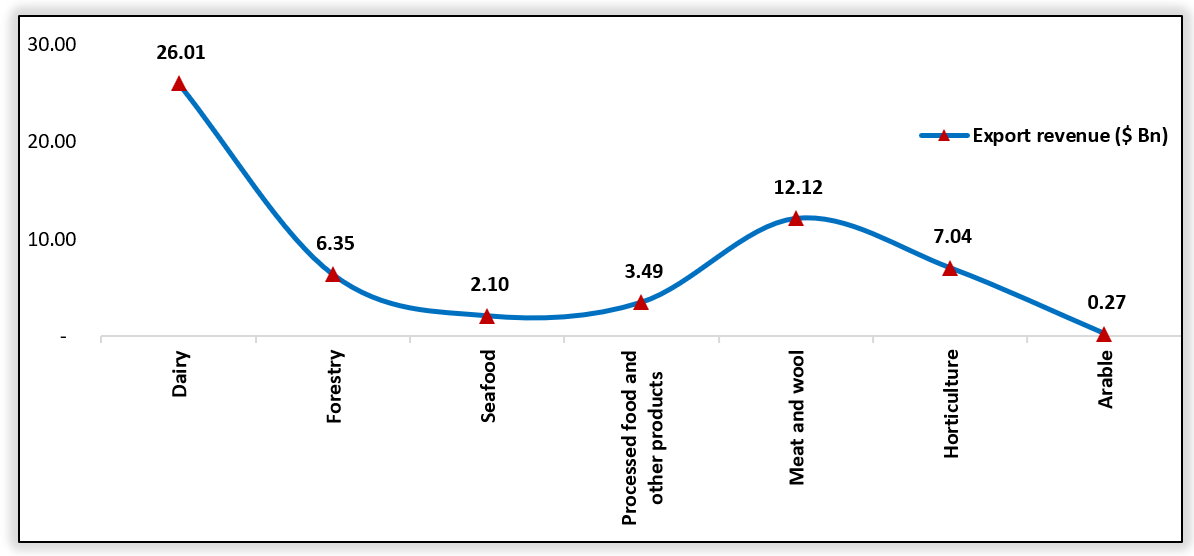
Exhibit 1: Export Revenue (Year to 30 June 2023) NZ$ Bn
Data Source: This work is based on/includes Stats NZ’s data which are licensed by Stats NZ for reuse under the Creative Commons Attribution 4.0 International Licence; Chart Created by Kalkine Group
Agricultural Production Statistics: Year Ended June 2023 (Final)
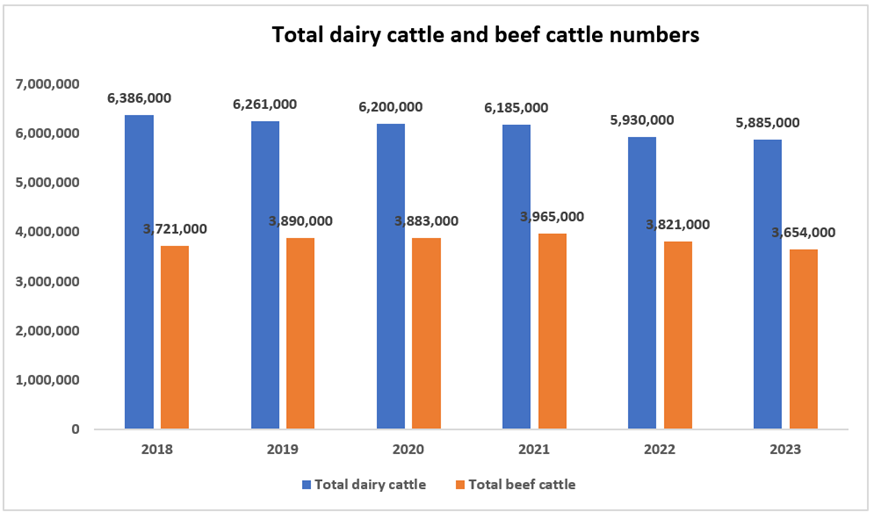
The agricultural production statistics include results related to key livestock, forestry, and arable crops. As per Stats.NZ, as at 30 June 2023, the number of beef cattle stood at 3.7 Mn, reflecting a fall of 4% from 2022 and sheep was 24.4 Mn, down by 3% from 2022. Notably, the number of dairy cattle was 5.9 million, reflecting a fall of 1% from 2022 as well as deer was 742,000, down by 7% from 2022.
During the year ended 30 June 2023, the area of wheat harvested stood at 40,500 hectares, reflecting a decline of 6% from 2022 as well as barley harvested was 50,100 hectares, which implies a rise of 4% from 2022.
As per Stats NZ, there was the total of 13.2 Mn hectares of land engaged in agricultural activity as at 30 June 2023.
Exhibit 2: Total Dairy Cattle And Beef Cattle Numbers, 2018–2023
Data Source: This work is based on/includes Stats NZ’s data which are licensed by Stats NZ for reuse under the Creative Commons Attribution 4.0 International Licence; Chart Created by Kalkine Group
Consumers Price Index: March 2024 Quarter
As per Stats NZ, quarterly inflation rate stood at 0.6% (for the March 2024 quarter) as well as annual inflation rate stood at 4.0%. The quarterly non-tradeable inflation rate was 1.6% and annual non-tradeable inflation rate was 5.8%.
Talking about the quarterly change, alcoholic beverages and tobacco increased by 3.4% because of cigarettes and tobacco (up by 6.5%) as well as alcoholic beverages (up by 1.0%). The recreation and culture increased 2.4% because of accommodation services (which were up by 6.7%) and recreational and cultural services (up by 2.0%).
The 0.6% increase in overall CPI was partly offset by transport, which declined 2.5%. This was because of passenger transport services (down by 6.3%), private transport supplies and services (declined by 1.4%) as well as purchase of vehicles (which fell by 1.5%).
Key Risks and Challenges:
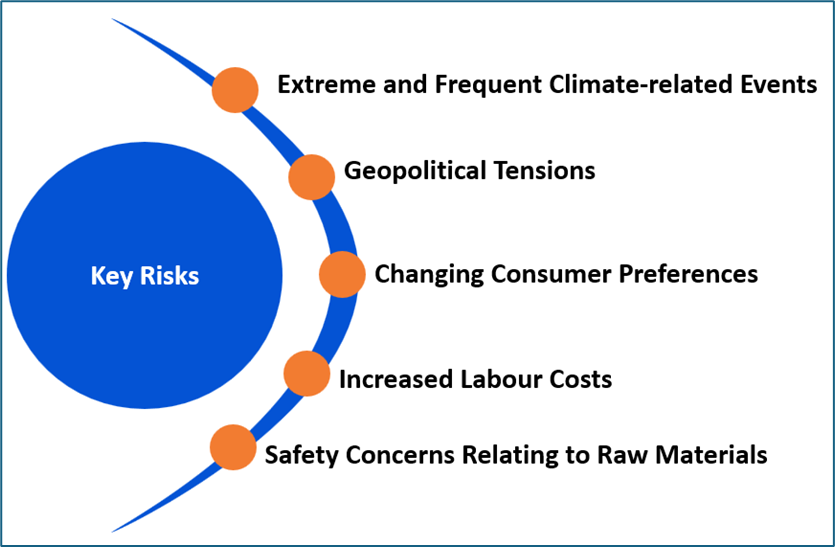
The broader consumer staples sector is exposed to risks such as disruptions in the supply chain, higher labour shortages, global macro-economic challenges, global economic slowdown, etc. As a result of these challenges, the companies might encounter disruptions throughout their operations.
Extreme as well as frequent climate-related events are having significant effects throughout the world, which includes food and fibre production systems. In order to combat the climate change, NZ has committed to decreasing its methane emissions and achieving net zero for other greenhouse gases by 2050. Also, the global food consumption patterns are witnessing a change.
Exhibit 3. Key Risks in Consumer Staples Sector:
Source: Analysis by Kalkine Group
Outlook:
MPI is focused towards success of the primary industries for the benefit of all New Zealanders. MPI is focusing towards helping the primary sector to double the value of its exports by allowing industries to grow as well as to strengthen the environmental performance. The focus is towards maximising export opportunities, improving sector productivity, increasing sustainable resource use as well as protecting from biological risk.
The climate change is already occurring, impacting land productivity as well as marine environment. The rising frequency of severe weather events is leading to significant impacts for the rural communities. Recently, the Government released Emissions Reduction Plan, setting out actions NZ would take to meet the emissions reduction targets.
As part of this plan, farmers would be supported to reduce emissions, accelerate development and adoption of climate mitigation technologies as well as initiate actions in order to improve forestry’s contribution to reducing emissions.
The consumers in global trading markets would continue to prioritise high-quality food. Therefore, a shift to more efficient as well as environmentally sustainable agricultural practices would be enhancing the ability of NZ food and fibre sector to market high-value products and improve the returns.
Apart from the sector-specific factors, an analysis on three NZX-listed companies is provided. This report covers their insights, outlook, performance and potential as expected to be delivered in the near to medium term.
1) Foley Wines Limited (Recommendation: Speculative Buy, Potential Upside: Low Double-Digit) (M-Cap: NZD 49.3 million)
Business Description:
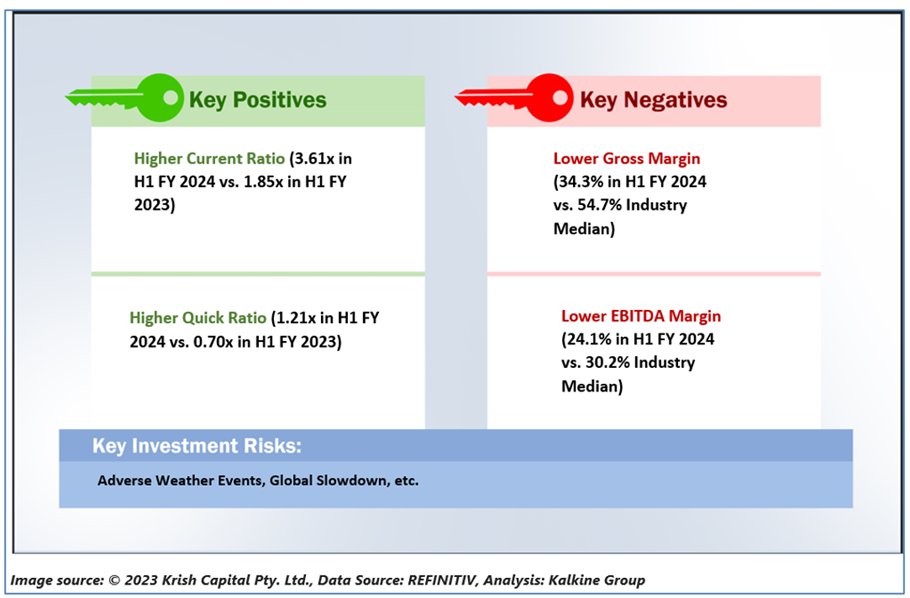
Foley Wines Limited (NZX: FWL) is an integrated wine company. It is engaged in producing as well as distributing table wines.
Outlook:
FWL announced that the company completed its harvest for 2024 vintage. The harvest totalled 6,404 tonnes across Grove Mill as well as Vavasour wineries in Marlborough, Te Kairanga and Martinborough Vineyard wineries in Martinborough and Mt Difficulty winery in Central Otago, an overall decline of 21% on last year’s harvest of 8,137 tonnes.
The company has established some robust global partnerships which would certainly help in navigating FWL’s way through the headwinds in global economy.
Technical Overview:
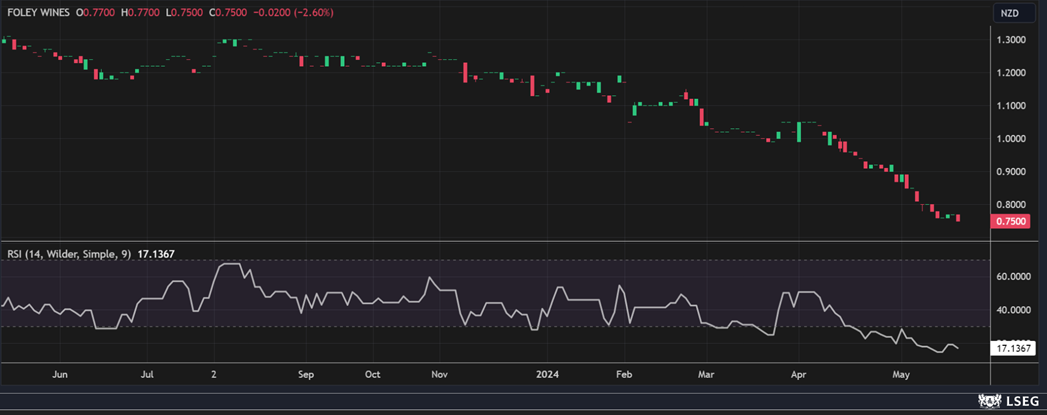
FWL Daily Technical Chart, Data Source: REFINITIV
Technical Commentary
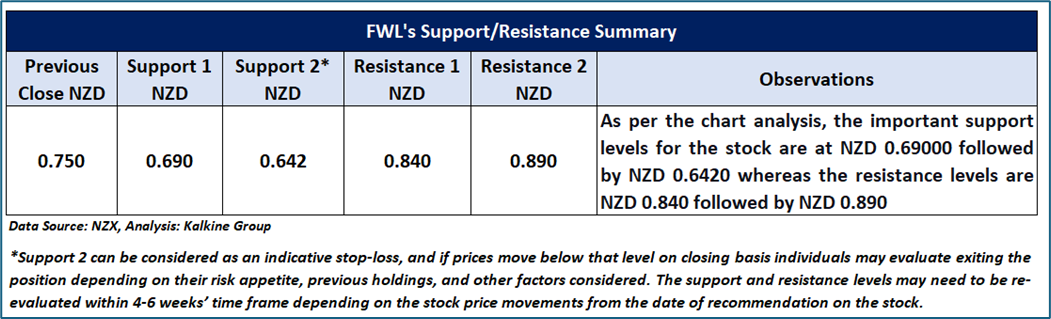
On the daily chart, FWL’s stock prices are forming a downtrend characterized by lower lows and lower highs, indicating a negative bias. In contrast, the momentum oscillator RSI (14-period) is trading deep in its oversold region, anticipating for a minor rally. Prices are trading below both the trend-following indicators 21-period and 50-period SMAs, which might function as dynamic resistance levels for the stock; in contrast, the stock’s nearest round level might serve as a sentimental support. An important support level for the stock is situated at NZD 0.69, while crucial resistance level is placed at NZD 0.84
Stock Recommendation
Considering the facts above, a ‘Speculative Buy’ recommendation on the stock has been provided at the closing market price of NZD 0.750 per share, down by 2.60% as on 16 May 2024
2) Marlborough Wine Estates Group Limited (Recommendation: Speculative Buy, Potential Upside: Low Double-Digit) (M-Cap: NZD 40.9 Mn)
Business Description:
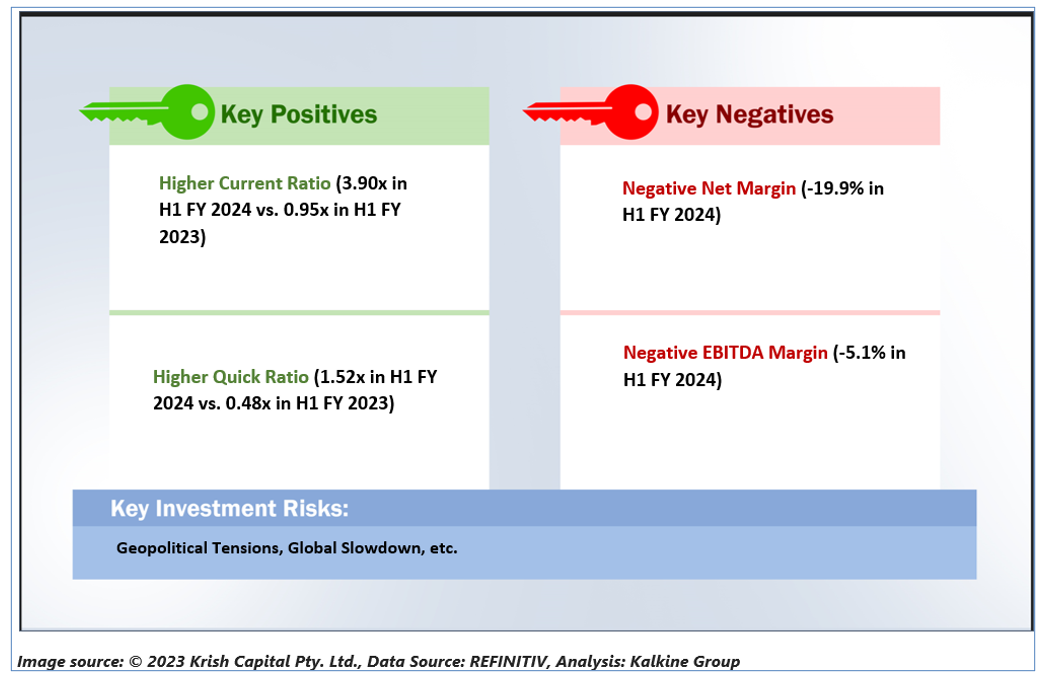
Marlborough Wine Estates Group Limited (NZX: MWE) owns as well as operates vineyards in Awatere Valley, Marlborough.
Outlook:
MWE successfully completed the 2024 harvest, which has delivered exceptional fruit quality. The company has reduced bulk wine sales in the current year to make sure that it could continue to pursue its branded wine growth strategy. This, along with harvested grapes, would be enabling the group to pursue growth of its branded wine sales in domestic as well as international markets for the year ahead.
Technical Overview:
Technical Commentary
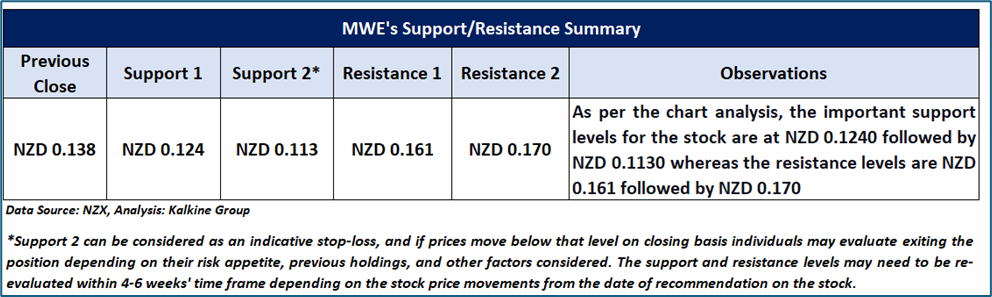
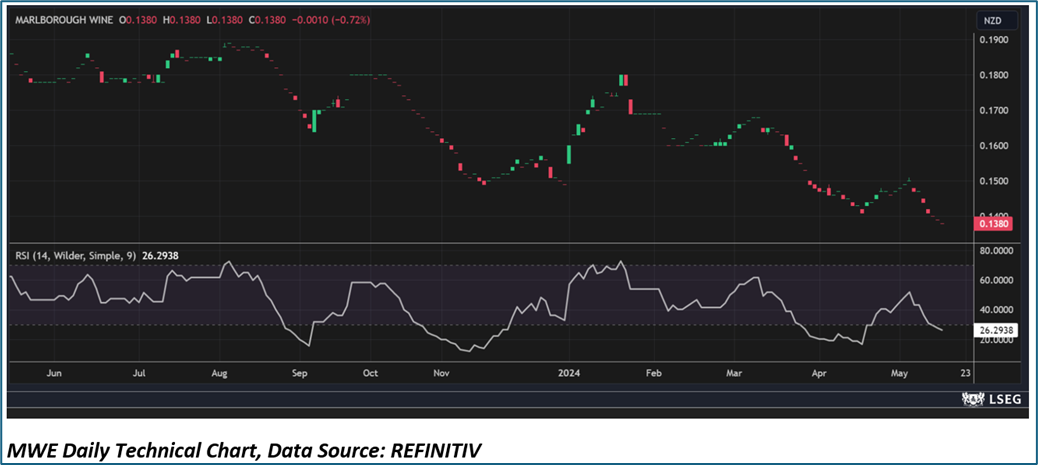
While experiencing a downtrend, MWE’s stock prices are establishing a descending wedge pattern on the daily chart, suggesting that the downside momentum in the stocks has been halting. Moreover, the momentum oscillator RSI (14-period) is forming a bottom divergence in relation to prices, providing further support to the previous observation. Prices are trading below the trend-following indicators 21-period and 50-period SMAs, which might function as dynamic resistance levels for the stock; in contrast, the stock’s nearest round level may act as a sentimental support. A significant support level for the stock is positioned at NZD 0.124, while critical resistance level is located at NZD 0.161.
Stock Recommendation
Considering the facts above, a ‘Speculative Buy’ recommendation on the stock has been provided at the closing market price of NZD 0.138 per share, down by 0.72% as on 16 May 2024.
Markets are trading in a highly volatile zone currently due to certain macro-economic issues and geopolitical tensions prevailing. Therefore, it is prudent to follow a cautious approach while investing.
Note 1: Past performance is not a reliable indicator of future performance.
Note 2: The reference date for all price data, currency, technical indicators, support, and resistance levels is May 16, 2024. The reference data in this report has been partly sourced from REFINITIV.
Note 3: Investment decisions should be made depending on an individual's appetite for upside potential, risks, holding duration, and any previous holdings. An 'Exit' from the stock can be considered if the Target Price mentioned as per the Valuation and or the technical levels provided has been achieved and is subject to the factors discussed above.
Note 4: Annual Dividend Yield is on a Trailing Twelve Month (TTM1) basis and are subject to change based on factors such as company performance, stock price changes, etc.
Technical Indicators Defined: -
Support: A level at which the stock prices tend to find support if they are falling, and a downtrend may take a pause backed by demand or buying interest. Support 1 refers to the nearby support level for the stock and if the price breaches the level, then Support 2 may act as the crucial support level for the stock.
Resistance: A level at which the stock prices tend to find resistance when they are rising, and an uptrend may take a pause due to profit booking or selling interest. Resistance 1 refers to the nearby resistance level for the stock and if the price surpasses the level, then Resistance 2 may act as the crucial resistance level for the stock.
Stop-loss: It is a level to protect further losses in case of unfavourable movement in the stock prices.
Kalkine New Zealand Limited is a Financial Advice Provider (“FAP”) and is authorised by a Class 1 Financial Advice Provider Licence issued by Financial Markets Authority (“FMA”) to provide financial advice. Kalkine provides only general financial advice through its research reports following a person becoming a member. The reports contain buy/sell/hold and other recommendations in relation to equity financial products. The recommendations and opinions [on this website] / [in this report] do not take into account any of your investment objectives, financial situation or needs. Before you make a decision about whether to acquire a financial product, you should obtain the Product Disclosure Statement from the product issuer. You should consider the appropriateness of advice taking into account your own objectives, financial situation and needs and seek independent financial advice before making any financial decisions. If you act on the advice in the research reports, you may have to pay fees, expenses or other amounts (but not to Kalkine). Further information about the complaints and dispute resolution process, as well as information about Kalkine’s duties are available on Kalkine’s website. Please read our Financial Advice Provider (FAP) disclosure statement and Complaints Handling Guide, which are available on the website.
Past performance is not a reliable indicator of future performance.
 Please wait processing your request...