
 AU
AU
 UK
UK
 CA
CA
 US
US
 IND
IND

 NZ
NZ

Company Overview:
Genesis Energy Limited (NZX: GNE) is a New Zealand-based diversified energy company. Chatham Rock Phosphate Limited (NZX: CRP) is an exploration and development company which is focused towards becoming a diversified phosphate developer and trader.
Kalkine’s Sector Report covers the Investment Highlights, Key Financial Metrics, Risks, Outlook, Technical Analysis along with the Valuation, Target Price, and Recommendation on the stock.
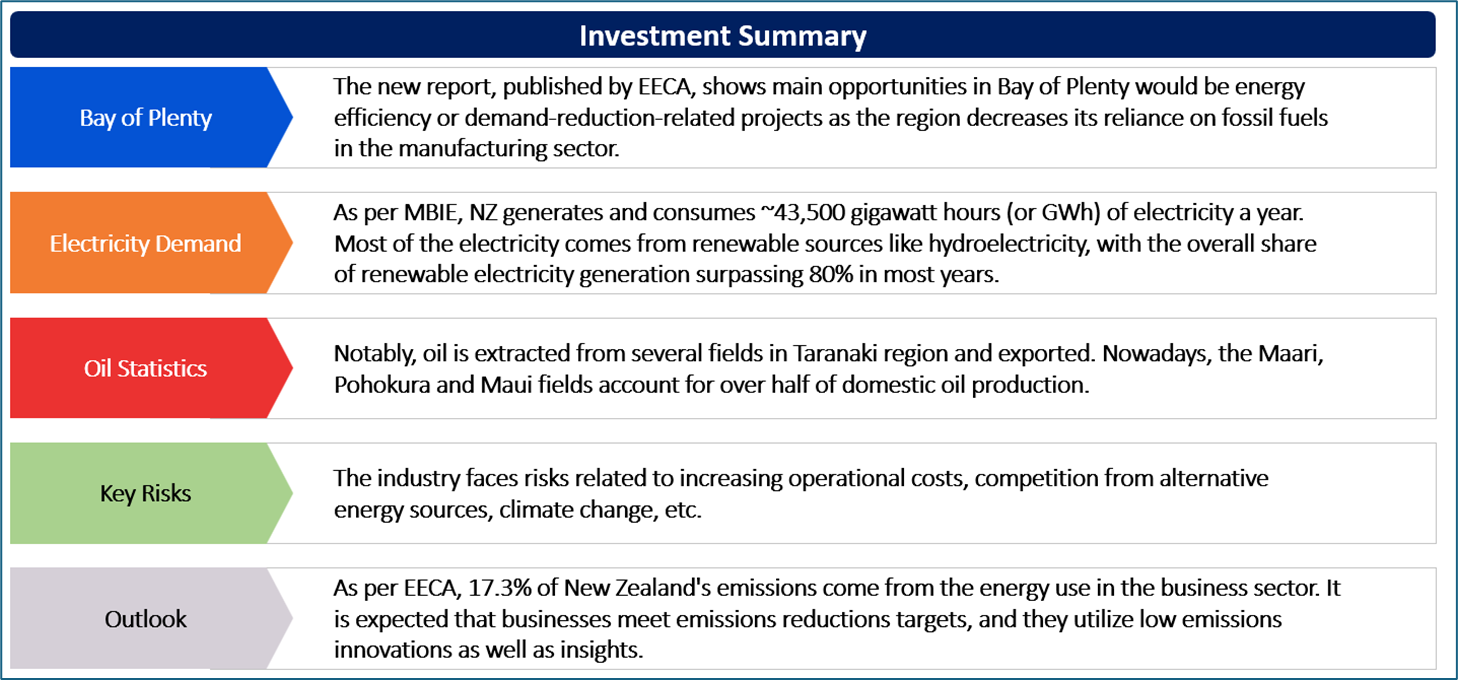
The new report, published by EECA (or the Energy Efficiency and Conservation Authority), shows main opportunities in Bay of Plenty would be energy efficiency or demand-reduction-related projects as the region decreases its reliance on fossil fuels in the manufacturing sector. These opportunities would be complementing viable renewable energy source options of biomass, electrification, as well as geothermal within the region. As per the release, The Bay of Plenty is unique from most other regions in that it has an abundance of geothermal and biomass resources.
Economically, it makes sense for local businesses to seriously explore the potential of geothermal as an energy source for the purposes of industrial processing.
In 2016, NZ and 200 other countries entered the legally binding international agreement, known as the Paris Agreement, which requires each country to reduce emissions to help limit global warming. In 2019, the Government also set a legislated domestic target of net zero greenhouse gas emissions (except biogenic methane) by 2050. In May 2022, the Government published the first 3 emissions budgets for 2022– 2025, 2026–2030, and 2031–2035. It also published the first Emissions Reduction Plan (or ERP) with policies as well as strategies for meeting the emissions budgets.
As per EECA, 17.3% of New Zealand's emissions come from the energy use in the business sector. It is expected that businesses meet emissions reductions targets and they utilise low emissions innovations as well as insights. Also, 18.3% of NZ’s emissions come from energy use in the transport sector. It is expected that NZ adopts low-emissions transport technologies and fuels.
Electricity Generation
As per MBIE, NZ generates and consumes ~43,500 gigawatt hours (or GWh) of electricity a year. Most of the electricity comes from renewable sources like hydroelectricity, with the overall share of renewable electricity generation surpassing 80% in most years. The hydroelectric generation has been a part of NZ’s energy system for more than 100 years and continues to provide the majority of the electricity needs. Currently, there's more than 5,000 MW of installed hydro capacity. The majority of it is found in the South Island.
Notably, wind generation has grown quickly as the source of electricity in NZ. The electricity generation from the combustion of coal, oil, and gas gives baseload, backup as well as peaker electricity supply.
Exhibit 1: Trend in Renewable Share (%)-Four-Quarter Moving Average
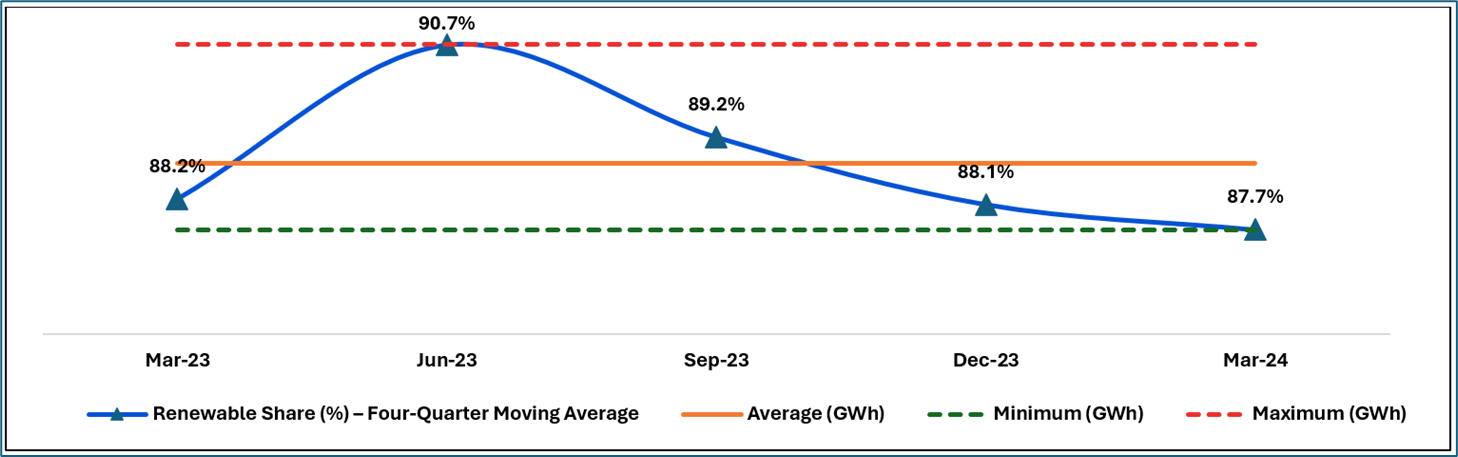
Data Source: This work is owned by the Ministry of Business, Innovation and Employment on behalf of the Crown which are licensed for reuse under the Creative Commons Attribution 4.0 International Licence; Chart Created by Kalkine Group
Oil Statistics
Oil is NZ’s largest source of energy and therefore has the strong influence on the economy. The deregulation of oil industry in 1988 removed price controls, government involvement in the refinery, licensing of wholesalers and retailers as well as restrictions on imports of refined products. Notably, oil is extracted from several fields in Taranaki region and exported. Nowadays, the Maari, Pohokura and Maui fields account for over half of domestic oil production.
New Zealand is the net importer of oil. In April 2022, Channel Infrastructure started operating as a fuel import terminal at Marsden Point in Northland. Notably, most oil is imported from refineries in Singapore, South Korea and Japan.
Exhibit 2: Oil Supply (Gross Petajoules (PJ)) (Quarterly)
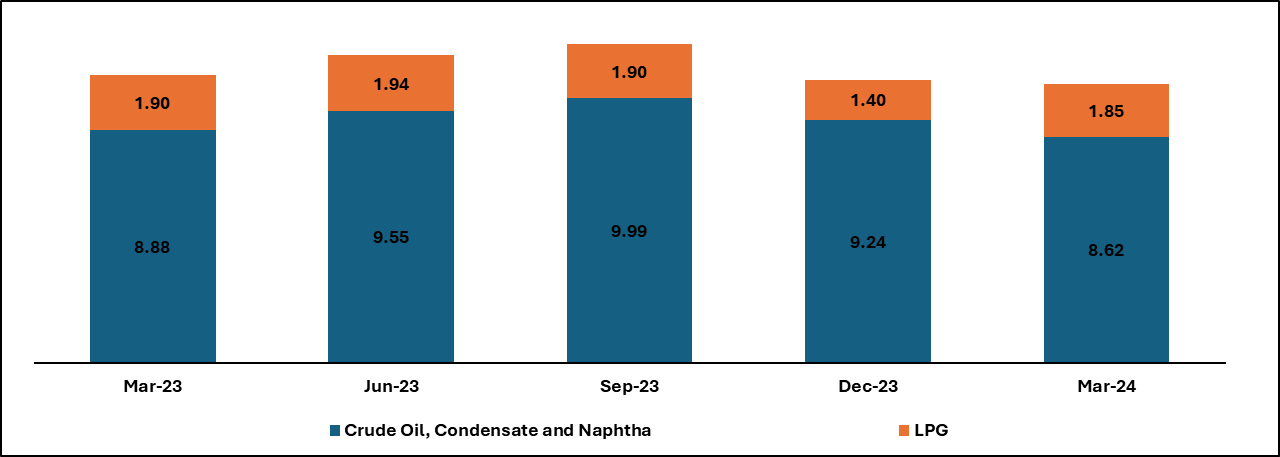
Data Source: This work is owned by the Ministry of Business, Innovation and Employment on behalf of the Crown which are licensed for reuse under the Creative Commons Attribution 4.0 International Licence; Chart Created by Kalkine Group
Key Risks and Challenges:
The companies operating in the energy sector could face risks including increased generation costs, lower hydro inflows as well as unplanned outages. Notably, higher fuel costs and emissions are another critical risks. Moreover, hydrological conditions, gas availability and any sort of material adverse events or unforeseeable circumstances could impact the broader utilities sector in NZ.
The sector could get adversely impacted due to climate-related risks, physical risks of slips and trips and confronting weather conditions, etc.
Exhibit 3. Key Risks in Utilities Sector:
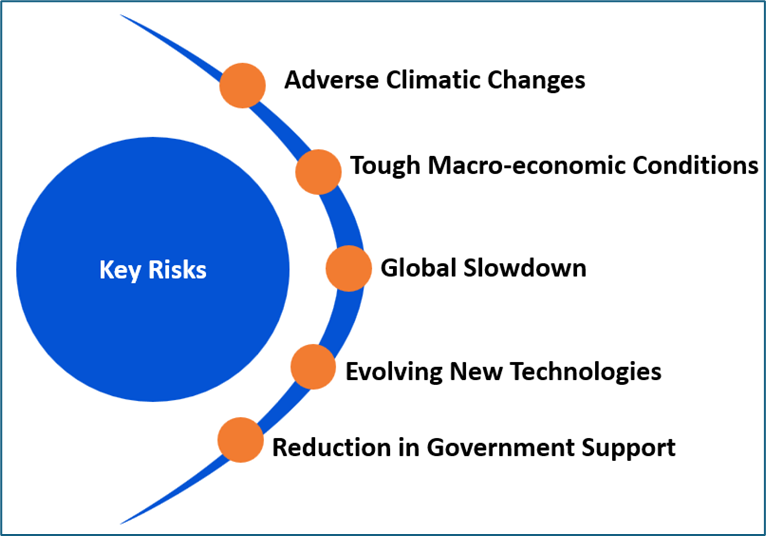
Source:- Analysis: Kalkine Group
Outlook:
As per EECA, Energy Minister Simeon Brown announced that the public EV charging network would soon boast 25 new high-speed charging hubs along key routes between major urban centres as well as outlined the Government’s plan to supercharge NZ’s EV infrastructure. The Government has a plan to significantly increase the number of public EV chargers throughout NZ with a goal of 10,000 charging points by 2030. This is part of the ambitious target to reduce net greenhouse gas emissions, aligned with Net Zero 2050 goal.
In order to deliver the plan, Cabinet has agreed to develop new model to support investment in EV charging infrastructure in NZ.
Recently, the emissions budgets have been set and the focus is towards implementing work programmes which deliver on them. At EECA, the focus is towards helping New Zealanders understand and reduce their energy-related emissions. In order to help meet the targets and achieve sustainable energy system, the focus is towards combination of 3 levers: co-funding and investment, regulation, and motivating people.
The activities EECA delivers in 2023/24 would be contributing to sustainable energy system in NZ which supports prosperity and wellbeing of current and future generations. The work programme aligns with Government’s priorities and is consistent with expectations set out by Minister of Energy and Resources.
Apart from the sector-specific factors, an analysis on two NZX-listed companies is provided. This report covers their insights, outlook, performance and potential as expected to be delivered in the near to medium term.
1) Genesis Energy Limited (Recommendation: Buy, Potential Upside: Low Double-Digit) (M-Cap: NZD 2.39 Billion, Annual Dividend Yield (TTM)1: 9.93%)
Business Description:
Genesis Energy Limited (NZX: GNE) is a New Zealand-based diversified energy company.
Outlook:
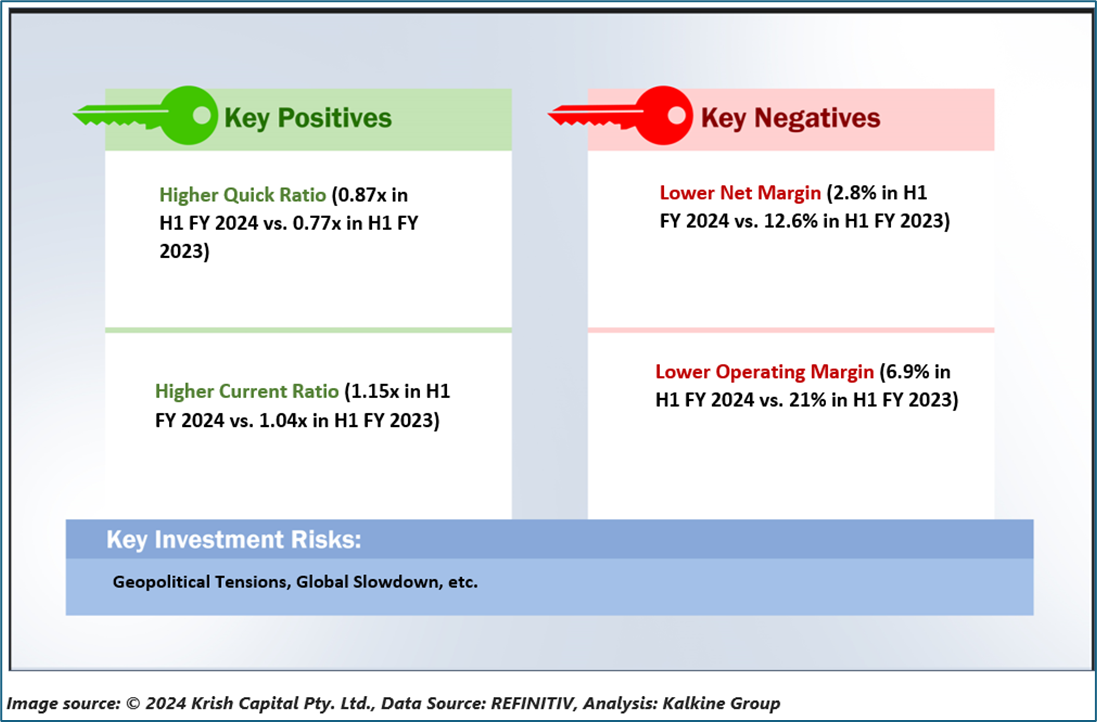
GNE is setting the foundation for future growth through Gen35 strategy which spans 3 horizons out to 2035. FY 2024 is the first of those and crucial for setting the platform to transition the company, its customers as well as help the country reach net zero 2050. With respect to Generation investment and operational update, GNE and joint venture partner FRV Australia completed financial close on 63 MW solar farm to be built at Lauriston on Canterbury Plains.
Technical Overview:
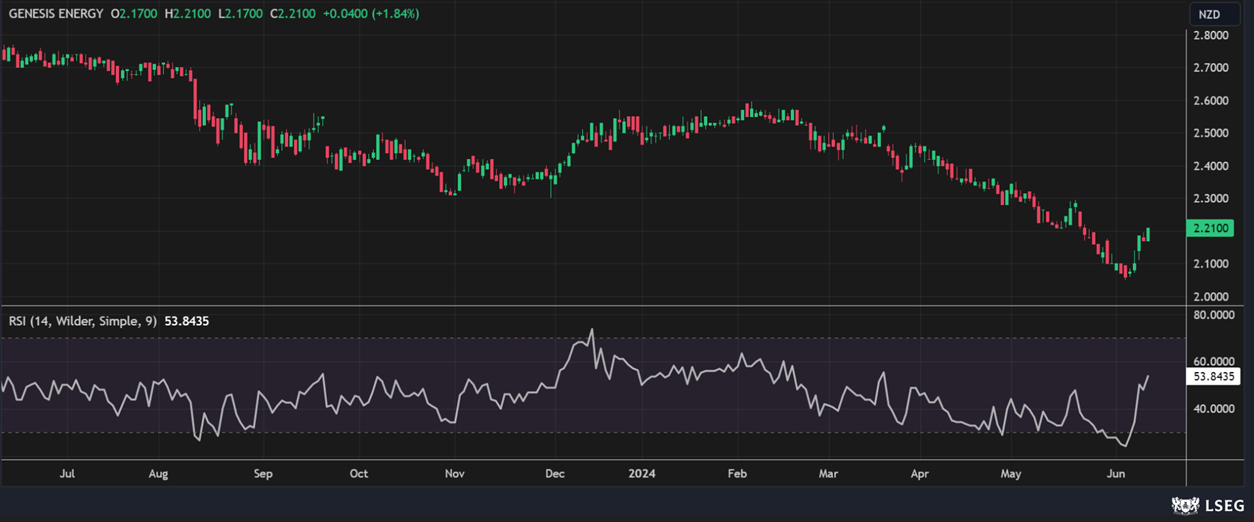
GNE Daily Technical Chart, Data Source: REFINITIV
Technical Commentary:
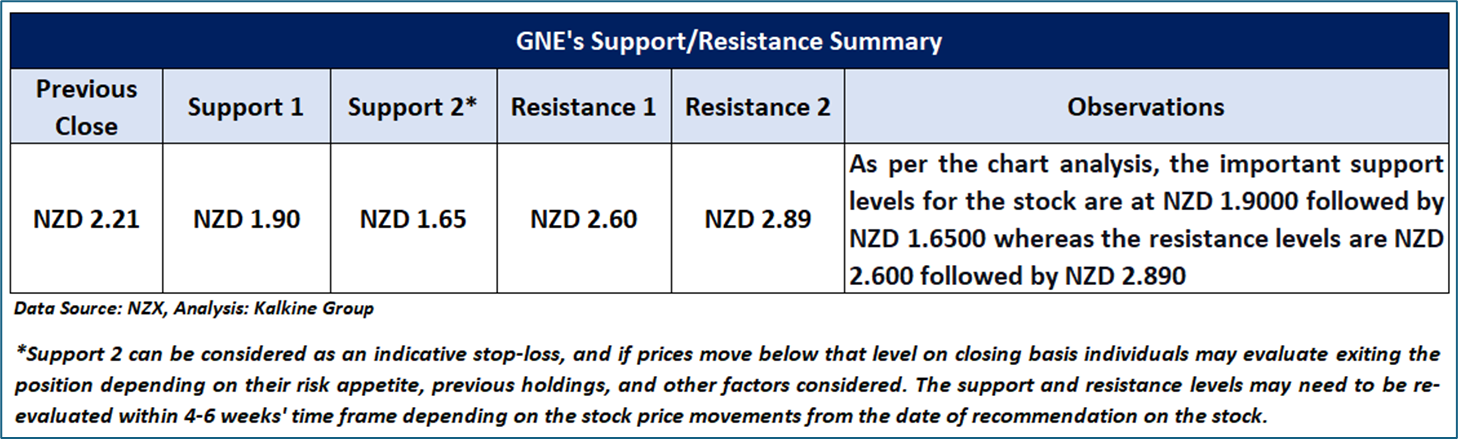
While experiencing a downtrend, GNE’s stock prices are rebounding from a significant support established in March 2020 which suggest that the current rally in the stock might continue to remain intact. Additionally, the momentum oscillator RSI (14-period) is heading north from the, providing more support for the previous observation. Prices are below the trend-following indicator 50-period SMA, which might serve as dynamic resistance level for the stock; in contrast, the stock’s previous low may act as a support. An important support level for the stock is placed at NZD 1.90, while key resistance level is situated at NZD 2.60.
Fundamental Valuation:
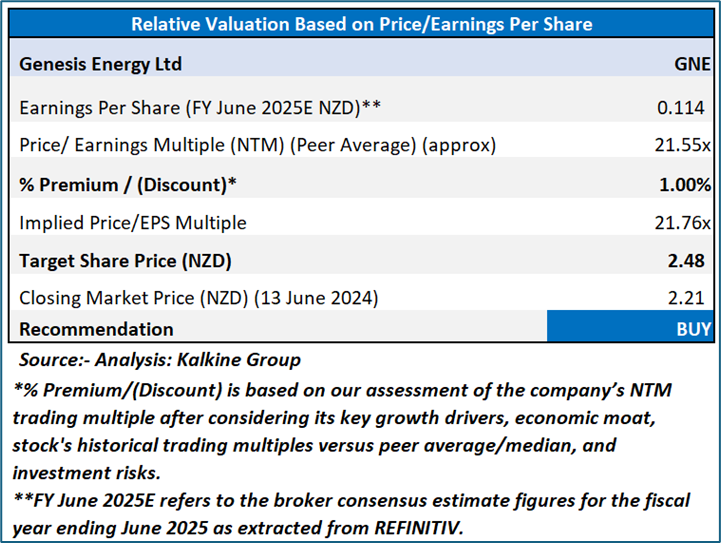
Price/EPS Based Relative Valuation
Stock Recommendation
Considering the facts above, a ‘Buy’ recommendation on the stock has been provided at the closing market price of NZD 2.21 per share, up by 1.84% as on 13 June 2024
2) Chatham Rock Phosphate Limited (Recommendation: Speculative Buy, Potential Upside: Low Double-Digit) (M-Cap: NZD 12.6 million)
Business Description:
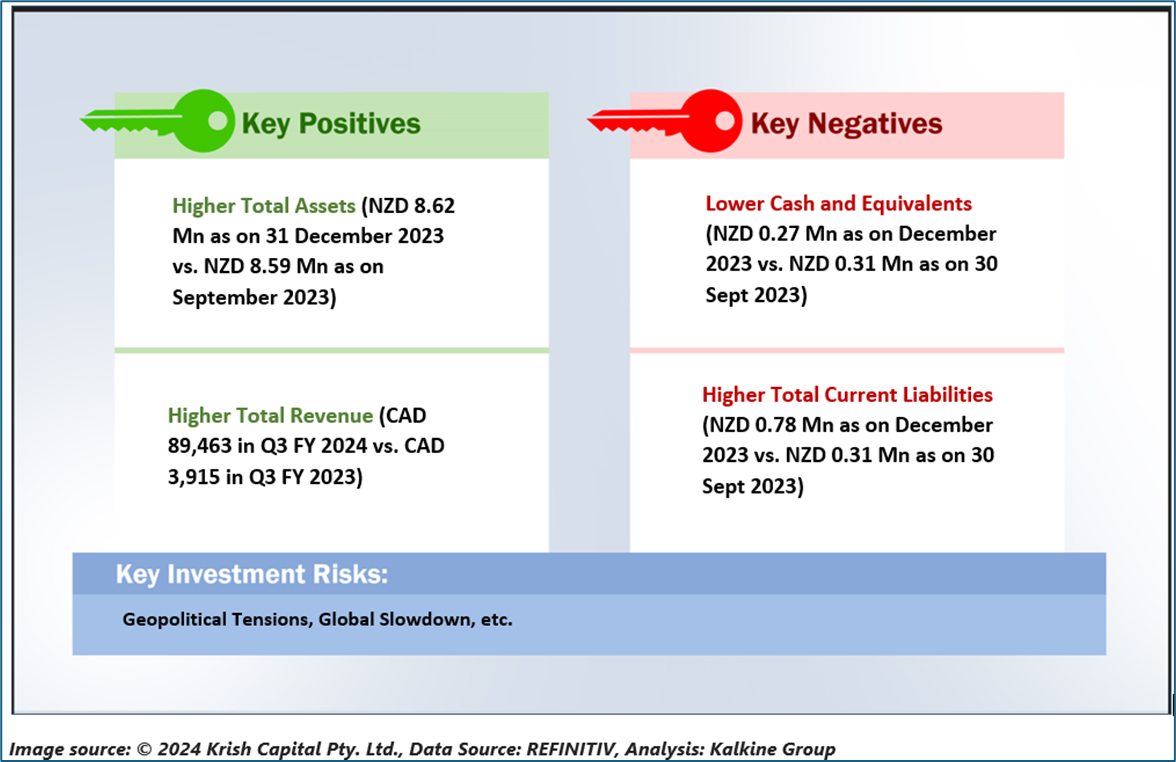
Chatham Rock Phosphate Limited (NZX: CRP) is an exploration and development company focused towards becoming diversified phosphate developer and trader.
Outlook:
CRP advised that just as phosphorus was added to the strategic minerals list in Australia, Canada has now added phosphorus to its critical minerals list. Canada has limited phosphate resources with small sedimentary phosphate deposits in British Columbia while having extensive but low-grade igneous deposits in the Ontario and Quebec.
In the USA, with phosphate production in decline, the current focus is towards food and fertilizer production. However, the expected demand for high quality phosphoric acid for lithium iron phosphate battery production would be driving the demand for supply of high-quality phosphate rock. CRP is strategically positioned to meet the demand.
Technical Overview:
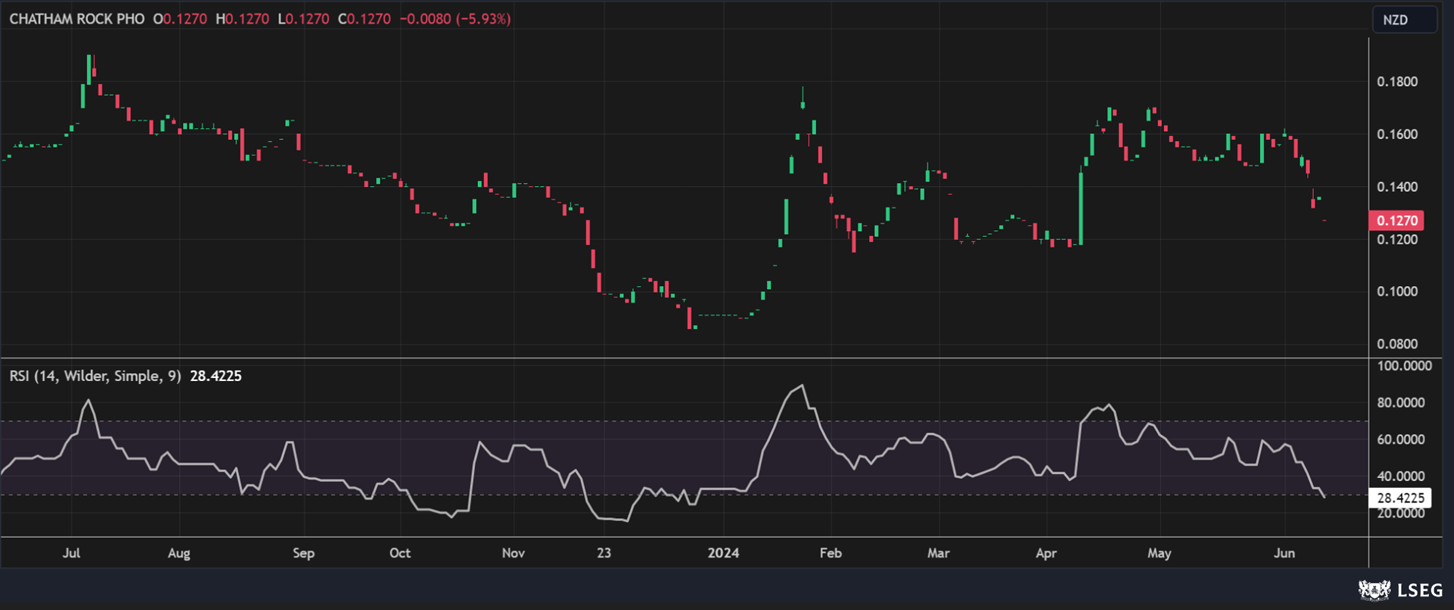
CRP Daily Technical Chart, Data Source: REFINITIV
Technical Commentary
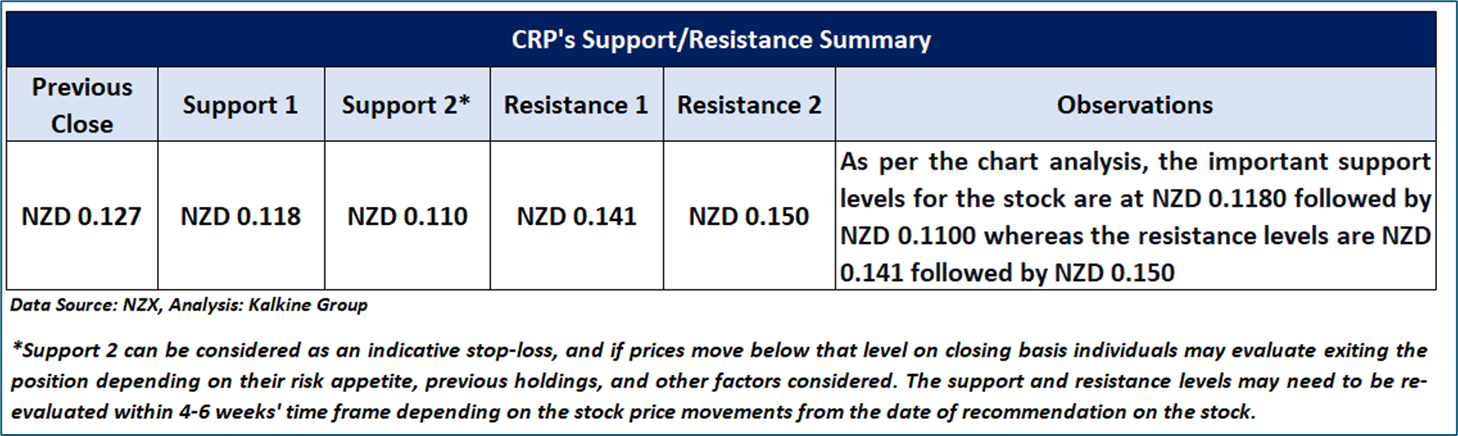
Since December 2023, CRP’s stock prices are developing a trading range characterized by lower highs and higher lows on the daily chart, suggesting that the current sideways period in the stock might continue to persist in the near future. Moreover, the momentum oscillator RSI (14-period) is oscillating between the levels of 30 and 70, adding further evidence for the mentioned recommendation. Prices fluctuating between its previous peak and trough, which might function as dynamic resistance and support levels for the stock, respectively. A significant support level for the stock is positioned at NZD 0.118, while critical resistance level is located at NZD 0.141
Stock Recommendation
Considering the aforementioned factors, a “Speculative Buy” rating is given on the stock at the closing market price of NZD 0.127 per share, down by 5.93% as on 13th June 2024.
Markets are trading in a highly volatile zone currently due to certain macro-economic issues and geopolitical tensions prevailing. Therefore, it is prudent to follow a cautious approach while investing.
Note 1: Past performance is neither an indicator nor a guarantee of future performance.
Note 2: The reference date for all price data, currency, technical indicators, support, and resistance levels is 13 June 2024. The reference data in this report has been partly sourced from REFINITIV.
Note 3: Investment decisions should be made depending on an individual's appetite for upside potential, risks, holding duration, and any previous holdings. An 'Exit' from the stock can be considered if the Target Price mentioned as per the Valuation and or the technical levels provided has been achieved and is subject to the factors discussed above.
Technical Indicators Defined: -
Support: A level at which the stock prices tend to find support if they are falling, and a downtrend may take a pause backed by demand or buying interest. Support 1 refers to the nearby support level for the stock and if the price breaches the level, then Support 2 may act as the crucial support level for the stock.
Resistance: A level at which the stock prices tend to find resistance when they are rising, and an uptrend may take a pause due to profit booking or selling interest. Resistance 1 refers to the nearby resistance level for the stock and if the price surpasses the level, then Resistance 2 may act as the crucial resistance level for the stock.
Stop-loss: It is a level to protect further losses in case of unfavourable movement in the stock prices.
Disclaimer This report has been issued by Kalkine New Zealand Limited (FSP691351) (NZBN:9429047678101) (“Kalkine”). Kalkine is a Financial Advice Provider (“FAP”) and is authorised by a Class 1 Financial Advice Provider Licence issued by Financial Markets Authority (“FMA”) to provide financial advice. Kalkine provides only general financial advice through its research reports following a person becoming a member. The reports contain buy/sell/hold and other recommendations in relation to equity securities, managed funds and other managed investment schemes and other financial advice products. The recommendations and opinions in this report and on Kalkine website do not take into account any of your investment objectives, financial situation or needs. Before you make a decision about whether to acquire a financial product, you should obtain the Product Disclosure Statement from the product issuer. You should consider the appropriateness of advice taking into account your own objectives, financial situation and needs and seek independent financial advice before making any financial decisions. If you act on the advice in the research reports, you may have to pay fees, expenses or other amounts (but not to Kalkine). Further information about the complaints and dispute resolution process, as well as information about Kalkine’s duties are available on Kalkine’s website. Please read our Financial Advice Provider (FAP) disclosure statement and Complaints Handling Guide, which are available on the website.
Past performance is not a reliable indicator of future performance.
 Please wait processing your request...