
 AU
AU
 UK
UK
 CA
CA
 US
US
 IND
IND

 NZ
NZ

Company Overview:
Foley Family Wines Limited (NZX: FWL) is the collection of iconic wineries and brands from New Zealand's most acclaimed wine regions. Delegat Group Limited (NZX: DGL) is a New Zealand-based wine company.
Kalkine’s Sector Report covers the Key Financial Metrics, Risks, Outlook, Technical Analysis along with the Valuation, Target Price, and Recommendation on the stock.
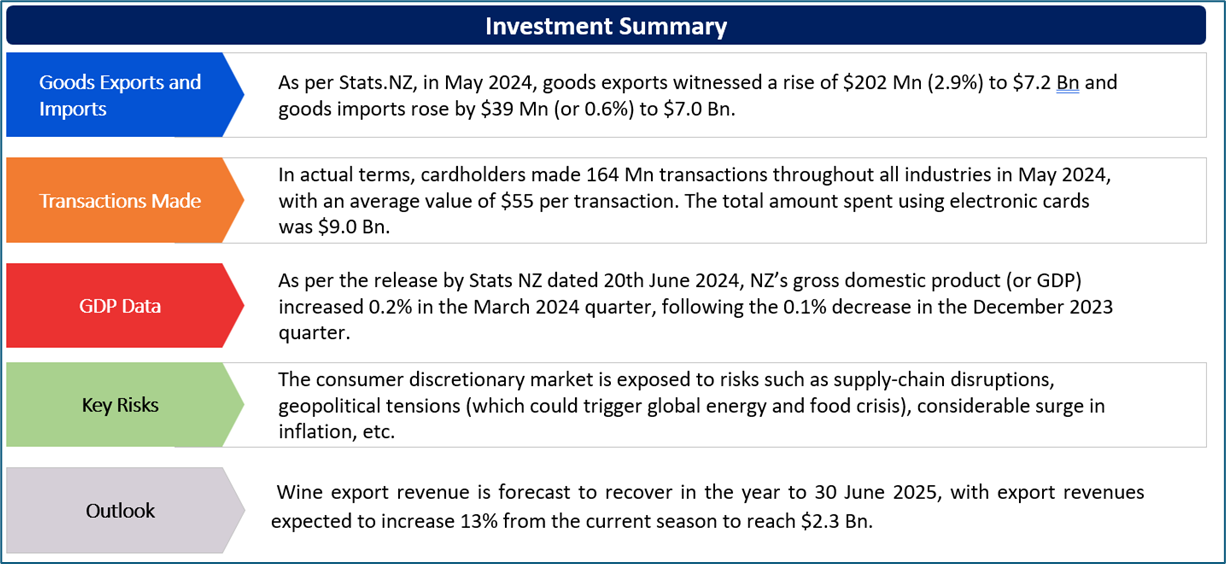
As per Stats.NZ, in May 2024, goods exports witnessed a rise of $202 Mn (2.9%) to $7.2 Bn and goods imports rose by $39 Mn (or 0.6%) to $7.0 Bn. Therefore, the monthly trade balance was a surplus of $204 Mn. Also, in May 2024, spending in the retail industries declined 1.1% (or $69 Mn) and spending in the core retail industries fell 0.8% (or $48 Mn) as compared to April 2024. By retail spending category, hospitality was down $25 Mn (or 2.0%), fuel declined $16 million (2.8 percent), durables declined $15 Mn (1.0 percent) and motor vehicles (excluding fuel) witnessed a fall of $9.5 Mn (or 4.8%).
The non-retail (excluding services) category fell $16 Mn (or 0.7%) from April 2024. This category consists of medical and other health care, travel and tour arrangement, postal and courier delivery and other non-retail industries. The services category was down $22 Mn (or 5.8%). This category includes repair and maintenance, and personal care, funeral, and other personal services. The total value of electronic card spending, which includes 2 non-retail categories (services and other non-retail), declined from April 2024, down $81 Mn (or 0.9%).
In actual terms, cardholders made 164 Mn transactions throughout all industries in May 2024, with an average value of $55 per transaction. The total amount spent using electronic cards was $9.0 Bn.
Exhibit 1: Percentage change in seasonally adjusted card transactions value by industry, April 2024–May 2024
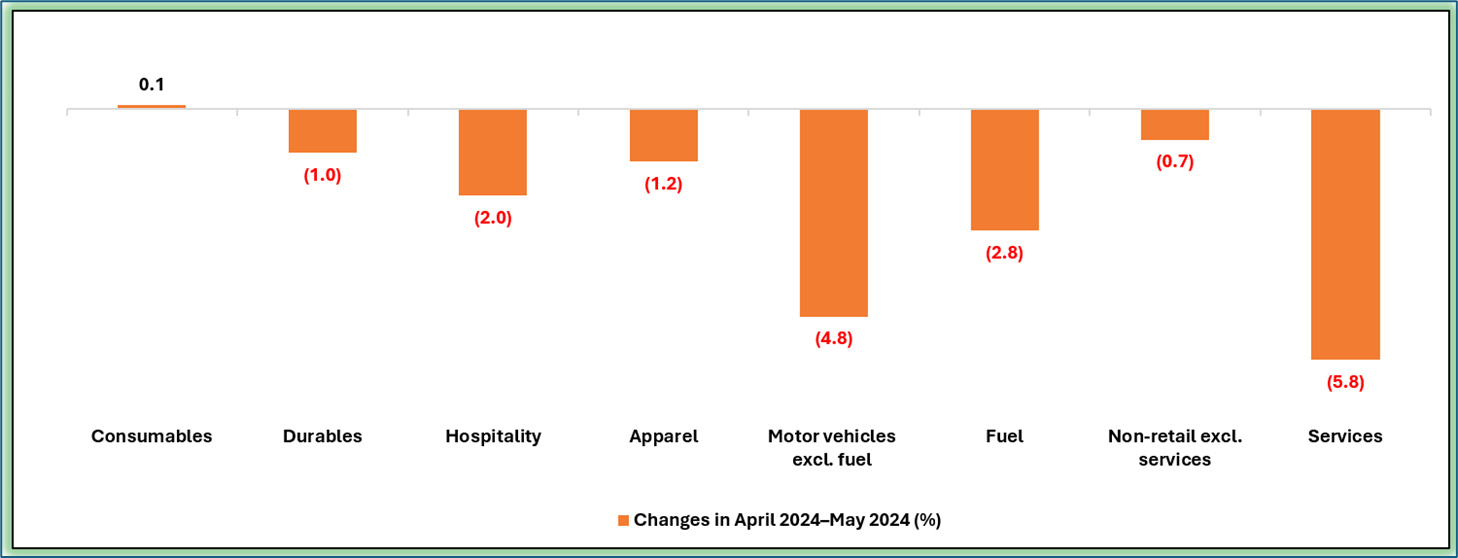
Data Source: This work is based on/includes Stats NZ’s data which are licensed by Stats NZ for reuse under the Creative Commons Attribution 4.0 International Licence; Chart Created by Kalkine Group
GDP Rose in March 2024 quarter
As per the release by Stats NZ dated 20th June 2024, NZ’s gross domestic product (or GDP) increased 0.2% in the March 2024 quarter, following the 0.1% decrease in the December 2023 quarter. There were a range of results at industry level, with 8 of the 16 industries increasing this quarter. Rises were witnessed in rental, hiring and real estate services, up 0.9%. Notably, electricity generation drove a 2.9% rise in electricity, gas, water and waste services. On the other hand, falls were witnessed in several industries such as construction, business services, and manufacturing.
GDP per capita declined by 0.3% in the March 2024 quarter. This was 6th consecutive quarterly fall. On an annual basis, GDP per capita declined 2.4%.
Exhibit 2: Gross Domestic Product, Quarterly and Annual Growth Rates, Chain-volume, March 2023–March 2024
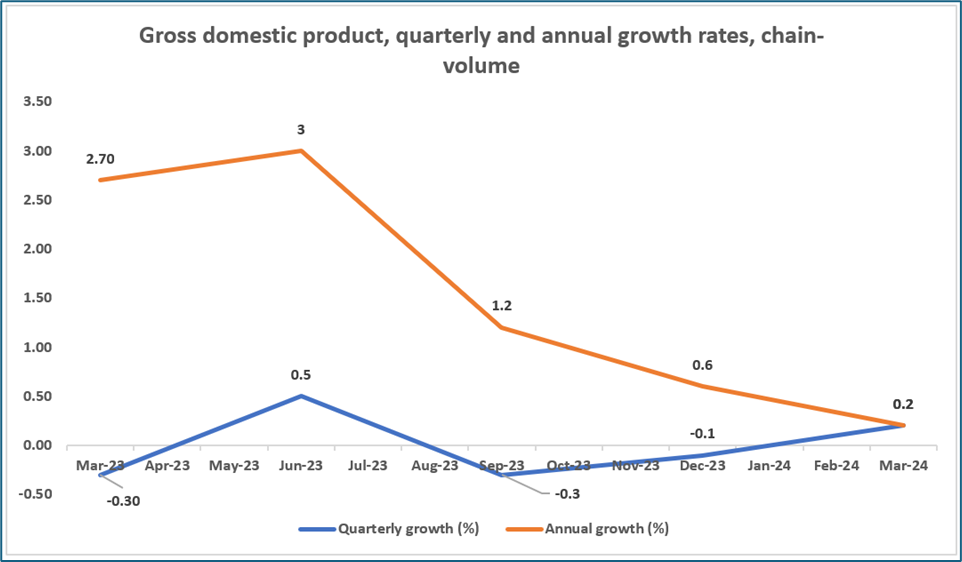
Data Source: This work is based on/includes Stats NZ’s data which are licensed by Stats NZ for reuse under the Creative Commons Attribution 4.0 International Licence; Chart Created by Kalkine Group
NZ-UK FTA is A Win for New Zealand Wine
As per Situation and Outlook for Primary Industries (June 2024), UK is NZ’s second–largest export destination for wine and exports were valued at NZ$461 Mn in 2023. Since entry into force of the NZ-United Kingdom Free Trade Agreement on 31 May 2023, NZ wine exports to the UK benefited from immediate tariff elimination as well as enhanced competitiveness of NZ wine in the UK market. The NZ-UK FTA includes annex on wine as well as distilled spirits which provides for comprehensive recognition of NZ wine-making practices as well as minimising administrative burdens and costs from certification and labelling requirements.
This improved access coincided with a series of ongoing reforms to wine regulations in the UK to allow greater innovation and encourage more efficient and sustainable practices.
Notably, NZ currently commands 51% value share of the Sauvignon Blanc market in the UK across grocery and major retail.
Key Risks and Challenges:
The consumer discretionary market is exposed to risks such as supply-chain disruptions, geopolitical tensions (which could trigger global energy and food crisis), considerable surge in inflation, globally synchronised tightening of monetary policy, fragilities in the banking system, etc. Also, higher borrowing costs from restrictive monetary policies as well as withdrawal of fiscal support.
The Consumer discretionary industry is cyclical in nature. Therefore, rising and falling interest rates, growth momentum in wages, unemployment or inflation could impact the broader consumer discretionary sector.
Exhibit 3. Key Risks in Retail & Consumer Sector:
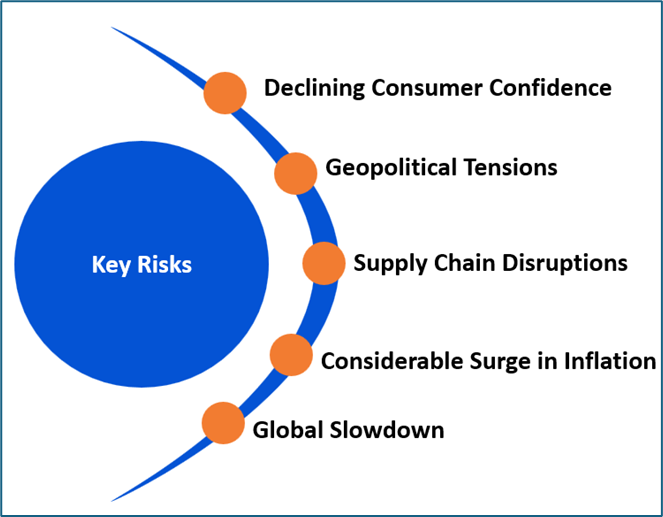
Source: Analysis by Kalkine Group
Outlook:
NZ wine also attracts a premium price in the UK at £8.37 per bottle of still wine as compared with the overall average of £6.74 per bottle. With consumers increasingly focused towards sustainability, NZ winegrowers’ efficient and sustainable production practices place them well to make the most of growing demand for wine in the UK. New Zealand exports to the EU stood at NZ$3.2 Bn in the year to 31 March 2024. The agreement provides tariff savings of $100 Mn per annum immediately for NZ’s exports, reaching $110 Mn per annum after 7 years. Notably, wine export revenue is forecast to recover in the year to 30 June 2025, with export revenues expected to increase 13% from the current season to reach $2.3 Bn.
The Seafood export revenue is expected to rise 5% to reach $2.2 billion in the year to 30 June 2024. In 2023/24, apples and pears, arable, kiwifruit, and seafood product revenue is set to increase despite the challenging global macroeconomic landscape. Notably, the growth in these sectors is because of favourable weather conditions for most horticultural and arable crops as they recover from the impacts of the previous wet summers and cyclone damage as well as improved availability of labour for harvests.
Apart from the sector-specific factors, an analysis on two NZX-listed companies is provided. This report covers their insights, outlook, performance and potential as expected to be delivered in the near to medium term.
1) Foley Wines Limited (Recommendation: Speculative Buy, Potential Upside: Low Double-Digit) (M-Cap: NZD 49.9 Mn)
Business Description:
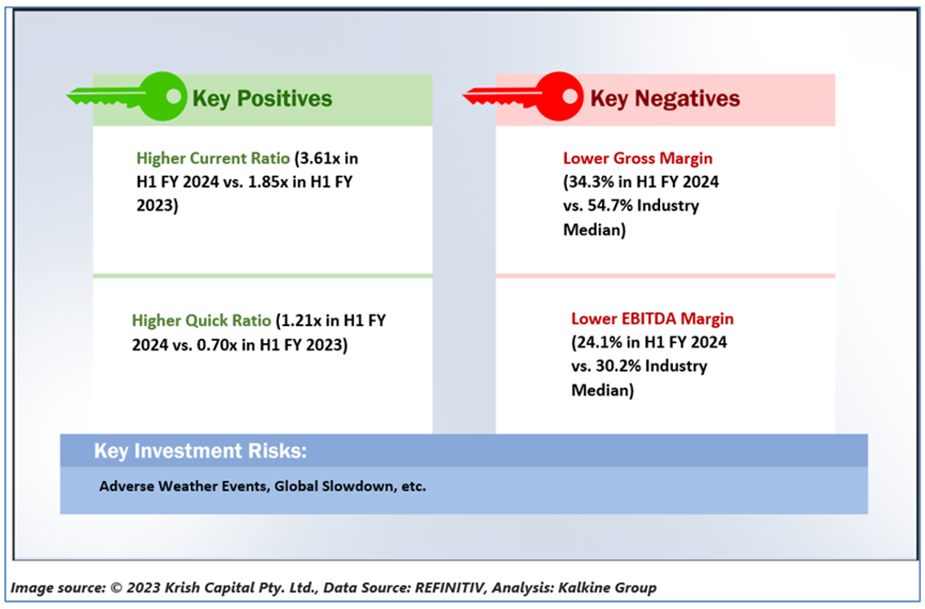
Foley Family Wines Limited (NZX: FWL) is the collection of iconic wineries and brands from New Zealand's most acclaimed wine regions.
Outlook:
FWL has established some robust global partnerships which will certainly help navigate its way through the headwinds in the global economy. The company is very focused towards having a much improved second 6 months. Notwithstanding the challenges, FWL believes it has routes to market that would enable the company to sell the brands profitability. FWL continues to secure strong new routes to market for the premium portfolio.
Technical Overview:
Technical Commentary:
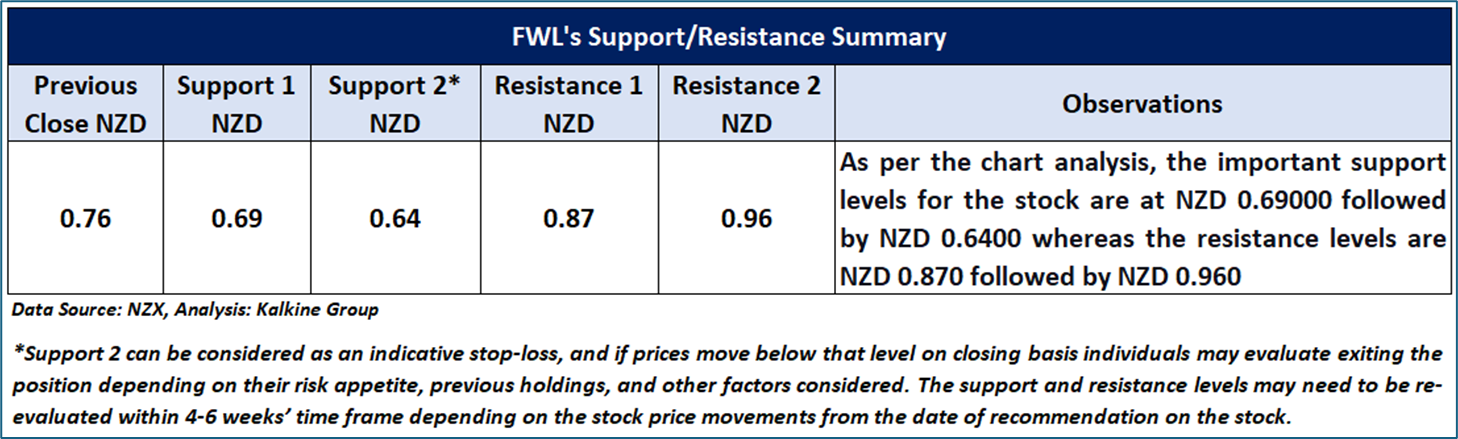
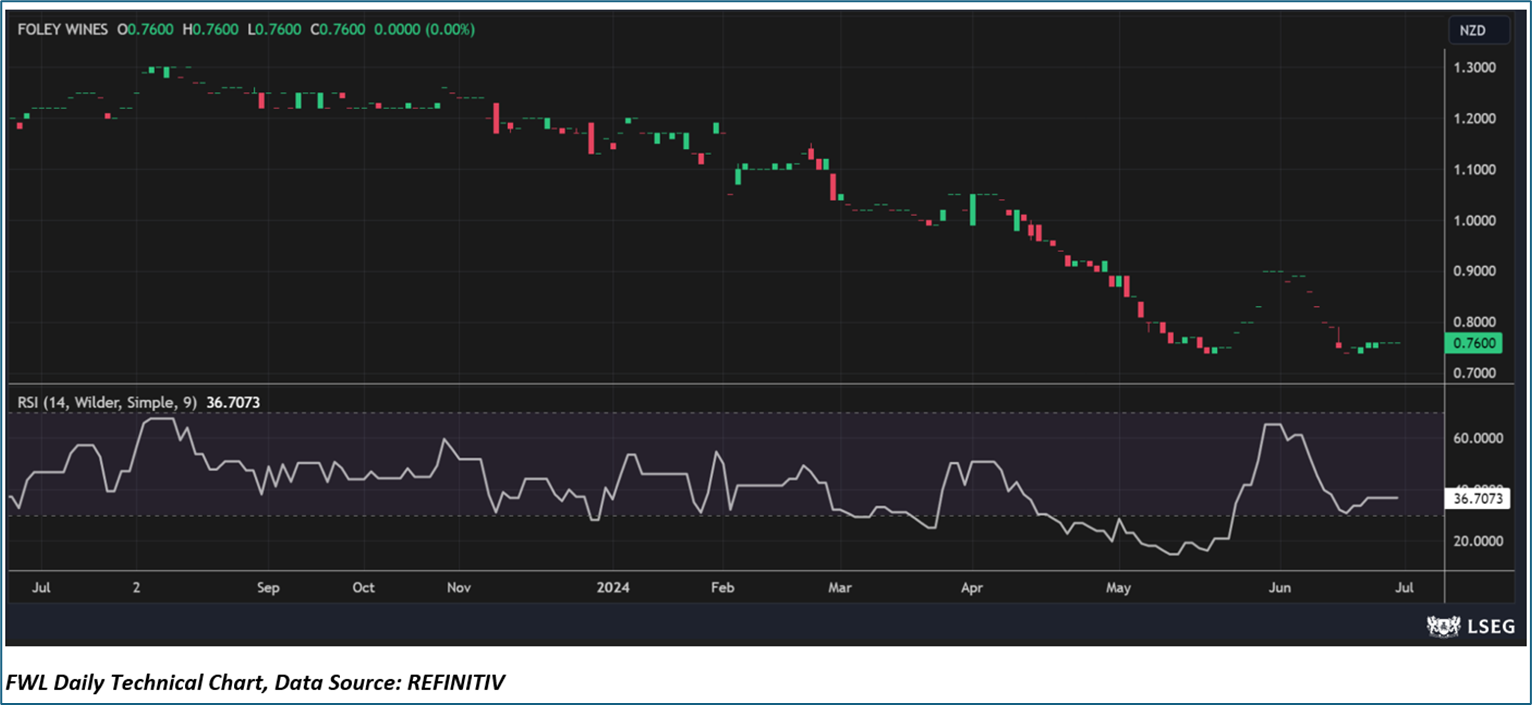
On the daily chart, FWL’s stock prices are forming a downtrend characterized by lower lows and lower highs, indicating a negative bias. In contrast, the stock is also developing a bottom divergence in relation to the momentum oscillator RSI (14-period) near its oversold region, anticipating for a minor rally. Prices are trading below both the trend-following indicators 21-period and 50-period SMAs, which might function as dynamic resistance levels for the stock; in contrast, the stock’s previous trough might serve as a support. An important support level for the stock is situated at NZD 0.69, while crucial resistance level is placed at NZD 0.87.
Stock Recommendation
Considering the facts above, a ‘Speculative Buy’ recommendation on the stock has been provided at the closing market price of NZD 0.760 per share as on 27 June 2024.
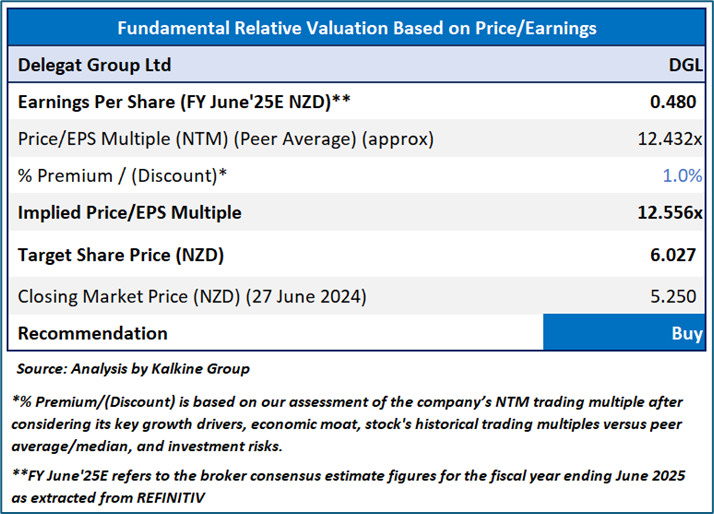
2) Delegat Group Limited (Recommendation: Buy, Potential Upside: Low Double-Digit) (M-Cap: NZD 530.9 million, Annual Dividend Yield: 5.29%)
Business Description:
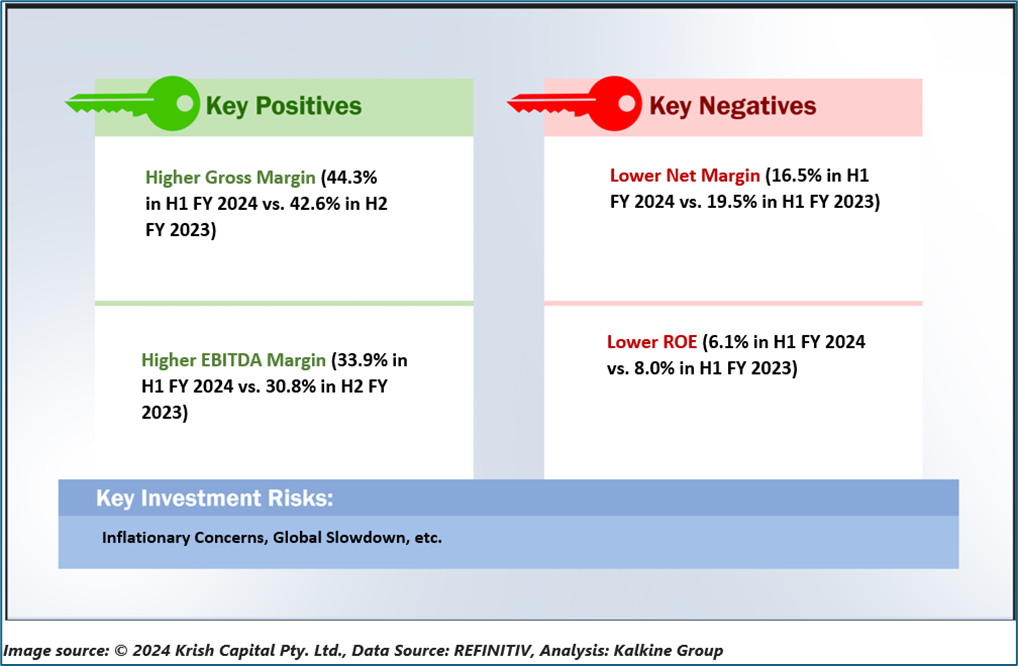
Delegat Group Limited (NZX: DGL) is a New Zealand-based wine company.
Outlook:
DGL announced that it has concluded 2024 harvest which has delivered excellent quality grapes in all regions. The Group's 2024 harvest is 34,150 tonnes, down by 24.7% on the 2023 harvest of 45,340 tonnes. The group maintained the FY 2024 Operating Profit guidance of between $57 Mn to $61 Mn. NZ remains the fastest growing country of origin in the premium US wine. DGL is expecting that ongoing deployment towards vineyard plantings and winery capacity expansion is expected to support future earnings growth.
Fundamental Valuation
Price/EPS Based Relative Valuation
Technical Overview:
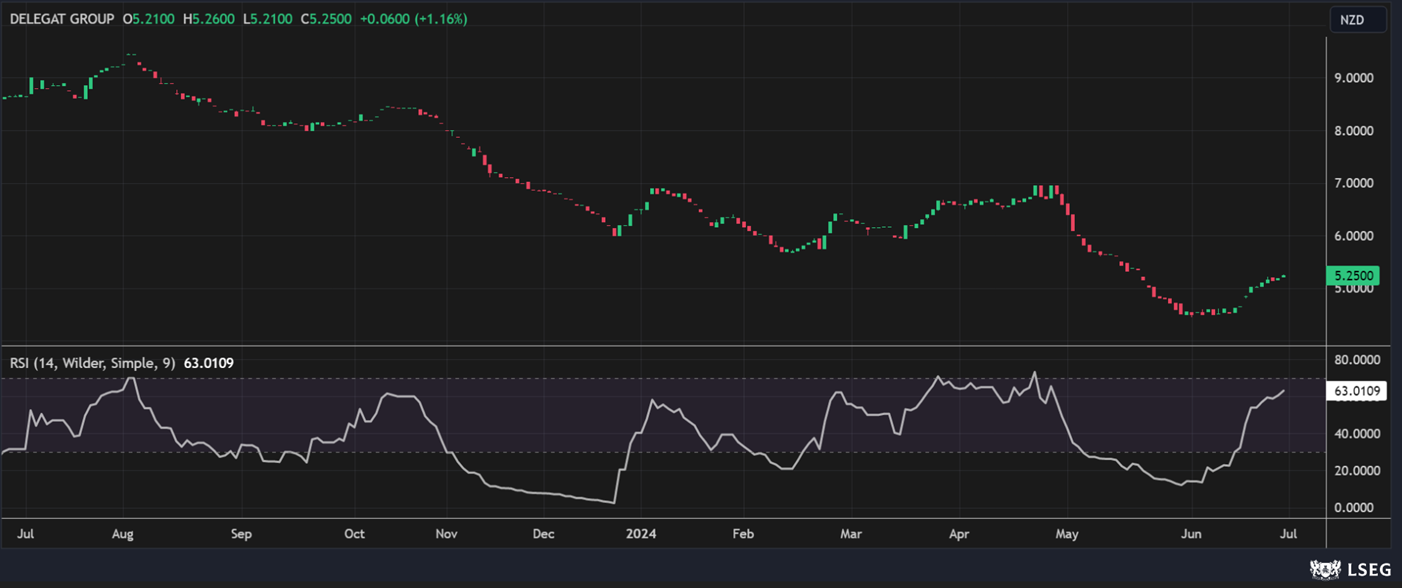
DGL Daily Technical Chart, Data Source: REFINITIV
Technical Commentary:
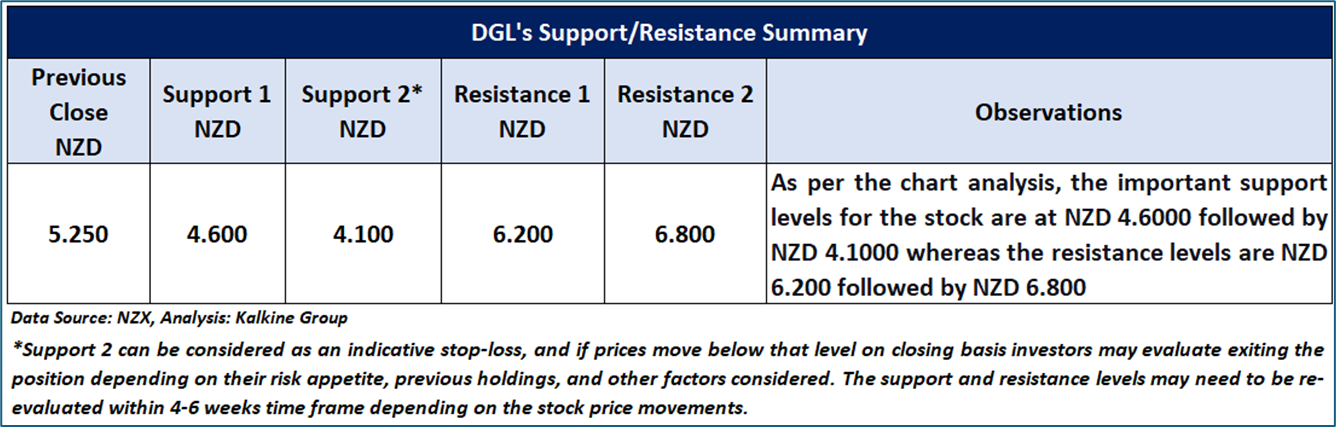
On the daily chart, while experiencing a downtrend, DGL’s stock prices are rebounding from the lower boundary of a downward slope channel, suggesting that the stock might continue its short-term rally to the channel’s upper boundary. Moreover, after developing a bottom divergence in relation to prices, the momentum oscillator RSI (14-period) is heading north from the midpoint, adding further evidence to the mentioned recommendation. Prices are trading above its previous trough, which might function as a support level for the stock; in contrast, the channel’s upper boundary may serve as a dynamic resistance. A significant support level for the stock is positioned at NZD 4.6, while critical resistance level is located at NZD 6.20.
Stock Recommendation
Considering the facts above, a ‘Buy’ recommendation on the stock has been provided at the closing market price of NZD 5.25 per share, up by 1.16% as on 27 June 2024.
Markets are trading in a highly volatile zone currently due to certain macro-economic issues and geopolitical tensions prevailing. Therefore, it is prudent to follow a cautious approach while investing.
Note 1: Past performance is not a reliable indicator of future performance.
Note 2: The reference date for all price data, currency, technical indicators, support, and resistance levels is June 27, 2024. The reference data in this report has been partly sourced from REFINITIV.
Note 3: Investment decisions should be made depending on an individual's appetite for upside potential, risks, holding duration, and any previous holdings. An 'Exit' from the stock can be considered if the Target Price mentioned as per the Valuation and or the technical levels provided has been achieved and is subject to the factors discussed above.
Note 4: Annual Dividend Yield is on a Trailing Twelve Month (TTM1) basis and are subject to change based on factors such as company performance, stock price changes, etc.
Technical Indicators Defined: -
Support: A level at which the stock prices tend to find support if they are falling, and a downtrend may take a pause backed by demand or buying interest. Support 1 refers to the nearby support level for the stock and if the price breaches the level, then Support 2 may act as the crucial support level for the stock.
Resistance: A level at which the stock prices tend to find resistance when they are rising, and an uptrend may take a pause due to profit booking or selling interest. Resistance 1 refers to the nearby resistance level for the stock and if the price surpasses the level, then Resistance 2 may act as the crucial resistance level for the stock.
Stop-loss: It is a level to protect further losses in case of unfavourable movement in the stock prices.
Disclaimer This report has been issued by Kalkine New Zealand Limited (FSP691351) (NZBN:9429047678101) (“Kalkine”). Kalkine is a Financial Advice Provider (“FAP”) and is authorised by a Class 1 Financial Advice Provider Licence issued by Financial Markets Authority (“FMA”) to provide financial advice. Kalkine provides only general financial advice through its research reports following a person becoming a member. The reports contain buy/sell/hold and other recommendations in relation to equity securities, managed funds and other managed investment schemes and other financial advice products. The recommendations and opinions in this report and on Kalkine website do not take into account any of your investment objectives, financial situation or needs. Before you make a decision about whether to acquire a financial product, you should obtain the Product Disclosure Statement from the product issuer. You should consider the appropriateness of advice taking into account your own objectives, financial situation and needs and seek independent financial advice before making any financial decisions. If you act on the advice in the research reports, you may have to pay fees, expenses or other amounts (but not to Kalkine). Further information about the complaints and dispute resolution process, as well as information about Kalkine’s duties are available on Kalkine’s website. Please read our Financial Advice Provider (FAP) disclosure statement and Complaints Handling Guide, which are available on the website.
Past performance is not a reliable indicator of future performance.
 Please wait processing your request...