
 AU
AU
 UK
UK
 CA
CA
 US
US
 IND
IND

 NZ
NZ

Company Overview:
Move Logistics Group Limited (NZX: MOV) is the New Zealand-based company, which is engaged in the logistics sector. It operates through five segments: International, Specialist, Freight, Contract Logistics, and Corporate. Air New Zealand Limited (NZX: AIR) is engaged in the transportation of passengers and cargo on an integrated network of scheduled airline services to, from and within New Zealand.
Kalkine’s Sector Report covers the Key Financial Metrics, Risks, Outlook, Technical Analysis along with the Valuation, Target Price, and Recommendation on the stock.
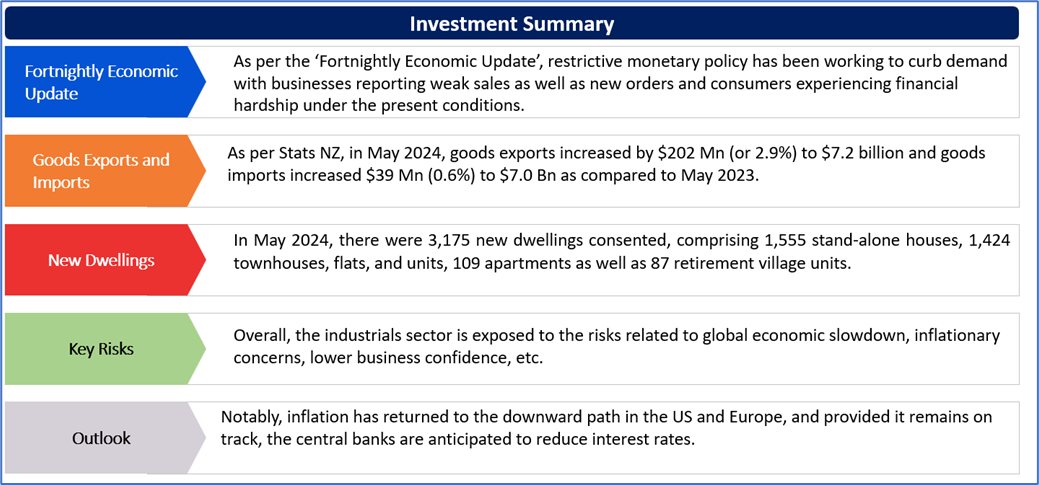
As per the ‘Fortnightly Economic Update’ dated 5th July 2024 released by The Treasury, restrictive monetary policy has been working to curb demand with businesses reporting weak sales as well as new orders and consumers experiencing financial hardship under the present conditions. The construction and retail sectors remain particularly bleak. The indicators are pointing to weakness for the remainder of this year amid employment retrenchment as well as company insolvencies.
Australia’s monthly inflation indicator moved up in May with both headline as well as trimmed mean measures increasing three-tenths to 4.1% and 4.4%, respectively. Notably, activity data for May also firmed: retail sales rebounded 0.6% in the month as well as home building approvals increased 5.5%, although the trend of both measures remained weak.
Notably, CoreLogic house prices retained their recent momentum, increasing 0.8% in June, to be 3.4% higher since the start of the year, as well as 8% higher than the year ago. There was considerable divergence throughout main cities: house prices in Perth rose 12% this year, Melbourne prices have fallen slightly, and Sydney prices increased ~2.5%.
Overseas merchandise trade: May 2024
As per Stats NZ, in May 2024, goods exports increased by $202 Mn (or 2.9%) to $7.2 billion and goods imports increased $39 Mn (0.6%) to $7.0 Bn as compared to May 2023. The monthly trade balance was the surplus of $204 Mn. With respect to exports, wine led to the exports rise. Notably, wine increased $47 Mn (or 38%) to $173 Mn and milk powder, butter, and cheese rose $7.0 Mn (or 0.4%) to $1.95 Bn.
The infant formula is included in preparations of milk, cereals, flour, and starch, that increased $37 Mn (or 16%) to $263 Mn. With respect to China, total exports declined $231 Mn (or 12%). The largest rise was preparations of milk, cereals, flour, and starch, rising $31 Mn and largest falls were meat and edible offal, down $166 Mn; fruit, which was down $34 Mn; and logs, wood, and wood articles, down $33 Mn.
Exhibit 1: Merchandise Trade Values ($ Bn), exports and imports, May months, 2021–2024
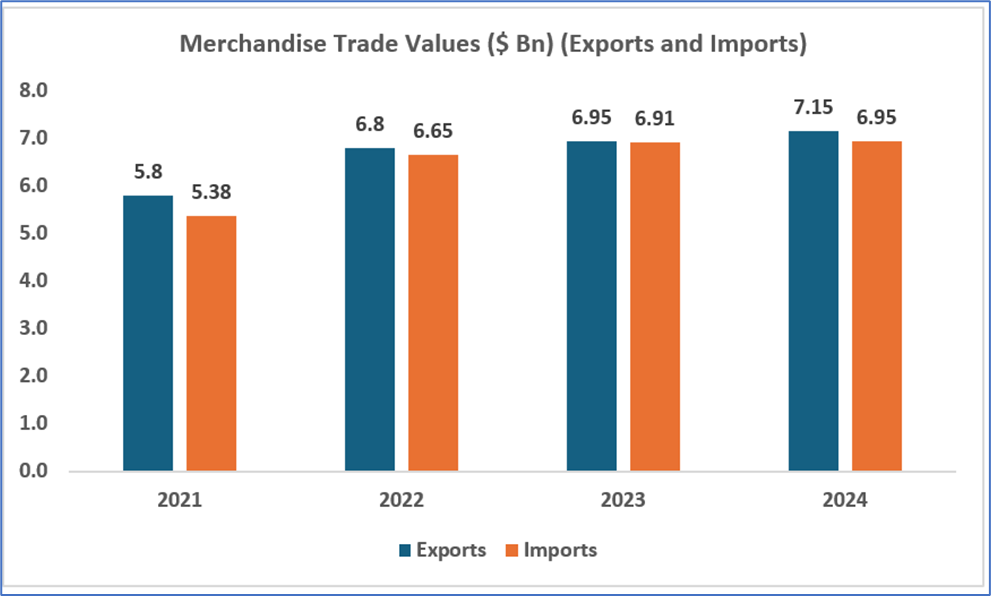
Data Source: This work is based on/includes Stats NZ’s data which are licensed by Stats NZ for reuse under the Creative Commons Attribution 4.0 International Licence; Chart Created by Kalkine Group
Building Consents Issued: May 2024
In May 2024, the seasonally adjusted number of new dwellings consented declined 1.7%, after falling 2.1% in April 2024 and, in the year ended May 2024, the actual number of new dwellings consented was 34,851, reflecting a fall of 23% from the year ended May 2023. The annual value of non-residential building work consented amounted to $9.2 Bn, down 7.0% from the year ended May 2023.
In May 2024, there were 3,175 new dwellings consented, comprising 1,555 stand-alone houses, 1,424 townhouses, flats, and units, 109 apartments as well as 87 retirement village units.
Exhibit: 2 New Dwellings Consented, Monthly, January 2024–May 2024
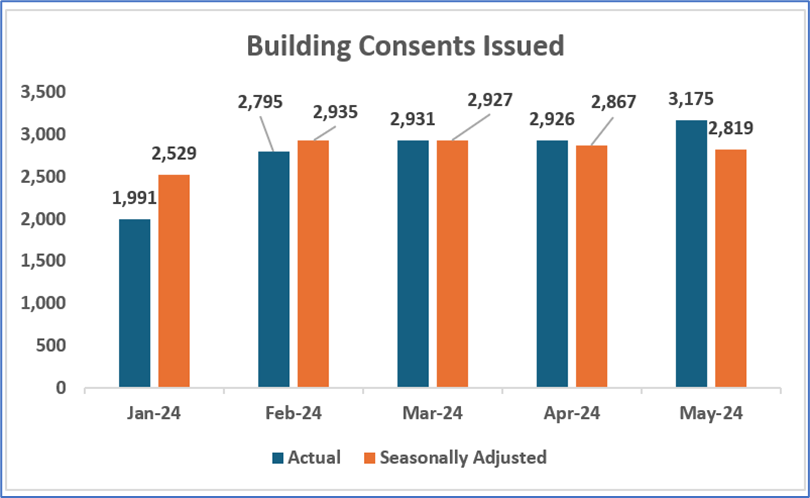
Data Source: This work is based on/includes Stats NZ’s data which are licensed by Stats NZ for reuse under the Creative Commons Attribution 4.0 International Licence; Chart Created by Kalkine Group
Key Risks and Challenges:
As per the recent Fortnightly Economic Update, the businesses are facing reduced pricing power amid low demand and deteriorating profitability. The monetary policy has been constraining the economy with weak sales. Also, new orders are presenting pressing constraints for increasing number of firms as per June quarter Quarterly Survey of Business Opinion (or QSBO).
A net 61% of firms mentioned lack of sales as the main constraint to their business, significantly up on 42% just a year prior. Also, job security and financial hardship are impacting the consumer sentiments.
Exhibit 3. Key Risks in Industrials Sector:
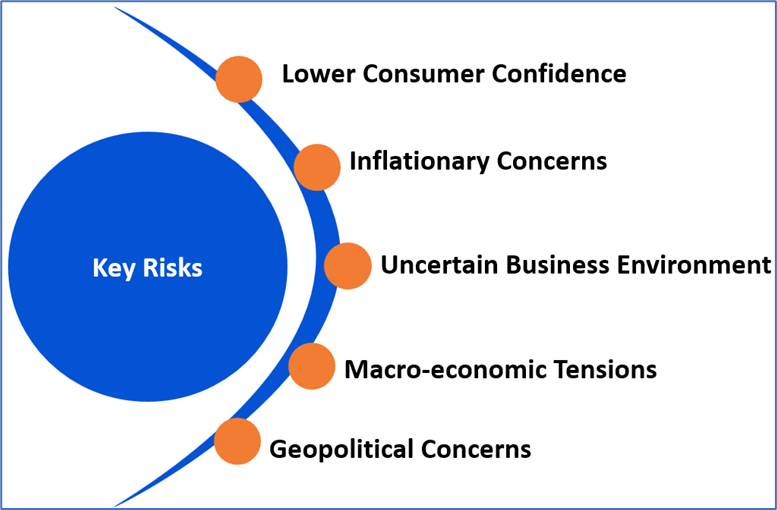
Source: Analysis by Kalkine Group
Outlook:
The global growth remained stable but low during June quarter, as well as similar pace of growth is anticipated over the H2 of the year. Notably, inflation has returned to the downward path in the US and Europe, and provided it remains on track, the central banks are anticipated to reduce interest rates. Australian inflation has been proving to be stubborn, and there are signs activity is increasing, which is raising the risk of further monetary policy tightening.
The global business sentiment improved over the previous 3 months, reflecting that growth remained steady. Although June’s S&P Global Purchasing Managers Index (or PMI) reversed much of May’s gains, activity in Q2 picked up as compared to the Q1.
Asian economies led the gains, even though China’s services PMI declined sharply in June. China’s manufacturing PMIs provided contrasting signals, the export-oriented S&P gauge rose, while official NBS measure hinted weaker activity. The US inflation slowed in May, however, it remained higher than at the start of the year. Notably, the US Federal Reserve’s preferred gauge of inflation, the personal consumption expenditures index, demonstrated no increase in the month, taking annual rate to 2.6%.
Apart from the sector-specific factors, an analysis on 2 NZX-listed companies is provided. This report covers their insights, outlook, performance and potential as expected to be delivered in the near to medium term.
1) Air New Zealand Limited (Recommendation: Buy, Potential Upside: Low Double-Digit) (M-Cap: NZD 1.80 billion, Annual Dividend Yield (TTM)1: 19.31%)
Business Description:
Air New Zealand Limited (NZX: AIR) is engaged in the transportation of passengers as well as cargo on integrated network of scheduled airline services to, from and within NZ.
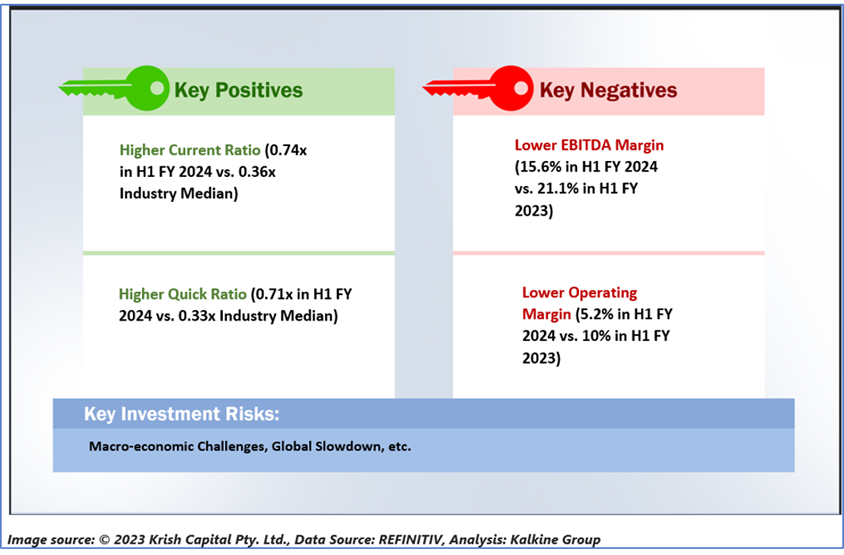
Outlook:
The airline is expecting earnings before taxation for the 2024 financial year to be in the range of $190 Mn to $230 Mn. AIR announced it has established a new 3-year, $250 Mn, unsecured, syndicated revolving credit facility. This facility is provided through participation from Australasian as well as global banks and would serve as standby liquidity support to the airline in line with the updated capital management framework.
Technical Overview:
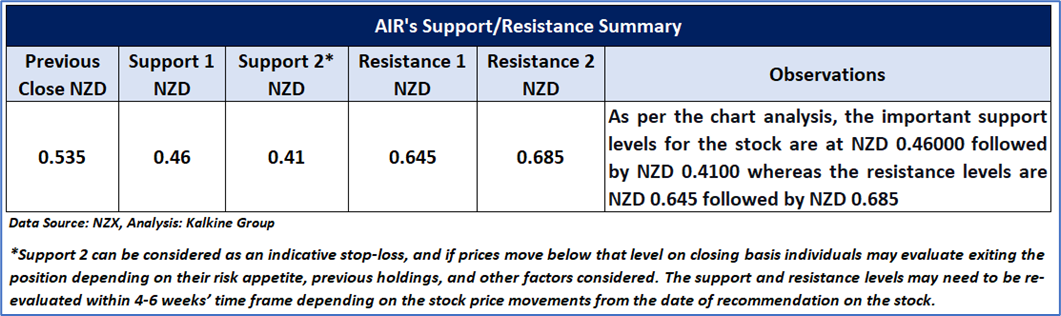
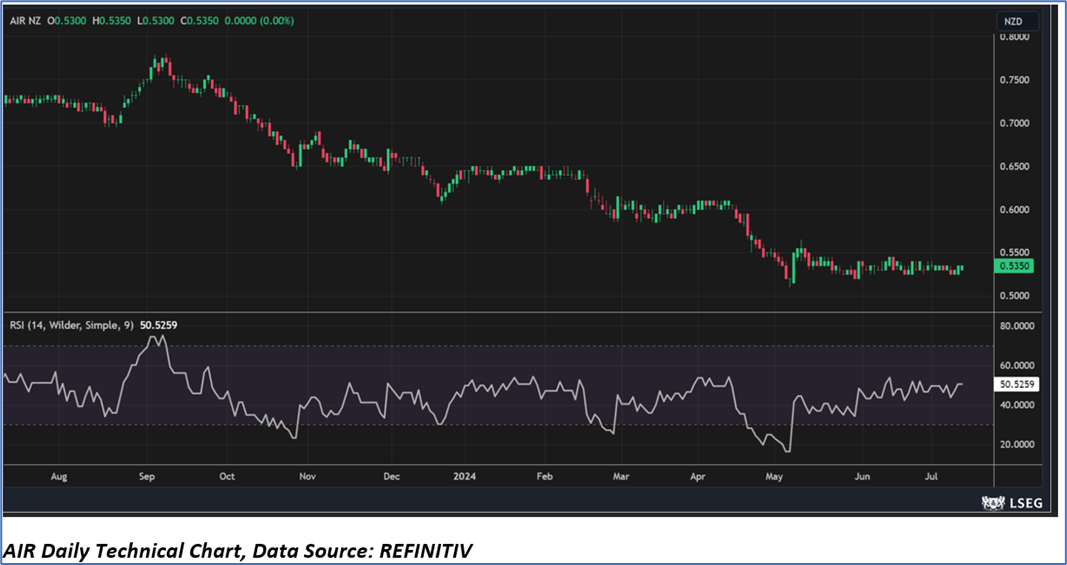
Technical Commentary
While experiencing a downtrend, AIR’s stock prices are forming a symmetrical triangle pattern characterized by lower highs and higher lows, suggesting that the current sideways period in the stock might continue to persist in the near future. Moreover, the momentum oscillator RSI (14-period) is hovering near the midpoint, providing more support to the previous observation. Prices are trading between its previous peak and trough, which might function as resistance and support levels for the stock, respectively. An important support level for the stock is placed at NZD 0.46, while key resistance level is situated at NZD 0.645.
Fundamental Valuation
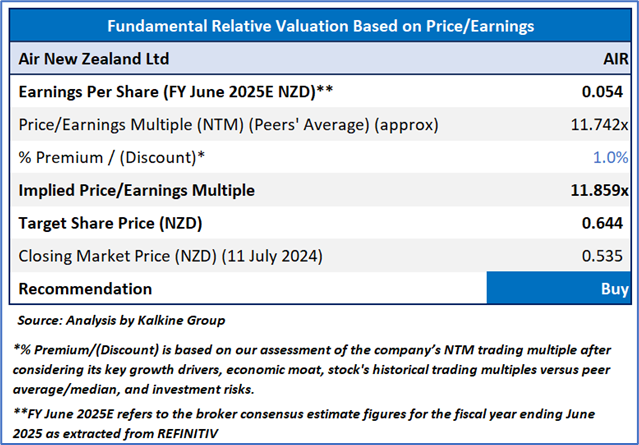
P/E Based Relative Valuation
Stock Recommendation
AIR was last covered on June 17, 2024. Considering the aforementioned factors, a ‘Buy’ rating is given on the stock at the closing market price of NZD 0.535 per share as on 11th July 2024.
2) Move Logistics Group Limited (Recommendation: Speculative Buy, Potential Upside: Low Double-Digit) (M-Cap: NZD 29.9 million)
Business Description:
Move Logistics Group Limited (NZX: MOV) is a NZ-based company, which is engaged in domestic freight and logistics business.
Outlook:
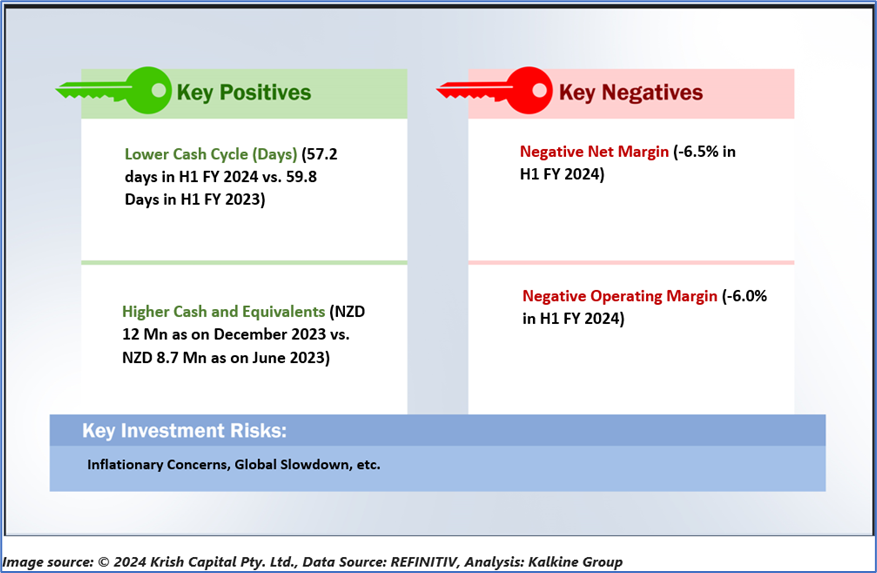
MOV is expecting H2 FY 2024 Normalised EBITDA to be ahead of H1 FY 2024. While the speed of turnaround initiatives has been inhibited by the weak economic conditions, early improvements are now starting to be delivered as MOV is transitioning towards a sales led, customer-focused, streamlined organisation.
Technical Overview:
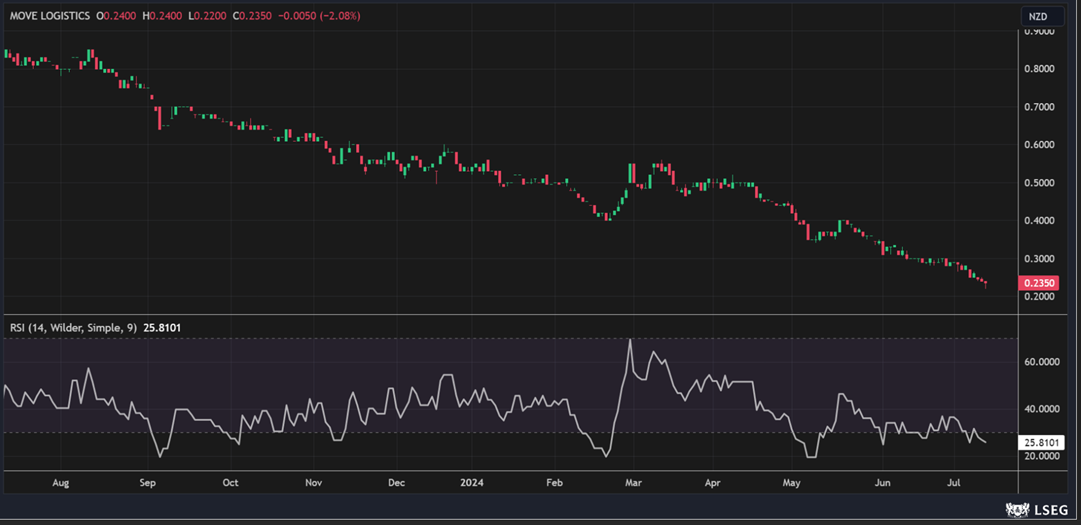
MOV Daily Technical Chart, Data Source: REFINITIV
Technical Commentary
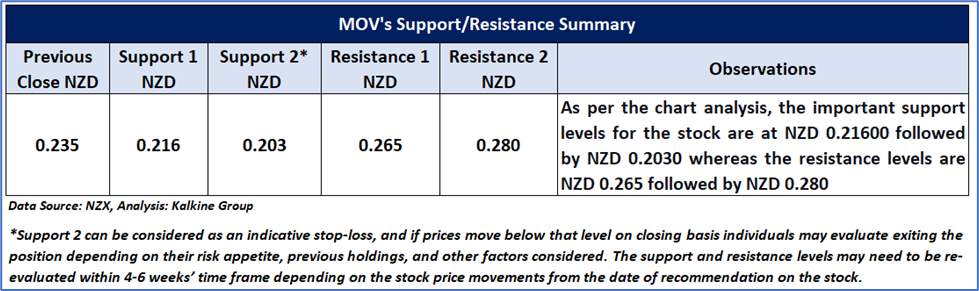
On the daily chart, MOV’s stock prices are trading near the lower boundary of a descending wedge pattern, anticipating for a minor rally. Moreover, the momentum oscillator RSI (14-period) is forming a bottom divergence in its oversold region in relations to prices, adding further evidence for the mentioned recommendation. Prices are fluctuating between the pattern’s upper and lower boundaries, which might serve as dynamic resistance and support levels for the stock, respectively. A significant support level for the stock is positioned at NZD 0.216, while critical resistance level is located at NZD 0.265.
Stock Recommendation
MOV was last covered on April 24, 2024. Considering the aforementioned factors, a ‘Speculative Buy’ rating is given on the stock at the closing market price of NZD 0.235 per share, down by 2.08% as on 11th July 2024.
Markets are trading in a highly volatile zone currently due to certain macro-economic issues and geopolitical tensions prevailing. Therefore, it is prudent to follow a cautious approach while investing.
Note 1: Past performance is neither an indicator nor a guarantee of future performance.
Note 2: The reference date for all price data, currency, technical indicators, support, and resistance levels is July 11, 2024. The reference data in this report has been partly sourced from REFINITIV.
Note 3: Investment decisions should be made depending on an individual's appetite for upside potential, risks, holding duration, and any previous holdings. An 'Exit' from the stock can be considered if the Target Price mentioned as per the Valuation and or the technical levels provided has been achieved and is subject to the factors discussed above.
Note 4: Annual Dividend Yield is on a Trailing Twelve Month (TTM1) basis and are subject to change based on factors such as company performance, stock price changes, etc.
Technical Indicators Defined: -
Support: A level at which the stock prices tend to find support if they are falling, and a downtrend may take a pause backed by demand or buying interest. Support 1 refers to the nearby support level for the stock and if the price breaches the level, then Support 2 may act as the crucial support level for the stock.
Resistance: A level at which the stock prices tend to find resistance when they are rising, and an uptrend may take a pause due to profit booking or selling interest. Resistance 1 refers to the nearby resistance level for the stock and if the price surpasses the level, then Resistance 2 may act as the crucial resistance level for the stock.
Stop-loss: It is a level to protect further losses in case of unfavourable movement in the stock prices.
Disclaimer This report has been issued by Kalkine New Zealand Limited (FSP691351) (NZBN:9429047678101) (“Kalkine”). Kalkine is a Financial Advice Provider (“FAP”) and is authorised by a Class 1 Financial Advice Provider Licence issued by Financial Markets Authority (“FMA”) to provide financial advice. Kalkine provides only general financial advice through its research reports following a person becoming a member. The reports contain buy/sell/hold and other recommendations in relation to equity securities, managed funds and other managed investment schemes and other financial advice products. The recommendations and opinions in this report and on Kalkine website do not take into account any of your investment objectives, financial situation or needs. Before you make a decision about whether to acquire a financial product, you should obtain the Product Disclosure Statement from the product issuer. You should consider the appropriateness of advice taking into account your own objectives, financial situation and needs and seek independent financial advice before making any financial decisions. If you act on the advice in the research reports, you may have to pay fees, expenses or other amounts (but not to Kalkine). Further information about the complaints and dispute resolution process, as well as information about Kalkine’s duties are available on Kalkine’s website. Please read our Financial Advice Provider (FAP) disclosure statement and Complaints Handling Guide, which are available on the website.
Past performance is not a reliable indicator of future performance.
 Please wait processing your request...