
 AU
AU
 UK
UK
 CA
CA
 US
US
 IND
IND

 NZ
NZ

Company Overview:
Chatham Rock Phosphate Limited (NZX: CRP) is an exploration and development company which is focused towards becoming a diversified phosphate developer and trader. Genesis Energy Limited (NZX: GNE) is a New Zealand-owned energy company.
Kalkine’s Sector Report covers the Investment Highlights, Key Financial Metrics, Risks, Outlook, Technical Analysis along with the Valuation, Target Price, and Recommendation on the stock.
1. Sector Landscape and Outlook
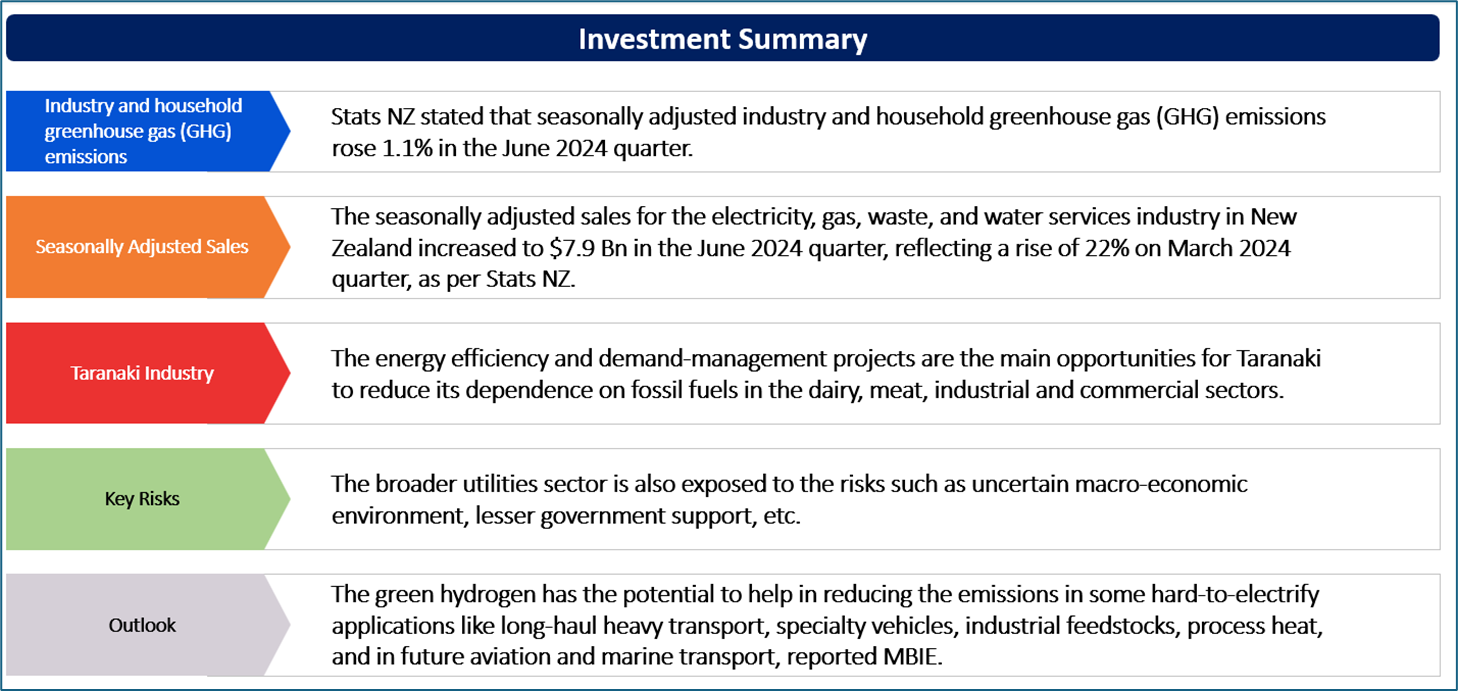
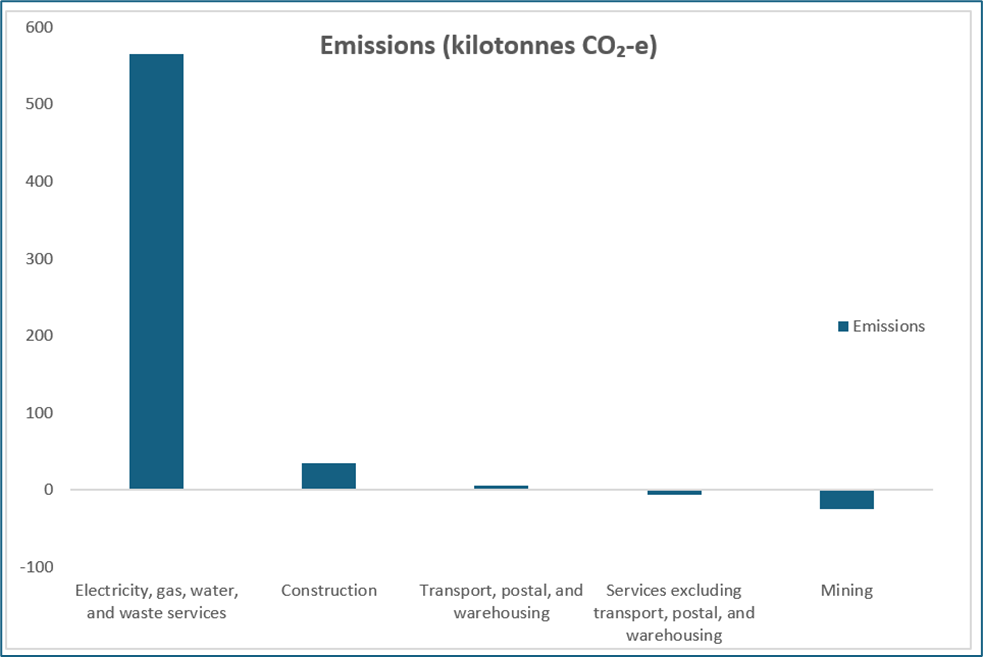
Stats NZ stated that seasonally adjusted industry and household greenhouse gas (GHG) emissions rose 1.1% in the June 2024 quarter. This increase of 224 kilotonnes during the quarter was because of more emissions from industry, particularly from the electricity, gas, water, and waste services industry. Over this quarter, industry emissions (excluding households) rose by 1.7% (292 kilotonnes). By comparison, gross domestic product (GDP), which accounts for industry production, declined 0.2% in the same period. Emissions from households declined 1.2% (26 kilotonnes) in the June 2024 quarter. The largest increase in emissions came from electricity, gas, water, and waste services, rising by 32% (566 kilotonnes). Emissions from construction were also up 8.4% (35 kilotonnes), and transport, postal, and warehousing emissions rose 0.4% (6 kilotonnes).
This increase in emissions from electricity, gas, water, and waste services was driven by higher use of fossil fuels (coal and gas) for electricity generation. NZ experienced dry conditions in hydro-generation areas during June 2024 quarter. As a result, 81% of its electricity in the quarter was generated from renewable sources as compared to 86% in the previous quarter.
Exhibit 1: Change in Emissions By Industry (kilotonnes CO₂-e), Seasonally Adjusted, March 2024–June 2024 quarters
Electrical Industry Sales
The seasonally adjusted sales for the electricity, gas, waste, and water services industry in New Zealand increased to $7.9 Bn in the June 2024 quarter, reflecting a rise of 22% on March 2024 quarter, as per Stats NZ. In actual terms, industry sales rose by $2.1 Bn (or 36%) in the June 2024 quarter as compared to June 2023 quarter. This was the largest value increase since the beginning of the series in June 2016. Purchases for this industry also rose significantly, up by $2.2 billion over the same period. The rise in electricity industry sales and purchases can likely be because of a combination of factors like gas shortages and low hydro generation. The impacts have mainly been expressed in the increased wholesale price of electricity.
The producer price index for electricity and gas supply inputs (costs) increased 49% while the outputs (revenue) rose 32% in the June 2024 quarter as compared to the June 2023 quarter. After adjusting for seasonal effects, the construction industry sales increased 1.3% from the March 2024 quarter to $24.2 billion, led by the heavy and civil construction sub-industry.
Exhibit 2: Electricity, Gas, Waste, and Water Services Industry Sales ($ Bn)
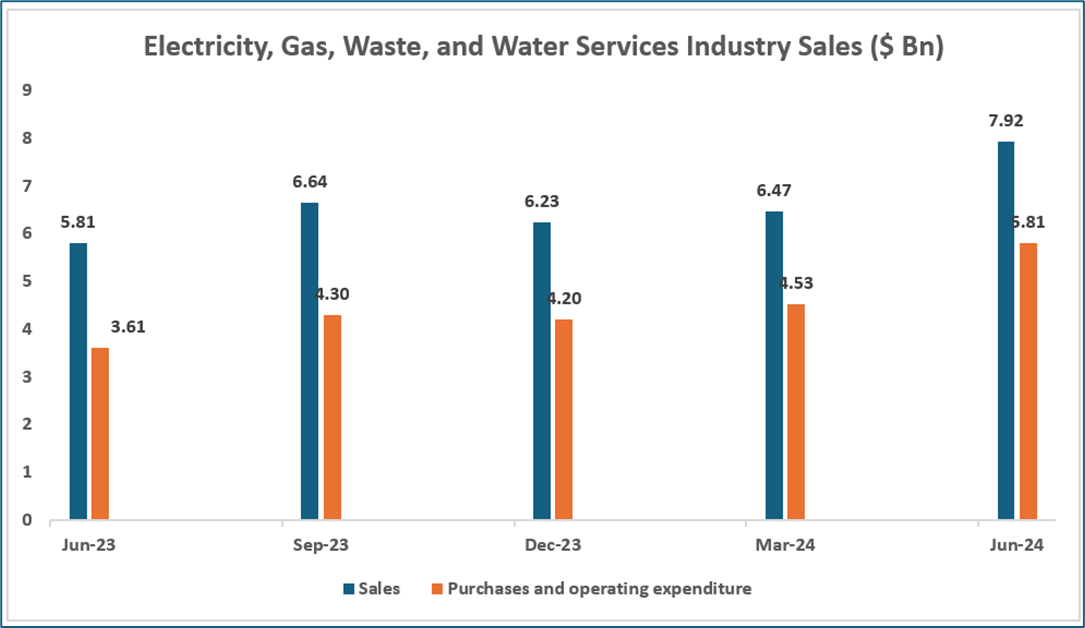
Data Source: This work is owned by the Ministry of Business, Innovation and Employment on behalf of the Crown which are licensed for reuse under the Creative Commons Attribution 4.0 International Licence; Chart Created by Kalkine Group
Taranaki Industry -Transition to Renewable Energy
As per the release dated 22 October 2024, a new report published by EECA (Energy Efficiency Conservation Authority) details the recommendations to help Taranaki industry use less energy and move off fossil fuels – future proofing the region and setting it up for a low-carbon economy. In order to make good decisions, businesses require access to the information which impacts them, especially about the combined impact of decisions made individually throughout the region. Notably, the fuel switching decisions collectively impact investment needed in Taranaki’s resource and infrastructure systems, along with the downstream effects of energy supply and generation.
The energy efficiency and demand-management projects are the main opportunities for Taranaki to reduce its dependence on fossil fuels in the dairy, meat, industrial and commercial sectors.
Key Risks and Challenges:
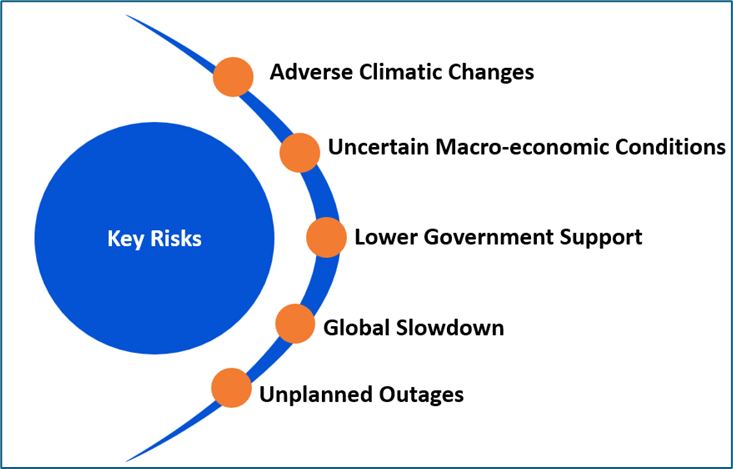
The companies operating in the energy sector might face risks including increased generation costs, unplanned outages, etc. Notably, fluctuation in the fuel costs might also pose a challenge for the broader utilities sector. The sector might get adversely impacted because of climate-related risks, physical risks of slips and trips and confronting weather conditions, etc.
Apart from these risks, the higher fuel costs and emissions are other additional risks.
Exhibit 3. Key Risks in Utilities Sector:
Source:- Analysis: Kalkine Group
Outlook:
MBIE stated that a modern, affordable and secure energy system remains fundamental to building a stronger and more productive economy. New Zealand’s energy system has been serving well to date and its long-term energy outlook is positive. There are opportunities for green hydrogen to reduce emissions in areas which are hard to electrify, support economic development as well as underpin the energy security and resilience. NZ has a highly renewable electricity system and significant potential for new generation capacity which can be used to produce green hydrogen as a next generation, low-emissions fuel and energy carrier.
Notably, the green hydrogen has the potential to help in reducing the emissions in some hard-to-electrify applications like long-haul heavy transport, specialty vehicles, industrial feedstocks, process heat, and in future aviation and marine transport, reported MBIE. The growing hydrogen industry in NZ can help the country achieve its commitments to reduce net emissions of all greenhouse gases (except biogenic methane) to zero by 2050, create highly-skilled jobs, and might underpin its energy security and resilience by decreasing dependence on imported fuels as well as providing back-up power options.
Apart from the sector-specific factors, an analysis on two NZX-listed companies is provided. This report covers their insights, outlook, performance and potential as expected to be delivered in the near to medium term.
1) Genesis Energy Limited (Recommendation: Buy, Potential Upside: Low Double-Digit) (M-Cap: NZD 2.30 billion, Annual Dividend Yield (TTM)1: 9.21%)
Business Description:
Genesis Energy Limited (NZX: GNE) is a New Zealand-owned energy company
Outlook:
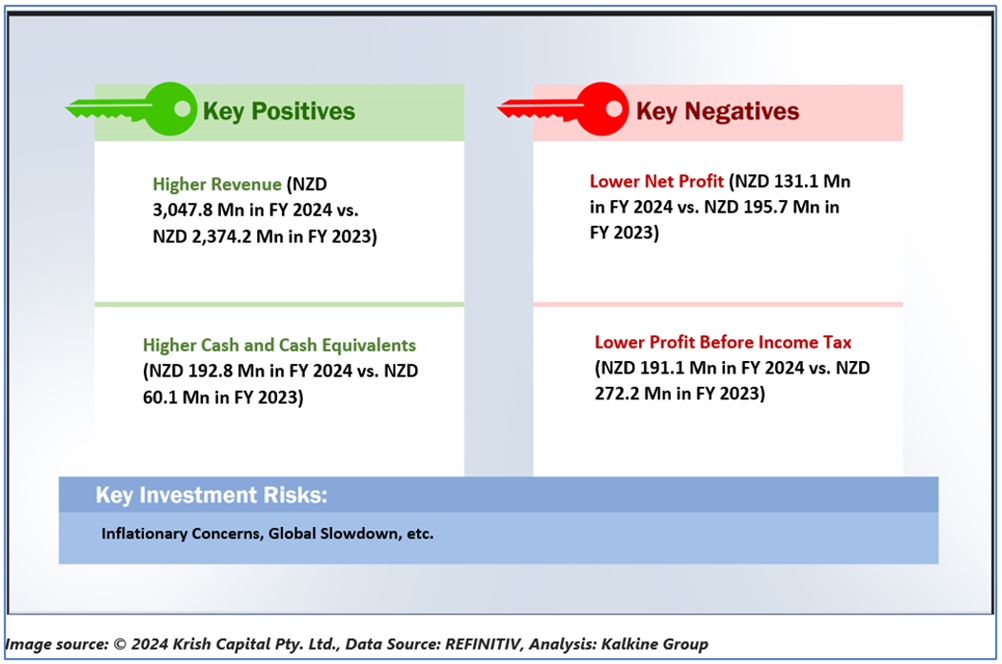
GNE purchased 65% of NZ’s leading EV charging infrastructure operator, Chargenet. The investment remains a key enabler to secure a 30% share of the emerging EV value pool under the Gen35 strategy. The company has been targeting an IRR of ~15% from the investment. The company’s new customer billing platform is making good progress with the Frank build complete and on track for go-live in Q4 FY 2025. Notably, the development and delivery of the Huntly 100 MW/200 MWh battery as well as the Edgecumbe solar farm continued in line with expectations.
Technical Overview:
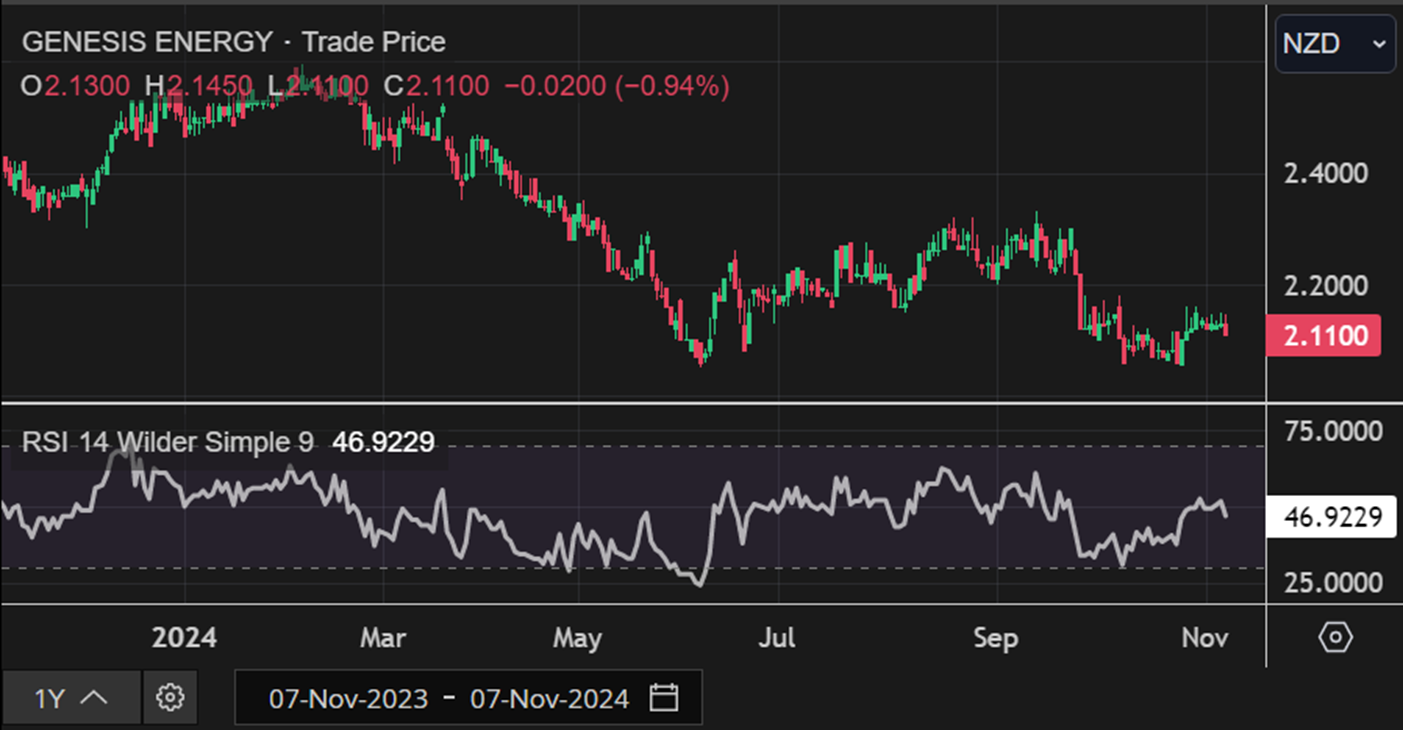
GNE Daily Technical Chart, Data Source: REFINITIV
Technical Commentary:
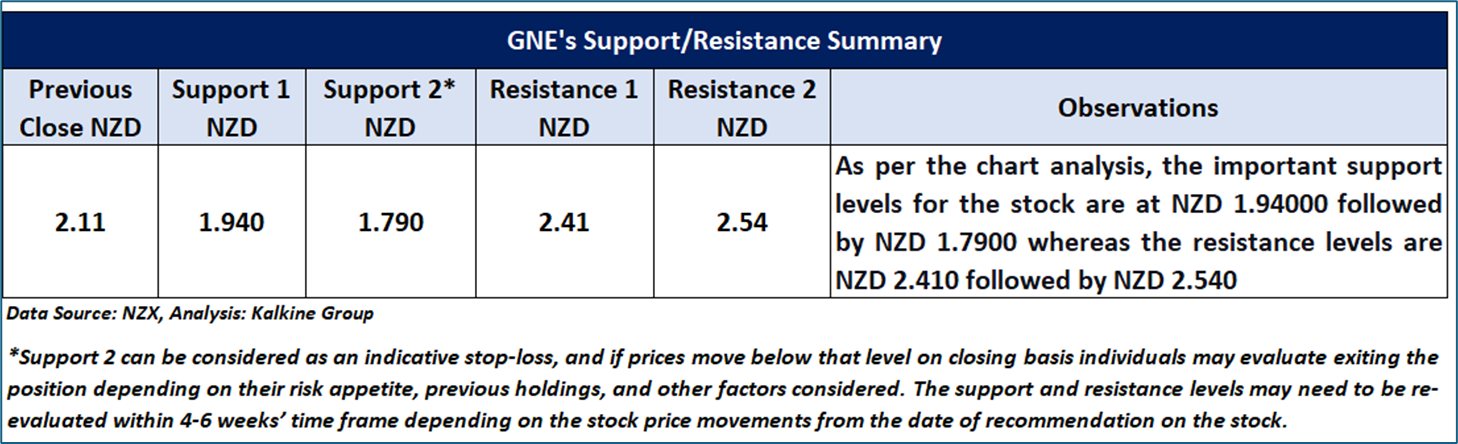
On the daily chart, GNE’s stock prices are undergoing a downtrend characterized by lower lows and lower highs, indicating a negative bias. In contrast, the stock is approaching a significant support established by its previous trough, anticipating for a potential minor rally. Prices are trading between its previous peak and trough, which might serve as resistance and support levels for the stock, respectively. An important support level for the stock is placed at NZD 1.94, while key resistance level is situated at NZD 2.41.
Fundamental Valuation:
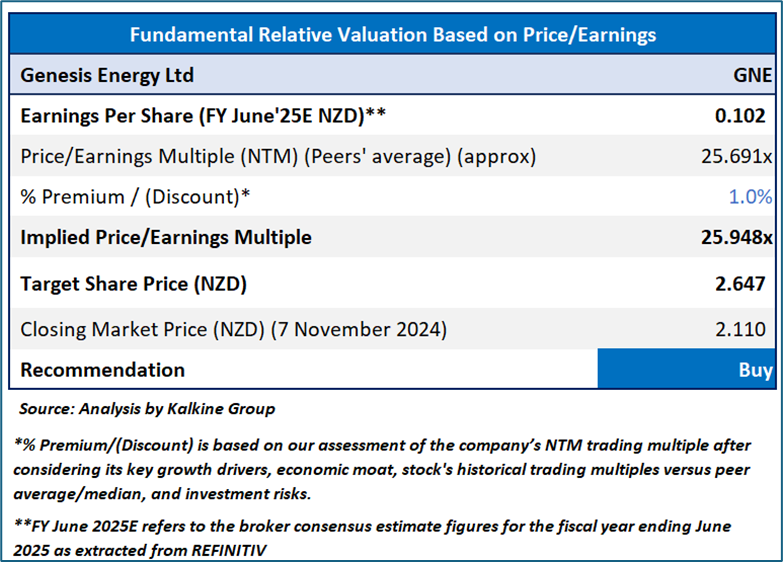
Price/EPS Based Relative Valuation
Stock Recommendation
Considering the facts above, a ‘Buy’ recommendation on the stock has been provided at the closing market price of NZD 2.110 per share, down by 0.94% as on 7 November 2024.
2) Chatham Rock Phosphate Limited (Recommendation: Speculative Buy, Potential Upside: Low Double-Digit) (M-Cap: NZD 11.5 million)
Business Description:
Chatham Rock Phosphate Limited (NZX: CRP) is an exploration and development company focused towards becoming diversified phosphate developer and trader.
Outlook:
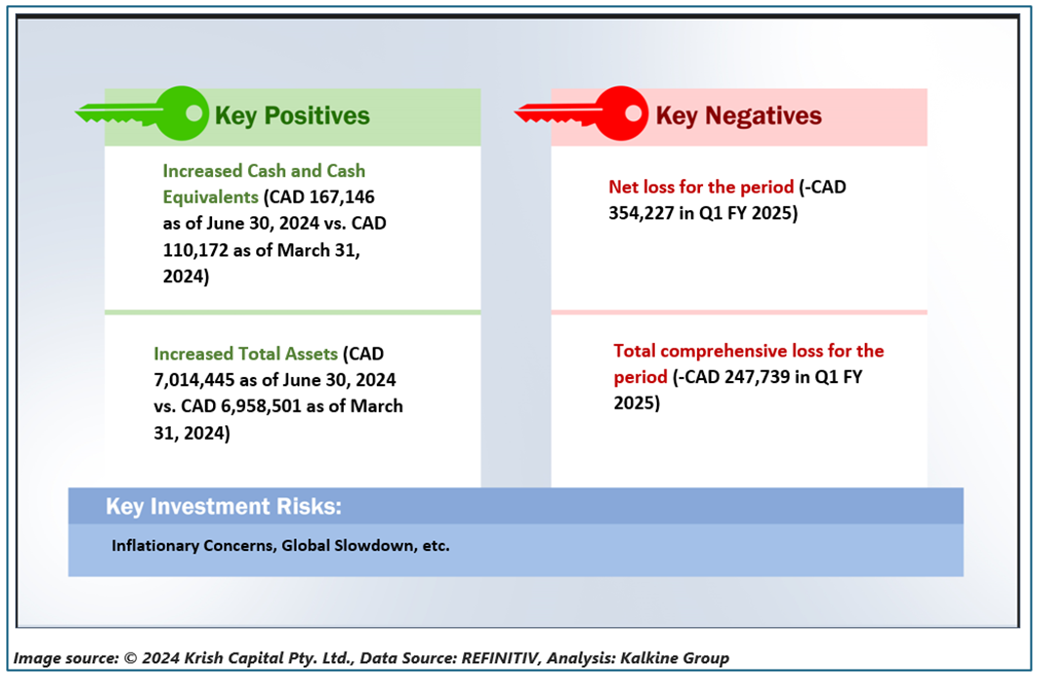
CRP announced that the company is proceeding with a non-brokered private placement of up to 6,250,000 shares at a price of CAD 0.08 per share (NZD 0.095 or AUD 0.086) for gross proceeds of up to CAD 500,000 (NZD 593,750 or AUD 537,500). CRP reported that operating in the resources sector in New Zealand just got easier. Notably, 19 mining and quarrying projects will be included in the Fast-Track Approvals Bill, the Government announced recently. These include the Trans-Tasman Resources seabed vanadium iron sands project.
Technical Overview:
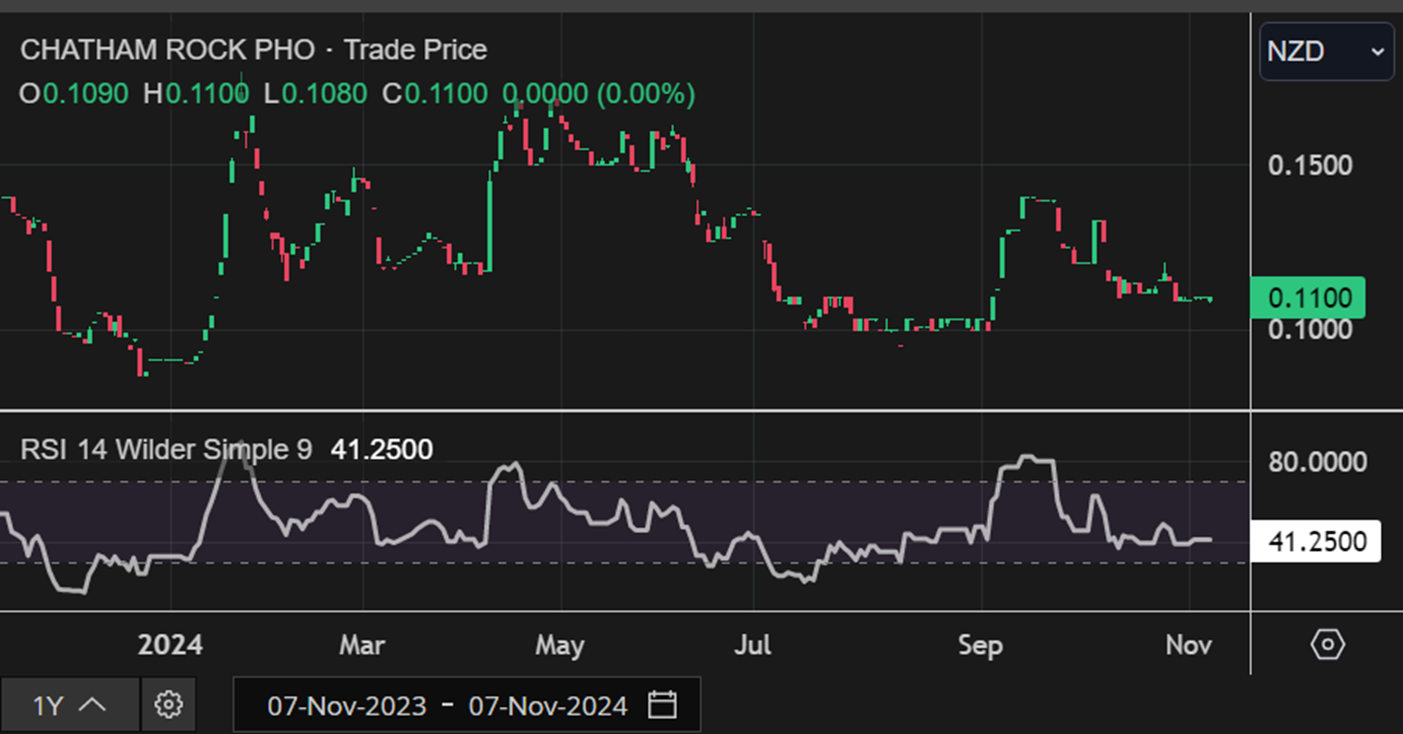
CRP Daily Technical Chart, Data Source: REFINITIV
Technical Commentary
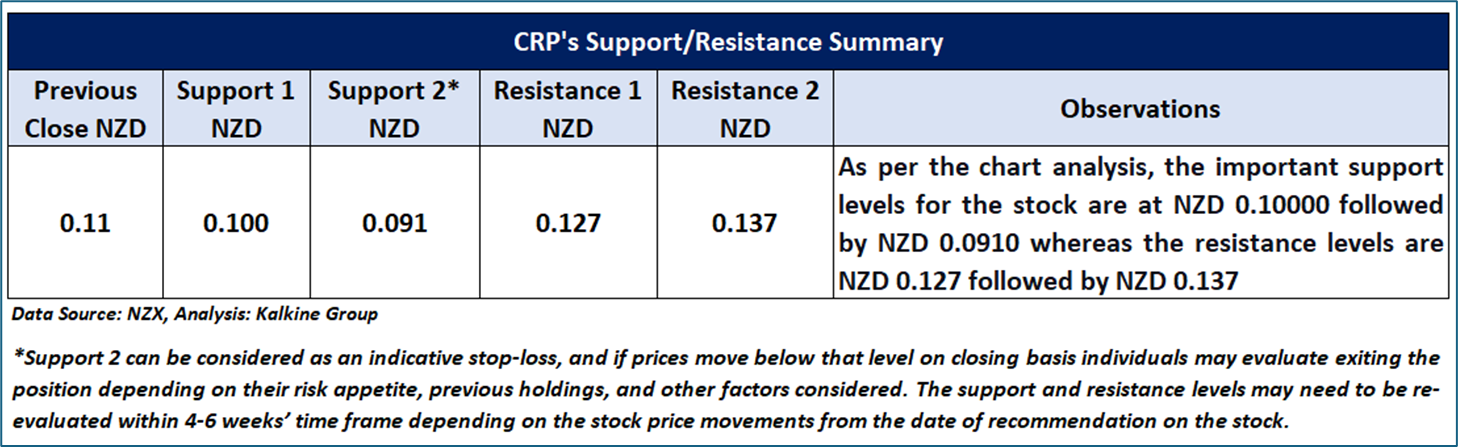
On the daily chart, CRP’s stock prices are developing a symmetrical triangle pattern, suggesting that the current sideways period in the stock might continue to persist in the near future. Moreover, the momentum oscillator RSI (14-period) is fluctuating around its midpoint, adding further evidence for the mentioned recommendation. Prices are trading between its previous peak and trough, which might function as resistance and support levels for the stock, respectively. A significant support level for the stock is positioned at NZD 0.10, while critical resistance level is located at NZD 0.127.
Stock Recommendation
Considering the aforementioned factors, a “Speculative Buy” rating is given on the stock at the closing market price of NZD 0.11 per share as on 7 November 2024.
Markets are trading in a highly volatile zone currently due to certain macro-economic issues and geopolitical tensions prevailing. Therefore, it is prudent to follow a cautious approach while investing.
Note 1: Past performance is neither an indicator nor a guarantee of future performance.
Note 2: The reference date for all price data, currency, technical indicators, support, and resistance levels is 7 November 2024. The reference data in this report has been partly sourced from REFINITIV.
Note 3: Investment decisions should be made depending on an individual's appetite for upside potential, risks, holding duration, and any previous holdings. An 'Exit' from the stock can be considered if the Target Price mentioned as per the Valuation and or the technical levels provided has been achieved and is subject to the factors discussed above.
Technical Indicators Defined: -
Support: A level at which the stock prices tend to find support if they are falling, and a downtrend may take a pause backed by demand or buying interest. Support 1 refers to the nearby support level for the stock and if the price breaches the level, then Support 2 may act as the crucial support level for the stock.
Resistance: A level at which the stock prices tend to find resistance when they are rising, and an uptrend may take a pause due to profit booking or selling interest. Resistance 1 refers to the nearby resistance level for the stock and if the price surpasses the level, then Resistance 2 may act as the crucial resistance level for the stock.
Stop-loss: It is a level to protect further losses in case of unfavourable movement in the stock prices.
Disclaimer This report has been issued by Kalkine New Zealand Limited (FSP691351) (NZBN:9429047678101) (“Kalkine”). Kalkine is a Financial Advice Provider (“FAP”) and is authorised by a Class 1 Financial Advice Provider Licence issued by Financial Markets Authority (“FMA”) to provide financial advice. Kalkine provides only general financial advice through its research reports following a person becoming a member. The reports contain buy/sell/hold and other recommendations in relation to equity securities, managed funds and other managed investment schemes and other financial advice products. The recommendations and opinions in this report and on Kalkine website do not take into account any of your investment objectives, financial situation or needs. Before you make a decision about whether to acquire a financial product, you should obtain the Product Disclosure Statement from the product issuer. You should consider the appropriateness of advice taking into account your own objectives, financial situation and needs and seek independent financial advice before making any financial decisions. If you act on the advice in the research reports, you may have to pay fees, expenses or other amounts (but not to Kalkine). Further information about the complaints and dispute resolution process, as well as information about Kalkine’s duties are available on Kalkine’s website. Please read our Financial Advice Provider (FAP) disclosure statement and Complaints Handling Guide, which are available on the website.
Past performance is not a reliable indicator of future performance.
 Please wait processing your request...