
 AU
AU
 UK
UK
 CA
CA
 US
US
 IND
IND

 NZ
NZ

Company Overview:
Chatham Rock Phosphate Limited (NZX: CRP) is an exploration and development company which is focused towards becoming a diversified phosphate developer and trader. Genesis Energy Limited (NZX: GNE) is a New Zealand-based diversified energy company.
Kalkine’s Sector Report covers the Investment Highlights, Key Financial Metrics, Risks, Outlook, Technical Analysis along with the Valuation, Target Price, and Recommendation on the stock.
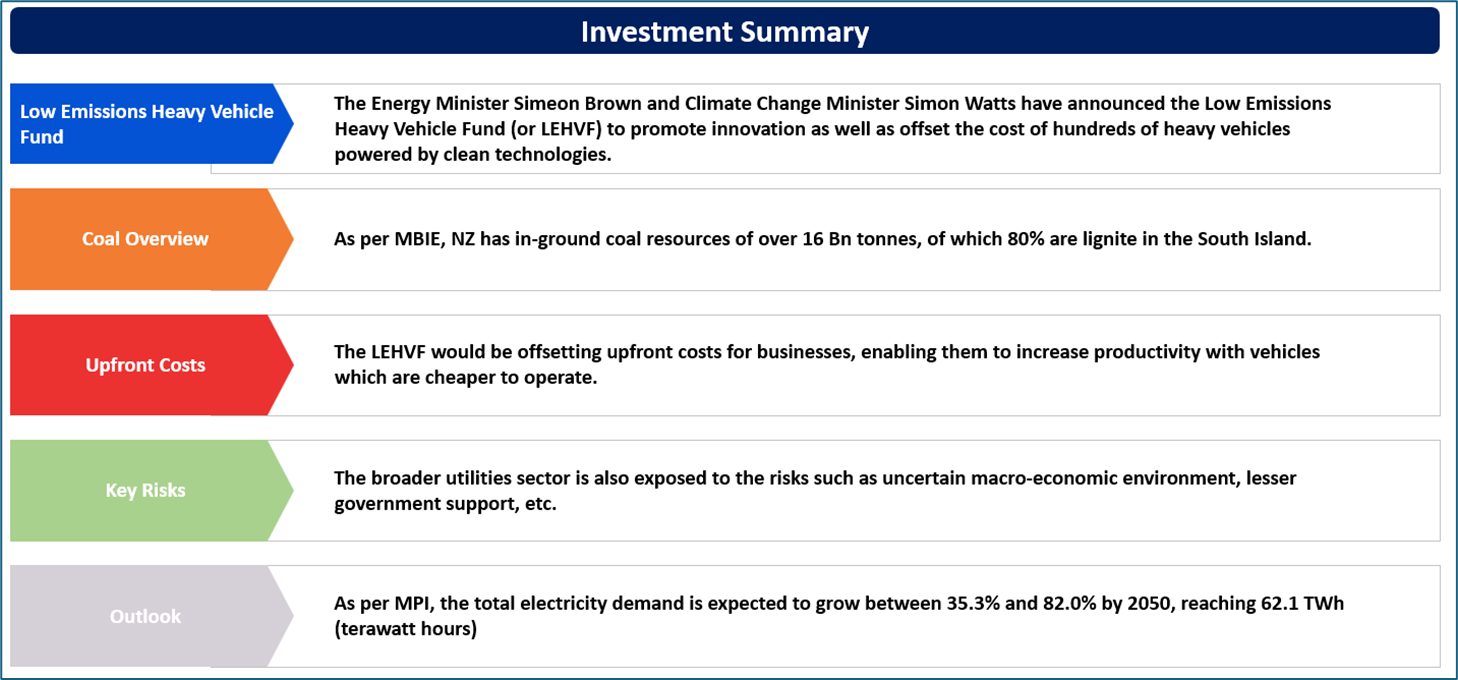
The Energy Minister Simeon Brown and Climate Change Minister Simon Watts have announced the Low Emissions Heavy Vehicle Fund (or LEHVF) in order to promote innovation as well as offset the cost of hundreds of heavy vehicles powered by clean technologies. Notably, boosting economic growth and productivity remains the key part of the Government’s plan to rebuild the economy. The LEHVF would be offsetting upfront costs for businesses, enabling them to increase productivity with vehicles which are cheaper to operate. As part of Budget 2024, the Government confirmed $27.75 Mn towards offsetting the purchase prices of low and zero-emissions heavy vehicles. The high upfront costs as well as the unknown total cost of ownership are some of the critical barriers to the uptake of zero and low-emissions heavy vehicles.
In order to address the barrier, the LEHVF would be contributing up to 25% of the cost of new zero and low-emissions heavy vehicles, and up to 25% of the cost to convert existing higher emitting heavy vehicles to be powered by low-emissions technology. In the release dated 14th August 2024, EECA stated that new electric empty container handlers are expected to play a critical role in decarbonising 2 of NZ’s largest ports. Notably, Port of Auckland and Wellington’s CentrePort have each been approved co-funding of $500,000 for procuring an electric empty container handler (or ECH) and associated on-port charging infrastructure.
Port of Auckland, NZ’s largest import port, would be procuring an electric ECH and its charger, and would set up the infrastructure for its operation. It currently has 6 diesel empty container handlers. It projects replacing one of its diesel ECHs with an electric model would reduce the port’s greenhouse gas emissions by minimum 670,977kg CO₂e over the upcoming 10 years.
Coal Overview
As per MBIE, NZ has in-ground coal resources of over 16 Bn tonnes, of which 80% are lignite in the South Island. Also, there are substantial resources of sub-bituminous coal in both islands as well as a lesser amount of high-quality bituminous coal, mainly on the West Coast of the South Island. The electricity generation (including cogeneration) makes up for the largest amount of domestic coal use. However, the Industrial coal use is mainly for 1) Cement, lime and plaster, 2) Meat, dairy and other food processing, and 3) Wool, timber, pulp and paper products.
Most of NZ’s premium bituminous coal is exported. It's valued internationally for the low ash and sulphur content and characteristics like high swelling, fluidity and reactivity, which enabling blending with other coals for use in the steel industry.
Exhibit 1: Quarterly Coal Supply (Production) (Tonnes)
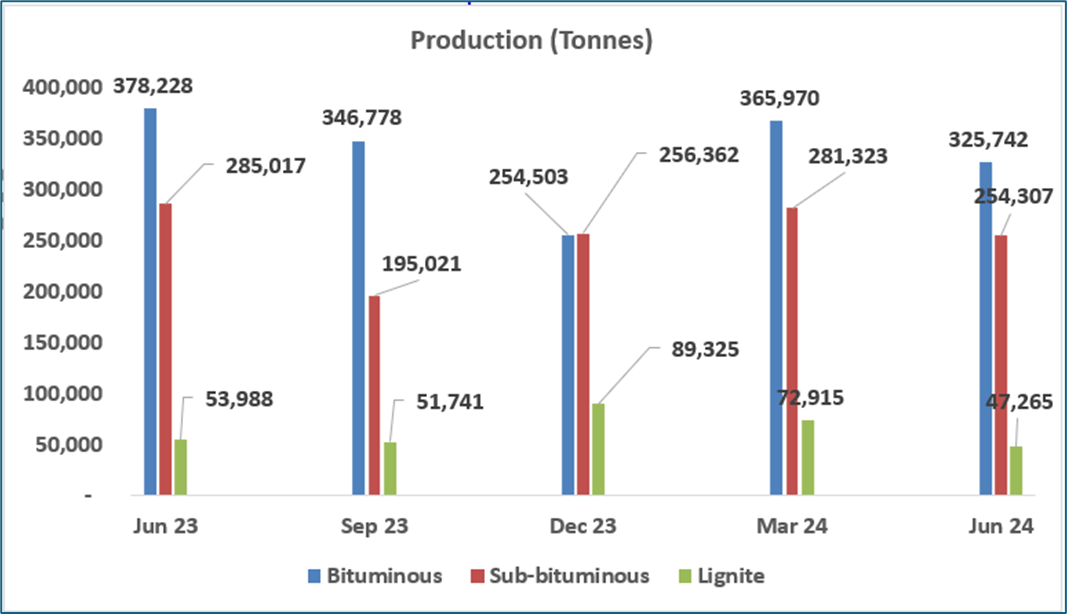
Data Source: This work is owned by the Ministry of Business, Innovation and Employment on behalf of the Crown which are licensed for reuse under the Creative Commons Attribution 4.0 International Licence; Chart Created by Kalkine Group
Oil Statistics
Oil is NZ’s largest source of energy and, therefore, it is having a strong influence on the broader economy. Notably, the deregulation of the oil industry in 1988 removed price controls, government involvement in the refinery, licensing of wholesalers and retailers as well as restrictions on imports of refined products. NZ exports local crude and imports refined petroleum products. The diesel and petrol are dominating petroleum product consumption in NZ. Also, diesel is the primary fuel, which is utilised for commercial land transport, and therefore, its use is strongly linked to economic performance. However, petrol consumption tends to be for the private use. The large amount of NZ’s total primary energy supply (or TPES) comes from the renewable resources. Hydro, geothermal, wind as well as bioenergy are utilised to produce electricity in NZ.
NZ is a country which is rich in geothermal resources because of the many volcanic areas, and faults as well as tectonic features. Also, geothermal energy is the fuel type having the largest contribution to the TPES but electricity generated from geothermal energy is a much lower proportion.
Exhibit 2: Renewable Energy Supply (Indigenous Production) (Gross petajoules (PJ))
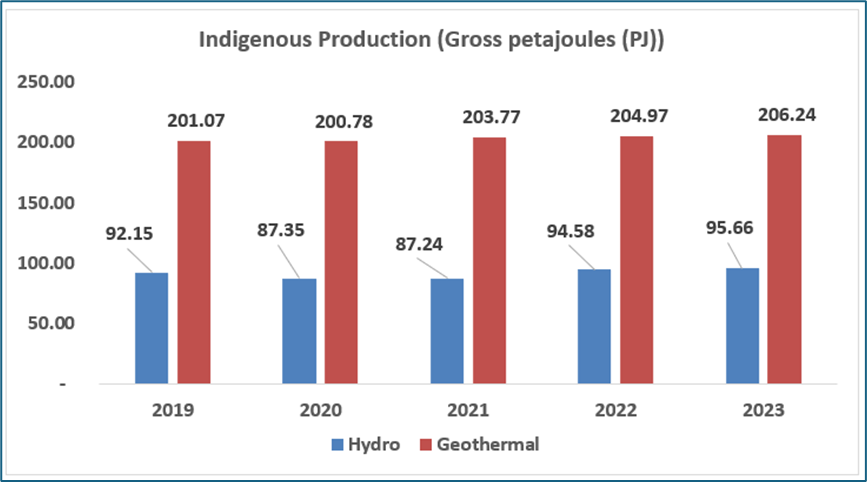
Data Source: This work is owned by the Ministry of Business, Innovation and Employment on behalf of the Crown which are licensed for reuse under the Creative Commons Attribution 4.0 International Licence; Chart Created by Kalkine Group
Key Risks and Challenges:
The companies operating in the energy sector might face risks including increased generation costs, unplanned outages, etc. Notably, fluctuation in the fuel costs might also pose a challenge for the broader utilities sector. Apart from these risks, the higher fuel costs and emissions are other additional risks. The broader utilities sector is also exposed to the risks such as uncertain macro-economic environment, lesser government support, etc.
Exhibit 3. Key Risks in Utilities Sector:
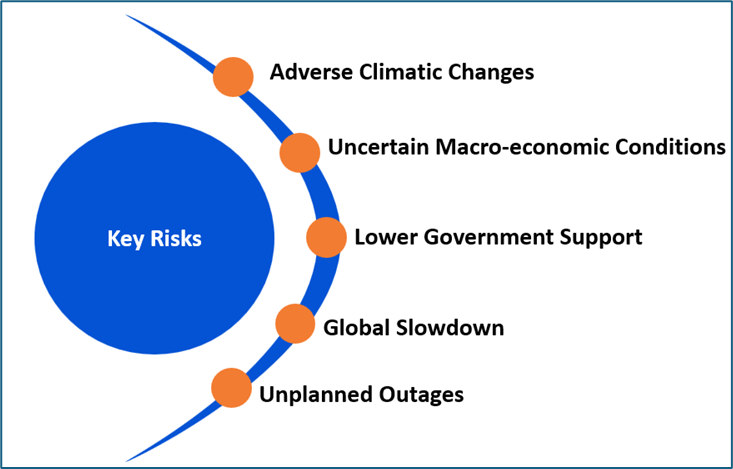
Source:- Analysis: Kalkine Group
Outlook:
As per MPI, the total electricity demand is expected to grow between 35.3% and 82.0% by 2050, reaching 62.1 TWh (terawatt hours) in the Reference scenario. Notably, the Reference scenario is the baseline scenario as well as considers both current trends and anticipated changes. By 2050, across all the scenarios, around half of all energy demand would be addressed by electricity. In the short term, the commercial and industrial sectors are expected to be the main sectors driving this growth. From the late 2030s, electrification of transport would be playing a larger role with increased uptake of electric vehicles (EVs).
Contributing to the increased demand is the level of switching of existing fossil fuel use to electricity, which remains a critical uncertainty. Alternative electrical heating technologies could become more attractive as time passes by. With the similar heating demand, users could increasingly convert to electrical heating, depending on the investment as well as running costs.
As per MPI, the least cost solution to address most of the new demand is onshore wind as well as solar generation. Also, MPI is expecting to witness some new hydro and geothermal plants built. In order to ensure enough firm capacity to reliably address the peak demand, new gas peakers are needed to provide firming across the scenarios. Notably, the renewable share of electricity generation might reach as high as 98.3%.
Apart from the sector-specific factors, an analysis on two NZX-listed companies is provided. This report covers their insights, outlook, performance and potential as expected to be delivered in the near to medium term.
1) Chatham Rock Phosphate Limited (Recommendation: Hold, Potential Upside: Low Double-Digit) (M-Cap: NZD 13.9 Million)
Business Description:
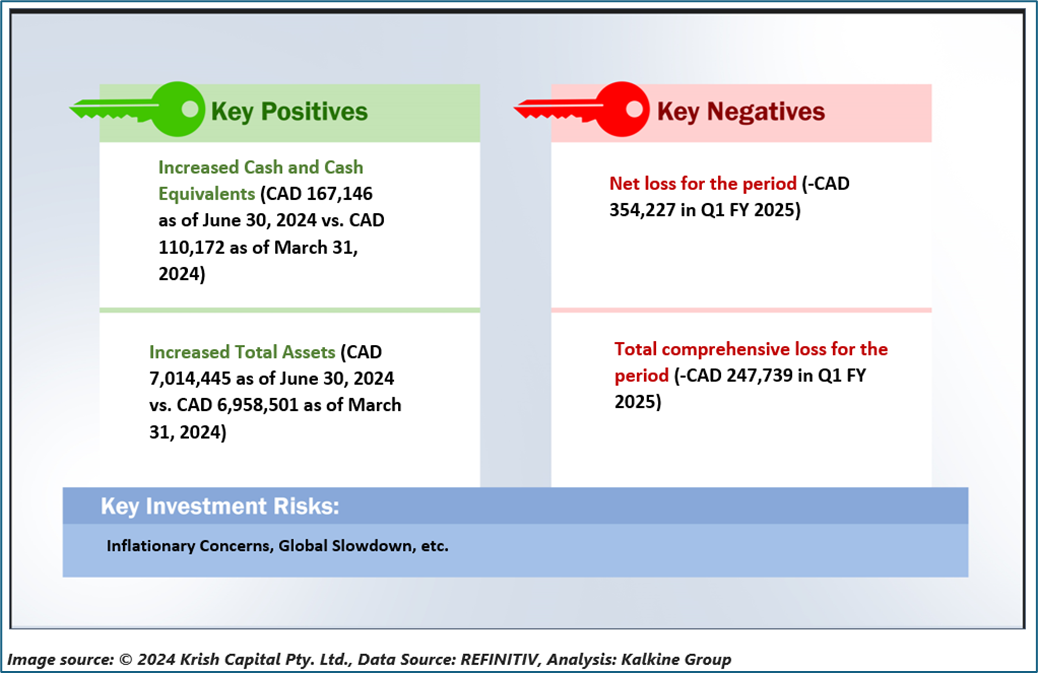
Chatham Rock Phosphate Limited (NZX: CRP) is an exploration and development company which is focused towards becoming a diversified phosphate developer and trader.
Outlook:
CRP reported that the Korella North mine has been given the green light with the granting of mining lease ML100379 by the Queensland Minister of Mines. The grant of this Mining Permit is a significant achievement for the company. The company’s next expected significant milestone is for the Chatham Rise project to be named in the proposed Fast Track permitting legislation when the relevant Bill gets reconsidered by the NZ Parliament.
Technical Overview:
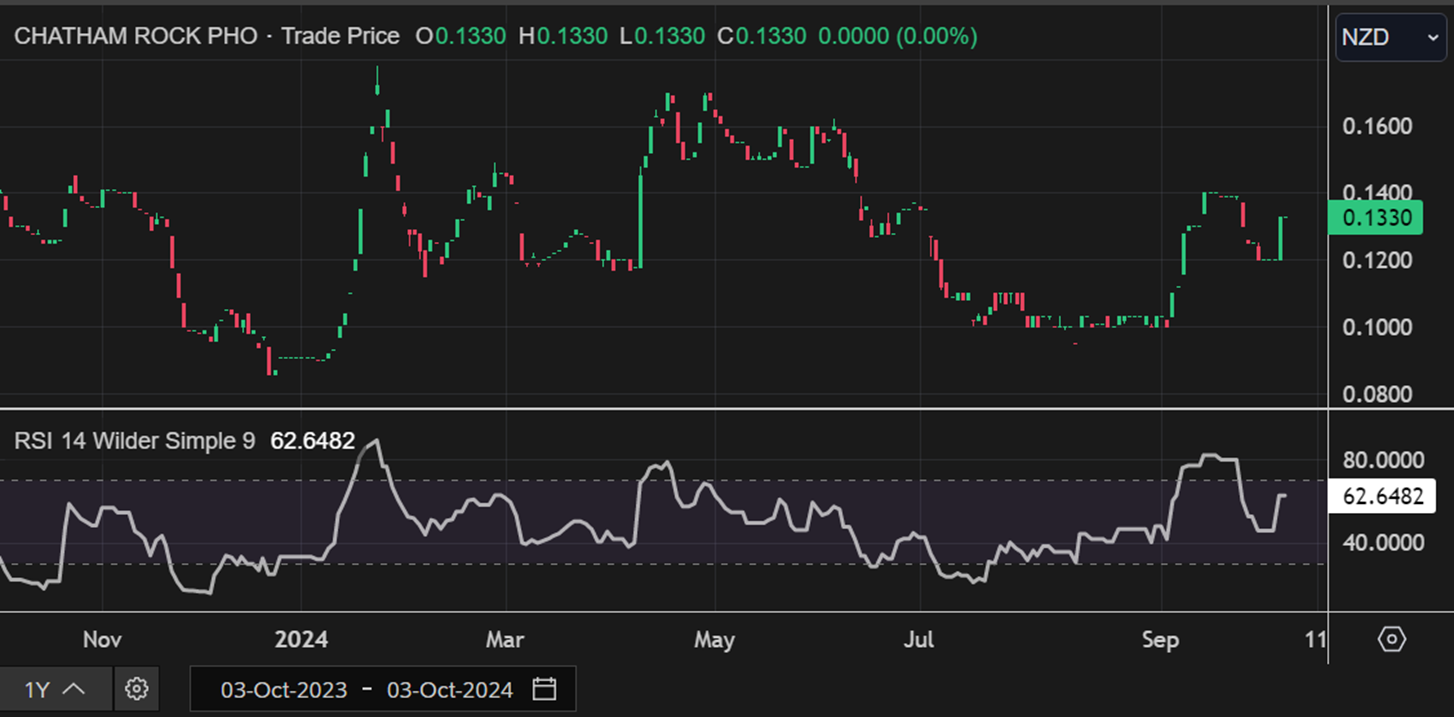
CRP Daily Technical Chart, Data Source: REFINITIV
Technical Commentary:
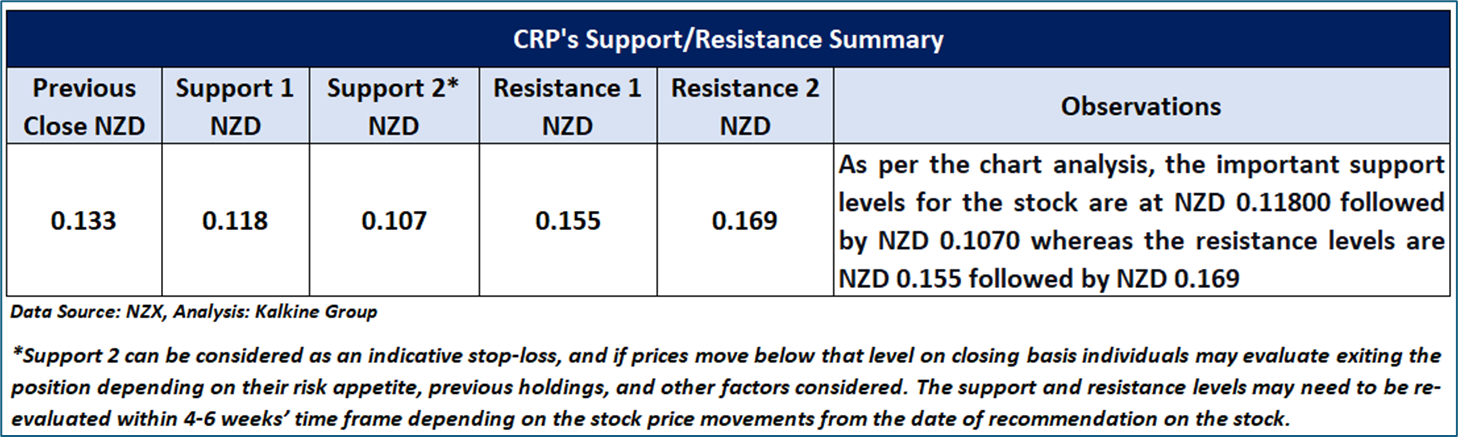
On the daily chart, CRP’s stock prices are developing a symmetrical triangle pattern, suggesting that the current sideways period in the stock might continue to persist in the near future. Moreover, the momentum oscillator RSI (14-period) is fluctuating around its midpoint, adding further evidence for the mentioned recommendation. Prices are trading between its previous peak and trough, which might function as resistance and support levels for the stock, respectively. A significant support level for the stock is positioned at NZD 0.118, while critical resistance level is located at NZD 0.155.
Stock Recommendation
Considering the facts above, a ‘Hold’ recommendation on the stock has been provided at the closing market price of NZD 0.133 per share as on 3 October 2024.
2) Genesis Energy Limited (Recommendation: Buy, Potential Upside: Low Double-Digit) (M-Cap: NZD 2.3 Bn, Annual Dividend Yield: 9.11%)
Business Description:
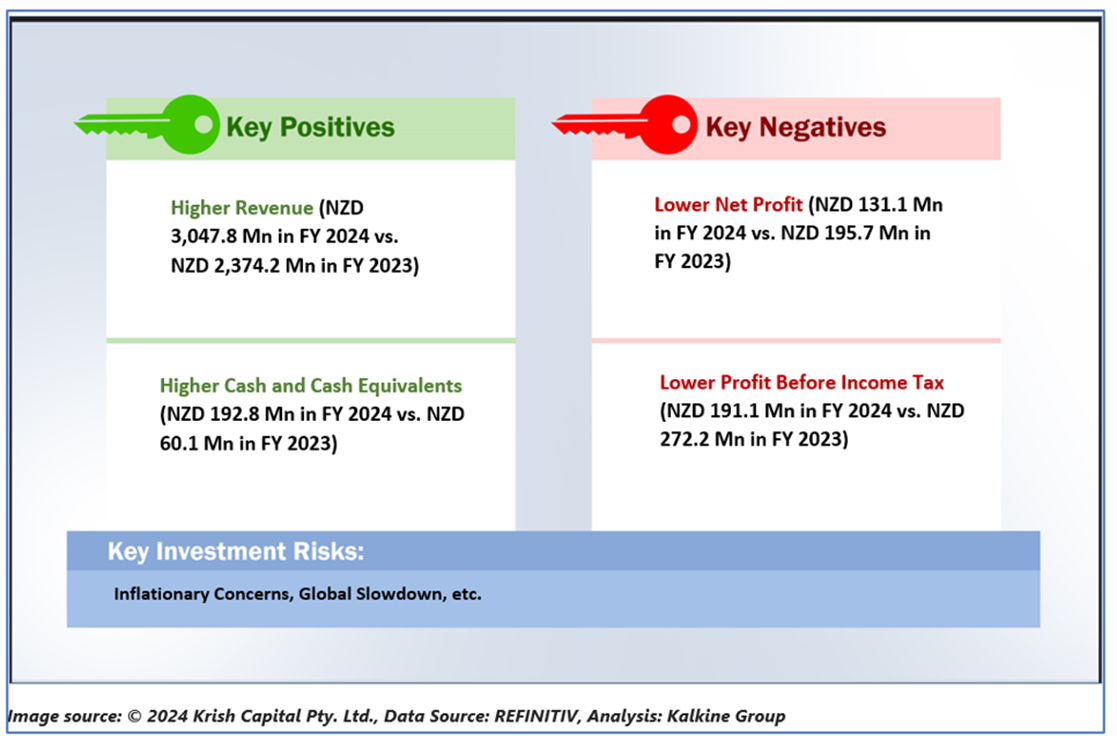
Genesis Energy Limited (NZX: GNE) is a New Zealand-based diversified energy company.
Outlook:
GNE would be acquiring a majority shareholding in ChargeNet, NZ’s largest nationwide electric vehicle (or EV) public charging network. This strategic move places the company as a key investor in the growth of the country’s EV market and the energy transition. Genesis’ deployment would be enabling ChargeNet to accelerate that growth with charge points anticipated to more than double by 2030.
Technical Overview:
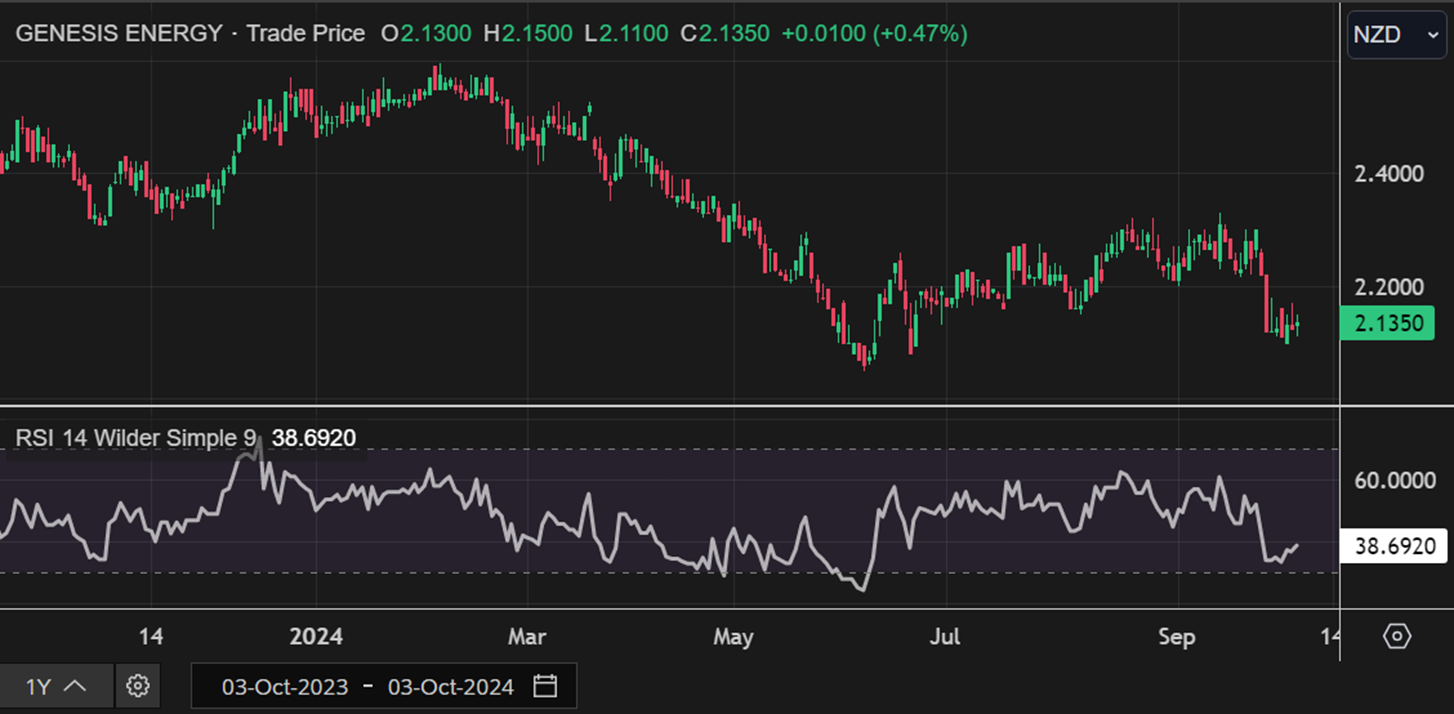 GNE Daily Technical Chart, Data Source: REFINITIV
Technical Commentary
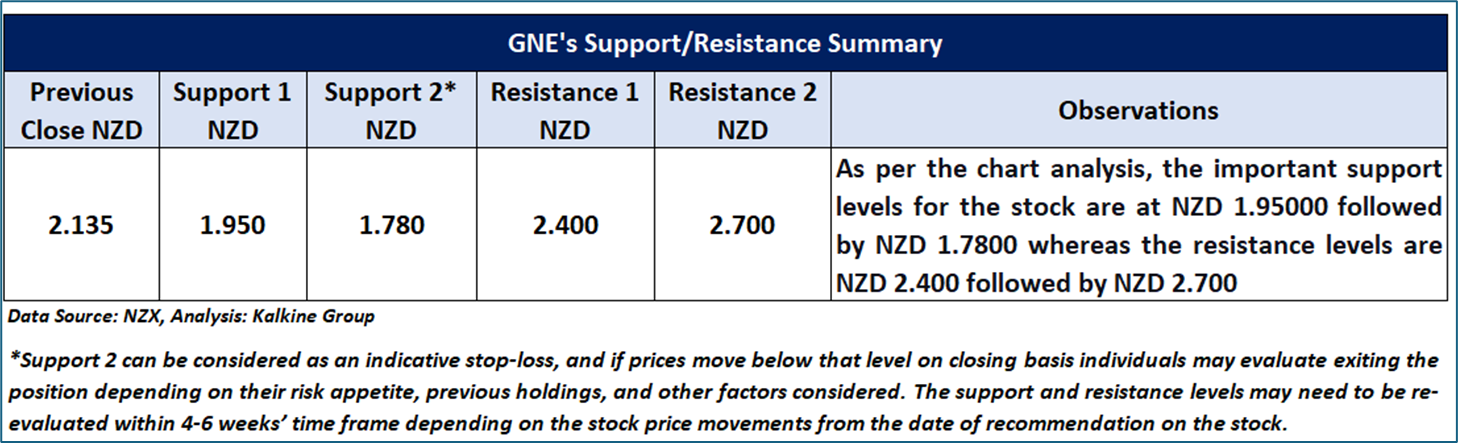
On the daily chart, GNE’s stock prices are undergoing a downtrend characterized by lower lows and lower highs, indicating a negative bias. In contrast, the stock is approaching a significant support established by its previous trough, anticipating for a potential minor rally. Prices are trading below both the trend-following indicators 21-period and 50-period SMAs, which might serve as dynamic resistance levels for the stock; in contrast, the stock’s previous trough may act as a support. An important support level for the stock is placed at NZD 1.95, while key resistance level is situated at NZD 2.40.
Fundamental Valuation
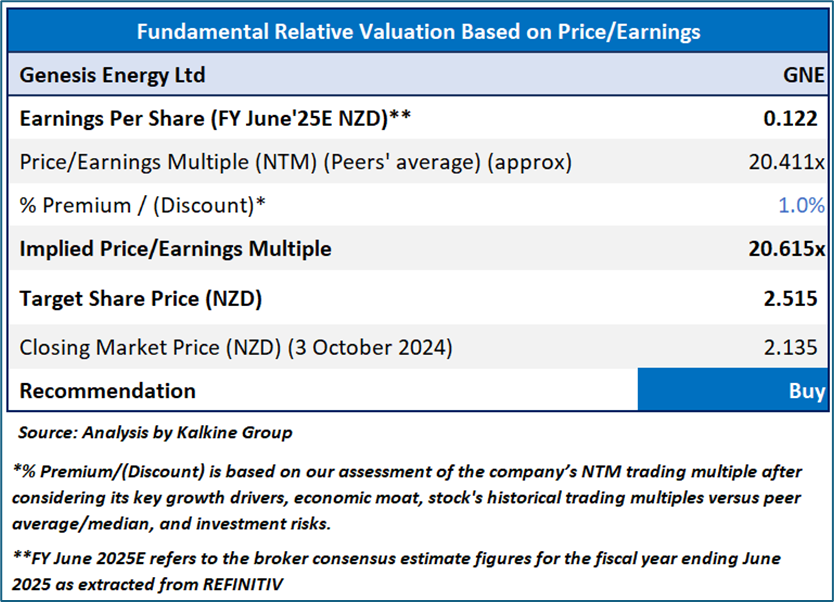
P/E Based Relative Valuation
Stock Recommendation
Considering the aforementioned factors, a “Buy” rating is given on the stock at the closing market price of NZD 2.135 per share, up by 0.47% as on 3 October 2024
Markets are trading in a highly volatile zone currently due to certain macro-economic issues and geopolitical tensions prevailing. Therefore, it is prudent to follow a cautious approach while investing.
Note 1: Past performance is neither an indicator nor a guarantee of future performance.
Note 2: The reference date for all price data, currency, technical indicators, support, and resistance levels is 3 October 2024. The reference data in this report has been partly sourced from REFINITIV.
Note 3: Investment decisions should be made depending on an individual's appetite for upside potential, risks, holding duration, and any previous holdings. An 'Exit' from the stock can be considered if the Target Price mentioned as per the Valuation and or the technical levels provided has been achieved and is subject to the factors discussed above.
Technical Indicators Defined: -
Support: A level at which the stock prices tend to find support if they are falling, and a downtrend may take a pause backed by demand or buying interest. Support 1 refers to the nearby support level for the stock and if the price breaches the level, then Support 2 may act as the crucial support level for the stock.
Resistance: A level at which the stock prices tend to find resistance when they are rising, and an uptrend may take a pause due to profit booking or selling interest. Resistance 1 refers to the nearby resistance level for the stock and if the price surpasses the level, then Resistance 2 may act as the crucial resistance level for the stock.
Stop-loss: It is a level to protect further losses in case of unfavourable movement in the stock prices.
Disclaimer This report has been issued by Kalkine New Zealand Limited (FSP691351) (NZBN:9429047678101) (“Kalkine”). Kalkine is a Financial Advice Provider (“FAP”) and is authorised by a Class 1 Financial Advice Provider Licence issued by Financial Markets Authority (“FMA”) to provide financial advice. Kalkine provides only general financial advice through its research reports following a person becoming a member. The reports contain buy/sell/hold and other recommendations in relation to equity securities, managed funds and other managed investment schemes and other financial advice products. The recommendations and opinions in this report and on Kalkine website do not take into account any of your investment objectives, financial situation or needs. Before you make a decision about whether to acquire a financial product, you should obtain the Product Disclosure Statement from the product issuer. You should consider the appropriateness of advice taking into account your own objectives, financial situation and needs and seek independent financial advice before making any financial decisions. If you act on the advice in the research reports, you may have to pay fees, expenses or other amounts (but not to Kalkine). Further information about the complaints and dispute resolution process, as well as information about Kalkine’s duties are available on Kalkine’s website. Please read our Financial Advice Provider (FAP) disclosure statement and Complaints Handling Guide, which are available on the website.
Past performance is not a reliable indicator of future performance.
 Please wait processing your request...