
 AU
AU
 UK
UK
 CA
CA
 US
US
 IND
IND

 NZ
NZ

Section 1: Company Overview and Fundamentals
1.1 Company Overview:
Frontline PLC (NYSE: FRO) is a Cyprus-based company primarily engaged in the transportation industry, with a primary focus on the maritime transport of crude oil and refined products. The company owns and manages a fleet of various tankers, including VLCC, Suezmax, and LR2/Aframax vessels, designed for the transport of oil and cargo. FRONTLINE PLC operates on a global scale.
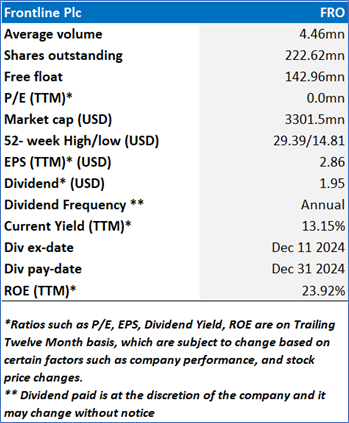
Kalkine’s Dividend Income Report covers the Company Overview, Key positives & negatives, Investment summary, Key investment metrics, Top 10 shareholding, Business updates and insights into company recent financial results, Key Risks & Outlook, Price performance and technical summary, Target Price, and Recommendation on the stock.
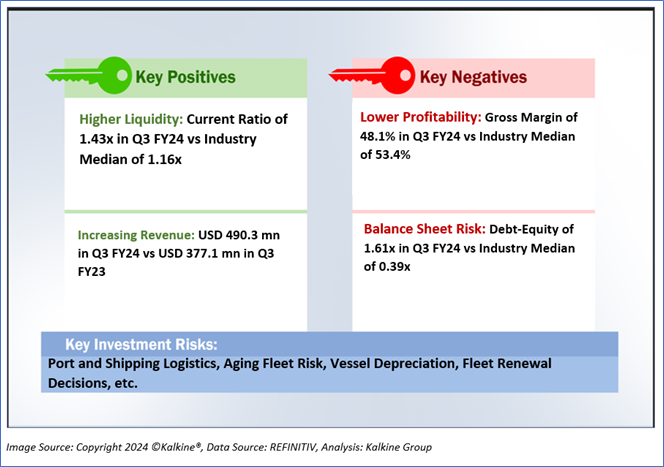
1.2 The Key Positives, Negatives, and Investment summary
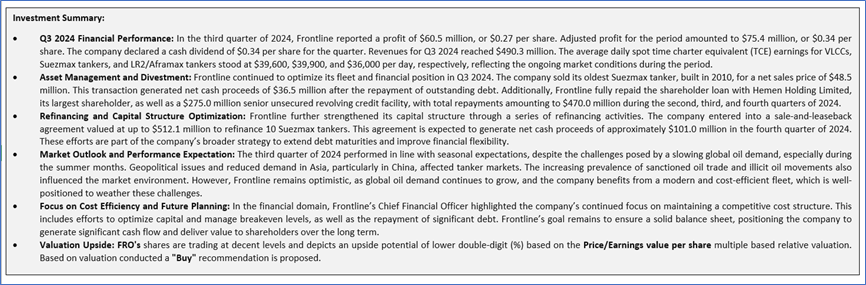
1.3 Top 10 shareholders:
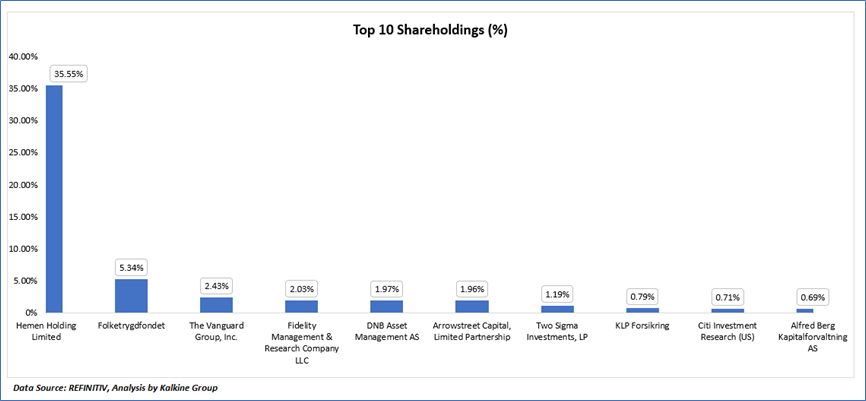
The top 10 shareholders together form ~52.67% of the total shareholding, signifying concentrated shareholding. Hemen Holding Limited and Folketrygdfondet, are the biggest shareholders, holding the maximum stake in the company at ~35.55% and ~5.34%, respectively.
1.4 Dividend Distribution:
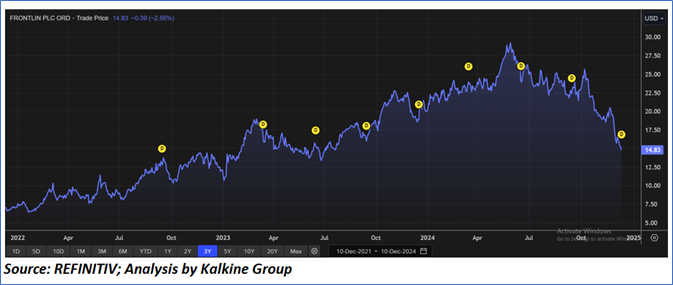
The dividend distribution trend has been relatively stable, with periodic dividend payouts even during periods of price fluctuations. FRO has maintained a consistent dividend policy with periodic payments even as its stock price has fluctuated. The company seems to prioritize shareholder returns, which may appeal to income-focused investors. However, the declining stock price in recent months suggests that the company's ability to continue paying dividends at the same level may come under pressure if the negative trend persists. Investors should monitor the company's earnings and dividend announcements closely for any signals of changes in dividend payouts in the future.
From mid-2022 to early 2023, there are several dividend payments marked by the yellow indicators. During this period, the stock price exhibits a strong upward movement, reaching a high around April 2023. The dividend payments seem relatively steady, and they occur during a general uptrend in the stock price. This could indicate a strong cash position and a healthy operational performance by the company, which allowed for consistent dividends. From mid-2023 onward, there is an increase in price volatility, as the stock experiences significant fluctuations with an overall downtrend. Despite the price decline, the dividend payments appear to continue regularly, suggesting that the company is attempting to maintain its commitment to paying dividends to shareholders. Even though the stock price drops sharply starting around April 2023, the company continues to pay dividends, which could signal that the company is prioritizing shareholder returns despite challenging market conditions.
By mid-2024, the stock price has fallen to a lower level (around $14.80 as shown on the right side of the chart), and yet the yellow markers continue to indicate dividend payouts. This could suggest that the company is maintaining a high dividend payout rate despite a lower stock price, which may attract investors looking for yield. However, this also raises concerns about the sustainability of such dividends if the company's performance does not improve, as consistent dividend payouts amidst a declining stock price might strain financial resources.\
1.5 Key Metrics
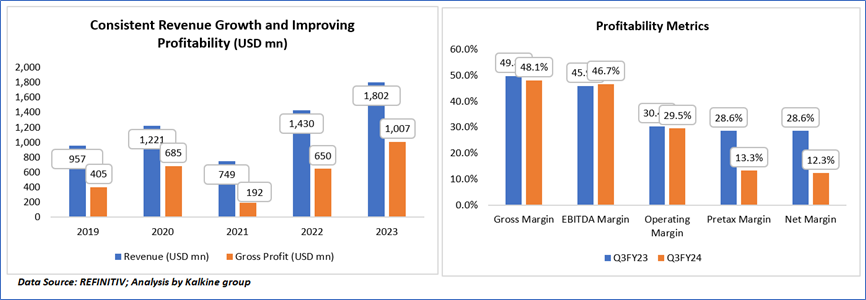
Section 2: Financial Highlights
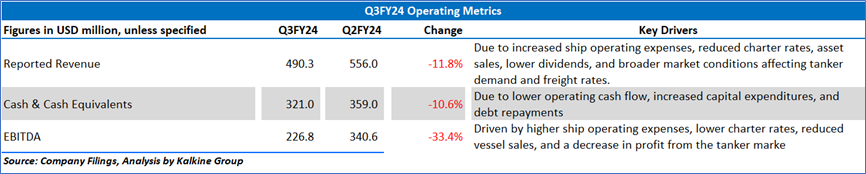
2.1 Insights of Q3FY24:
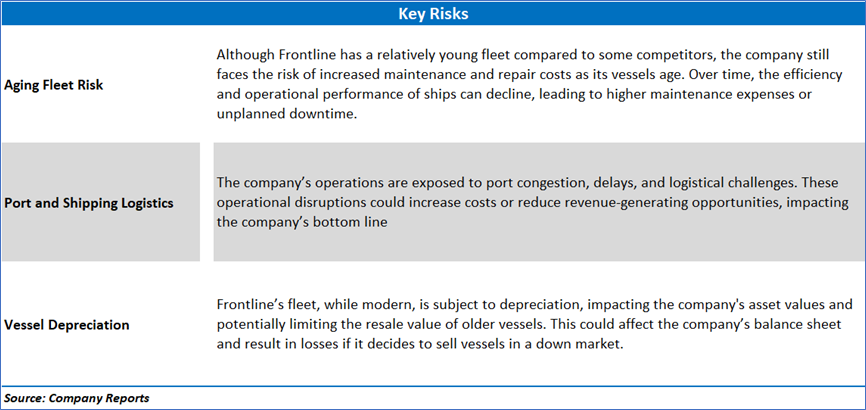
Section 3: Key Risks and Outlook:
Section 4: Stock Recommendation Summary:
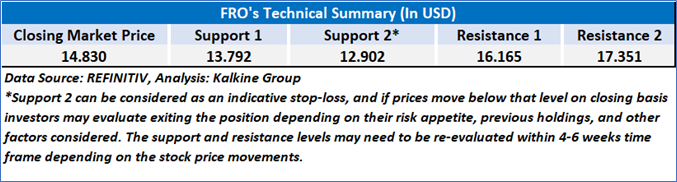
4.1 Technical Summary:
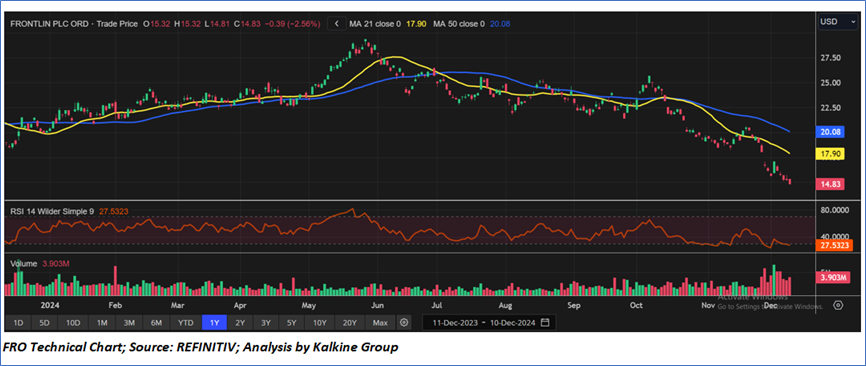
Price Performance:
4.2 Fundamental Valuation
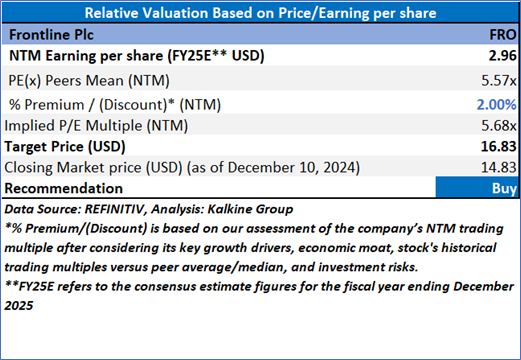
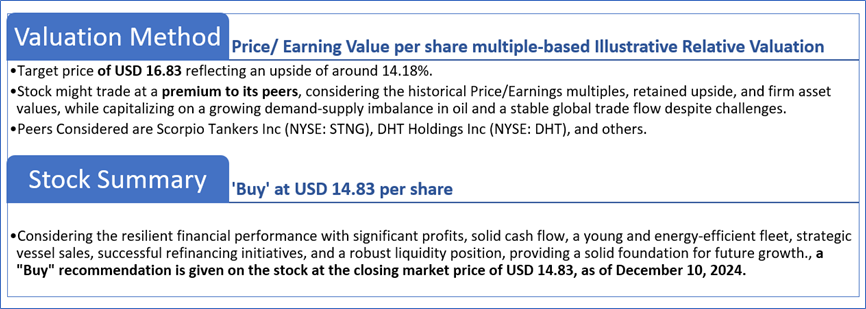
Valuation Methodology: Price/Earnings Per Share Multiple Based Relative Valuation
Markets are trading in a highly volatile zone currently due to certain macroeconomic issues and geopolitical tensions prevailing. Therefore, it is prudent to follow a cautious approach while investing.
Note 1: Past performance is not a reliable indicator of future performance.
Note 2: The reference date for all price data, currency, technical indicators, support, and resistance levels is December 10, 2024. The reference data in this report has been partly sourced from REFINITIV.
Note 3: Investment decisions should be made depending on an individual's appetite for upside potential, risks, holding duration, and any previous holdings. An 'Exit' from the stock can be considered if the Target Price mentioned as per the Valuation and or the technical levels provided has been achieved and is subject to the factors discussed above.
Note 4: The report publishing date is as per the Pacific Time Zone.
Technical Indicators Defined: -
Support: A level at which the stock prices tend to find support if they are falling, and a downtrend may take a pause backed by demand or buying interest. Support 1 refers to the nearby support level for the stock and if the price breaches the level, then Support 2 may act as the crucial support level for the stock.
Resistance: A level at which the stock prices tend to find resistance when they are rising, and an uptrend may take a pause due to profit booking or selling interest. Resistance 1 refers to the nearby resistance level for the stock and if the price surpasses the level, then Resistance 2 may act as the crucial resistance level for the stock.
Stop-loss: It is a level to protect against further losses in case of unfavorable movement in the stock prices.
Disclaimer This report has been issued by Kalkine New Zealand Limited (FSP691351) (NZBN:9429047678101) (“Kalkine”). Kalkine is a Financial Advice Provider (“FAP”) and is authorised by a Class 1 Financial Advice Provider Licence issued by Financial Markets Authority (“FMA”) to provide financial advice. Kalkine provides only general financial advice through its research reports following a person becoming a member. The reports contain buy/sell/hold and other recommendations in relation to equity securities, managed funds and other managed investment schemes and other financial advice products. The recommendations and opinions in this report and on Kalkine website do not take into account any of your investment objectives, financial situation or needs. Before you make a decision about whether to acquire a financial product, you should obtain the Product Disclosure Statement from the product issuer. You should consider the appropriateness of advice taking into account your own objectives, financial situation and needs and seek independent financial advice before making any financial decisions. If you act on the advice in the research reports, you may have to pay fees, expenses or other amounts (but not to Kalkine). Further information about the complaints and dispute resolution process, as well as information about Kalkine’s duties are available on Kalkine’s website. Please read our Financial Advice Provider (FAP) disclosure statement and Complaints Handling Guide, which are available on the website.
Past performance is not a reliable indicator of future performance.
 Please wait processing your request...